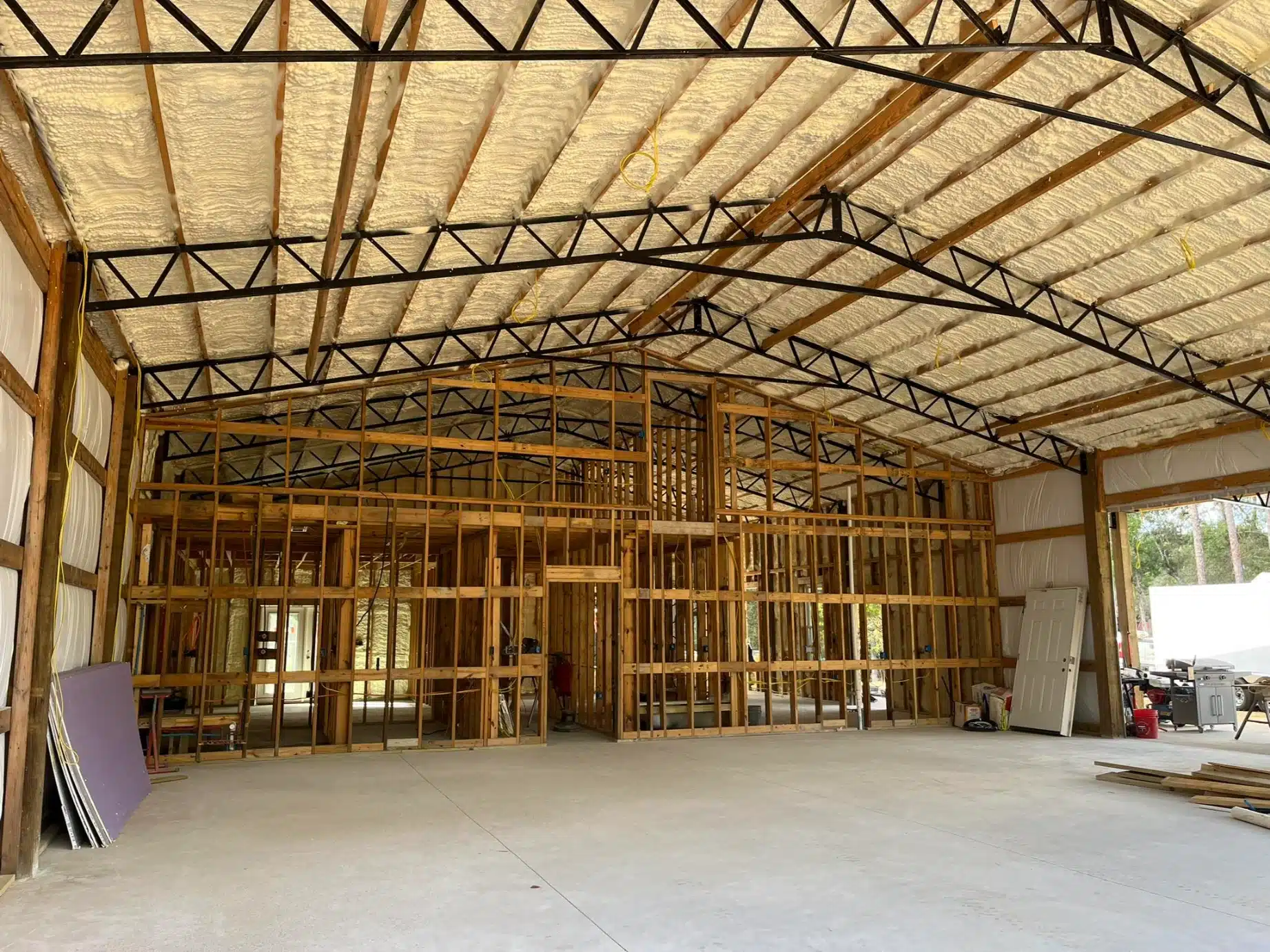
Business owners in Allentown, FL who operate in older commercial buildings or facilities with aging insulation are likely leaving money on the table every month through higher energy bills, inconsistent indoor temperatures, and unnecessary wear on HVAC systems. Upgrading commercial insulation is one of the most practical investments a business can make, particularly in a climate like the Florida Panhandle, where high heat and persistent humidity place constant demand on cooling systems. The right insulation upgrade depends on several factors, including building type, existing insulation condition, and specific operational needs, but the benefits span energy reduction, moisture control, indoor air quality, and long-term property protection. For a deeper understanding of available options, explore our complete guide to commercial insulation.
TL;DR
- Commercial buildings account for roughly 40% of all energy consumed for heating and cooling in the United States, making insulation upgrades a direct path to lower operating expenses.
- Allentown sits in Santa Rosa County, where summer dew points consistently reach the high 60s to low 70s, meaning commercial facilities deal with heavy moisture loads year-round.
- Around 12% to 14% of all reported building damage is linked to mold and moisture, both of which are worsened by inadequate or degraded insulation.
- Upgrading insulation reduces greenhouse gas emissions tied to commercial energy use, which is a growing focus under EPA environmental tracking programs.
- Florida Building Code requirements for commercial insulation are updated regularly, and older buildings may not meet current standards, creating compliance risk.
- Modern insulation materials with higher R-values, lower toxicity, and recycled content offer measurable improvements over legacy products.
- Businesses that invest in insulation upgrades often see lower maintenance costs due to reduced HVAC strain and fewer moisture-related repairs.
How Florida’s Climate Makes Insulation Non-Negotiable for Businesses
Allentown is an unincorporated community in Santa Rosa County, part of the Pensacola metropolitan area, with a population of just over 1,000 residents. While it is a small community, its commercial buildings face the same intense climatic demands as the rest of the Florida Panhandle. According to the Florida Climate Center at Florida State University, Florida is the most humid state in the nation. Summer dew point temperatures across the state generally run in the high 60s or low 70s every day, and coastal and Panhandle areas experience particularly heavy moisture due to proximity to the Gulf of Mexico.
This humidity is not just an outdoor comfort issue. It directly affects the building envelope of every commercial structure. Warm, moist air infiltrating poorly insulated walls, ceilings, and roofs creates condensation inside wall cavities and attic spaces. Over time, this moisture accumulation leads to mold growth, wood rot, and degraded structural materials. The Wikipedia entry on building insulation notes that insufficient thermal insulation allows indoor surface temperatures to drop below critical levels, causing condensation and mold formation, with building damage reports attributing 12.7% to 14% of all structural damage to mold-related problems.
For a business owner, this means that outdated insulation is not just an energy issue. It is a structural and health liability that can force expensive remediation, disrupt operations, and drive away customers or employees who experience poor indoor air quality.
Energy Costs and the Case for Upgrading
Commercial buildings are major energy consumers. Maintaining comfortable temperatures in buildings uses a large proportion of global energy consumption, and a significant share of that goes directly toward heating and cooling. When insulation is inadequate, HVAC systems must work harder to compensate for constant heat gain through the roof, walls, and windows during summer months, and heat loss during the occasional cold snaps that still reach the Panhandle.
The EPA’s guide on identifying greener insulation confirms that insulation conserves energy and saves money in monthly heating and cooling bills while also improving the health and comfort of building occupants. For commercial facilities in a hot-humid climate like Allentown, the savings compound quickly because cooling loads are high for extended portions of the year.
Beyond monthly utility bills, inadequate insulation shortens the lifespan of HVAC equipment. Systems that run continuously to overcome poor thermal performance experience more frequent breakdowns and require earlier replacement. The insulation upgrade effectively reduces the baseline cooling load, which takes pressure off equipment and extends its useful life.
Environmental and Compliance Benefits
Upgrading commercial insulation is not just about the bottom line. It also connects to broader environmental goals. The EPA’s Inventory of U.S. Greenhouse Gas Emissions and Sinks tracks emissions from the commercial and residential sector, which represents a significant portion of the nation’s overall greenhouse gas output. Every unit of energy saved through better insulation translates directly into reduced emissions from power generation.
For business owners who want to demonstrate environmental responsibility, whether for customer perception, tenant expectations, or corporate reporting, insulation upgrades offer a tangible, measurable improvement. The EPA also recommends selecting insulation with greater thermal resistance (higher R-value), reduced or eliminated toxic components like formaldehyde and volatile organic compounds, and higher recycled content. Professional commercial insulation services in Pensacola, FL help businesses achieve these performance goals.
Florida’s building codes have become progressively stricter regarding energy efficiency. The 8th Edition of the Florida Building Code, Energy Conservation, took effect December 31, 2023, and commercial buildings constructed or renovated under older codes may not meet current insulation R-value requirements. Upgrading insulation brings older buildings into closer alignment with modern standards, reducing the risk of compliance issues during future renovations, inspections, or sales.
Types of Commercial Insulation Upgrades by Building Area
Different parts of a commercial building present different insulation challenges and opportunities. Understanding which areas benefit most from an upgrade helps prioritize spending and maximize return.
| Building Area | Primary Challenge in Allentown, FL | Recommended Upgrade Approach | Expected Benefit |
|---|---|---|---|
| Roof and attic spaces | Radiant heat from the sun drives extreme attic temperatures | Bulk insulation combined with radiant barriers | Reduced cooling load, lower rooftop heat transfer |
| Exterior walls | Conductive heat gain and moisture infiltration | Continuous insulation with vapor-retarding layers | Stable indoor temps, moisture control |
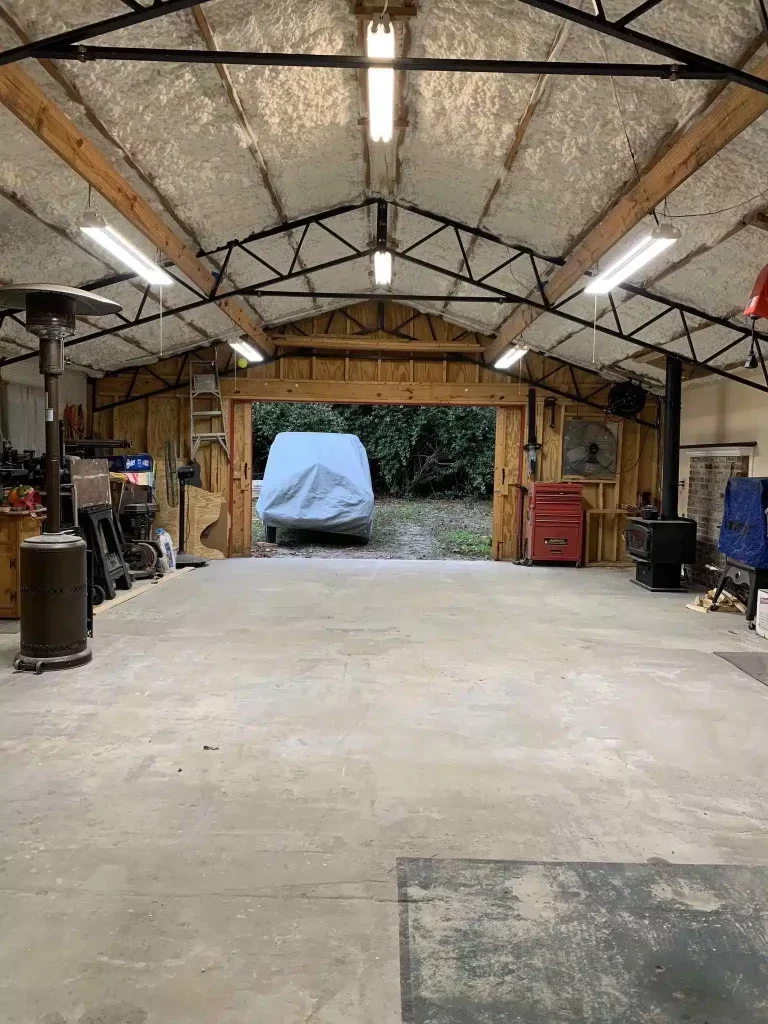
| Metal building panels | Thermal bridging through steel framing | Spray foam or rigid board with thermal breaks | Elimination of hot/cold spots, energy savings |
| Ductwork and mechanical systems | Duct losses in unconditioned spaces | Duct insulation and sealing | Reduced wasted conditioned air |
| Windows and doors | High solar heat gain coefficient (SHGC) | Low-e glazing upgrades or reflective films | Less solar heat entering the building |
The building insulation reference notes that in hot climates, the greatest source of heat energy is solar radiation, which enters buildings directly through windows or heats the building shell to temperatures higher than the ambient air. Radiant barriers are particularly effective for attic spaces in hot climates and can dramatically reduce downward heat transfer into conditioned spaces. Many property owners combine these systems with spray foam services in Allentown, FL for year-round energy efficiency.
What Allentown Business Owners Should Prioritize
Not every commercial building in Allentown needs the same insulation strategy. The right approach depends on building type, age, use, and budget. Here is a breakdown by common business context:
Retail spaces and offices: These buildings typically operate during daytime hours with high occupancy. Priority should be roof insulation and window treatments, since solar heat gain during operating hours drives peak cooling demand. A well-insulated ceiling and radiant barrier combination can meaningfully reduce afternoon temperature spikes.
Warehouses and storage facilities: These buildings often have large roof areas relative to floor space and may operate with minimal cooling. Insulation upgrades here focus on roof and wall systems to protect stored goods from heat damage and reduce the load on any climate-controlled zones within the facility.
Restaurants and food service: Moisture control is especially important in these environments. Spray foam insulation that acts as both an air barrier and a vapor barrier helps manage humidity from cooking while preventing external moisture infiltration.
Agricultural and outdoor-oriented businesses: Metal buildings and pole barns are common in rural Santa Rosa County. These structures are notorious for condensation problems and temperature swings. Closed-cell spray foam applied to the roof and walls provides both insulation and a vapor barrier in a single application.
Signs You’ve Found the Right Insulation Partner
Choosing who handles your commercial insulation upgrade matters as much as choosing the materials. Look for these indicators when evaluating a provider:
- Thorough assessment process: A qualified team will inspect your entire building envelope, identify areas of heat gain and moisture infiltration, and explain exactly what they find before recommending solutions. They should be willing to walk you through the assessment results in plain language.
- Material knowledge tailored to climate: In a hot-humid environment like the Florida Panhandle, the installer should understand the relationship between insulation type, vapor barriers, and moisture management, not just R-values.
- Code awareness: Your installer should be familiar with the Florida Building Code requirements for commercial insulation in your climate zone and ensure all work meets or exceeds those standards.
- Transparent scope of work: A clear, written proposal that specifies materials, R-values, application methods, areas to be insulated, and a realistic timeline, with no vague language or hidden line items.
- Long-term perspective: A strong provider will discuss maintenance considerations, warranty coverage, and how the upgrade interacts with your existing HVAC system rather than treating the insulation as an isolated fix.
Get Your Allentown Commercial Insulation Assessment
Prestige Insulation Solutions LLC serves the Allentown, FL area with professional commercial insulation services designed to reduce your energy costs, control moisture, and protect your building investment. Our experienced team evaluates every aspect of your building envelope and recommends targeted upgrades based on your specific facility type, operational needs, and budget. Whether you are managing a retail space, warehouse, or agricultural building in Santa Rosa County, we deliver solutions matched to the demands of the Florida Panhandle climate.
Request a Quote | Schedule a Building Assessment
Reach out at (850) 429-4969 or email [email protected] to discuss your building’s insulation needs with our team.
Frequently Asked Questions
What R-value should my commercial building have in the Allentown, FL area?
Requirements depend on your building type, wall assembly, and whether you are meeting minimum code or targeting higher performance. The Florida Building Code sets specific prescriptive R-value requirements by climate zone, and a professional assessment can identify what your building currently has versus what it needs.
How does humidity affect commercial insulation performance?
High humidity, which is constant in the Florida Panhandle, can cause moisture to accumulate in insulation that lacks a proper vapor barrier. When insulation absorbs moisture, its thermal resistance drops, and it can promote mold growth. Selecting the right insulation type and vapor management strategy is essential in humid climates.
Can insulation upgrades reduce my commercial cooling costs?
Yes. Insulation slows heat transfer through your building envelope, which means your HVAC system does not have to work as hard to maintain comfortable indoor temperatures. The EPA confirms that insulation conserves energy and saves money on heating and cooling bills.
How long does a commercial insulation upgrade take?
Timelines vary based on the size of the building, the areas being insulated, and the materials used. Many commercial projects can be completed with minimal disruption to daily operations, especially when work is phased by building zone.
Is upgrading insulation worth it for older commercial buildings?
Older buildings often have the most to gain, since they may have been built under outdated energy codes and typically have degraded or missing insulation. An assessment can reveal exactly where heat gain and moisture infiltration are occurring and what improvements will deliver the greatest return.
Sources
- EPA – Identifying Greener Insulation – EPA guidance on insulation sustainability considerations including energy savings, reduced toxics, recycled content, and occupant health benefits.
- EPA – Inventory of U.S. Greenhouse Gas Emissions and Sinks: 1990-2022 – The official U.S. greenhouse gas inventory tracking emissions from the commercial and residential building sector over three decades.
- Florida Climate Center – Humidity in Florida – State Climatologist overview confirming Florida as the most humid state, with summer dew points reaching the high 60s to low 70s statewide.
- Wikipedia – Allentown, Florida – Demographic and geographic profile of Allentown as an unincorporated community in Santa Rosa County, FL, part of the Pensacola metro area.
- Wikipedia – Building Insulation – Comprehensive reference on building insulation materials, thermal resistance, moisture management, and energy efficiency for commercial and residential structures.

- What Types of Insulation Can Be Professionally Removed From Your Home Safely and Efficiently in Pensacola, FL? - October 16, 2026
- What Should You Know Before Hiring Professional Insulation Removal Services in Pensacola, FL? - October 13, 2026
- Everything You Need to Know About Professional Insulation Removal - October 7, 2026