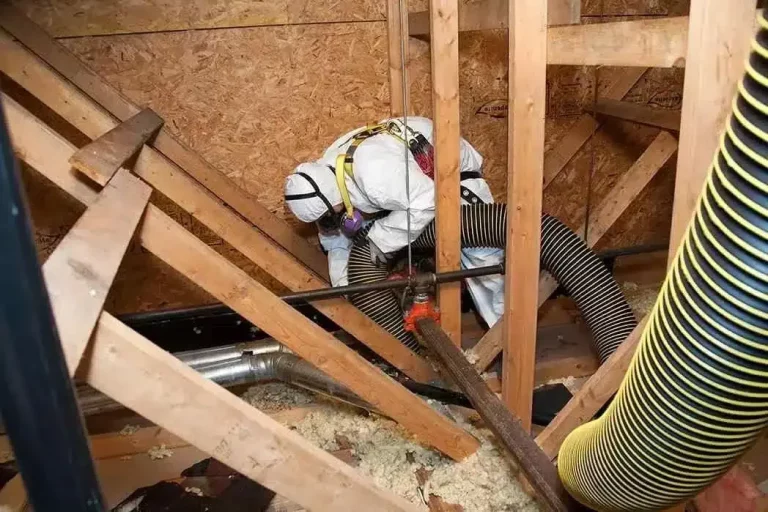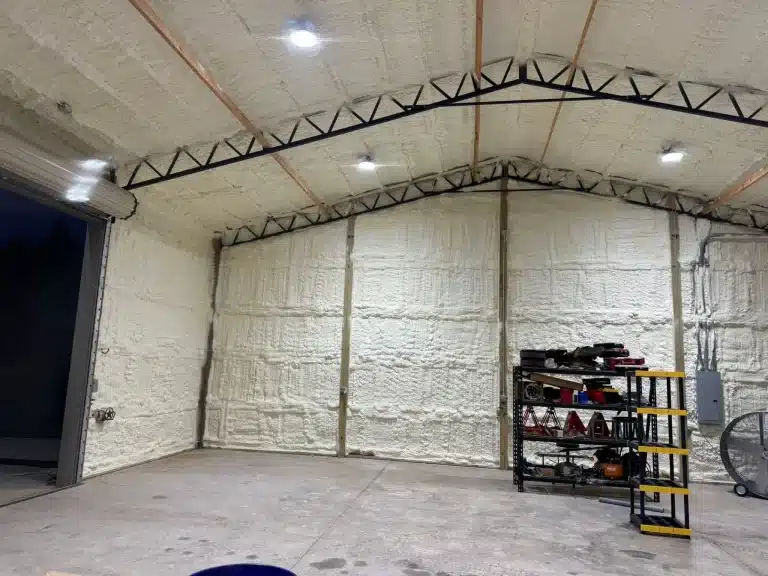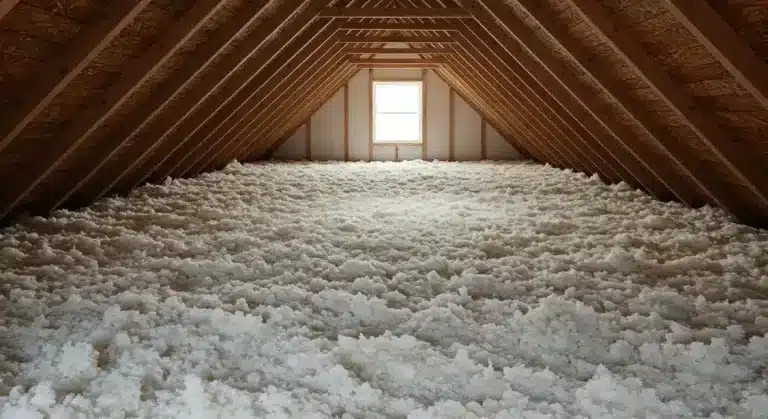
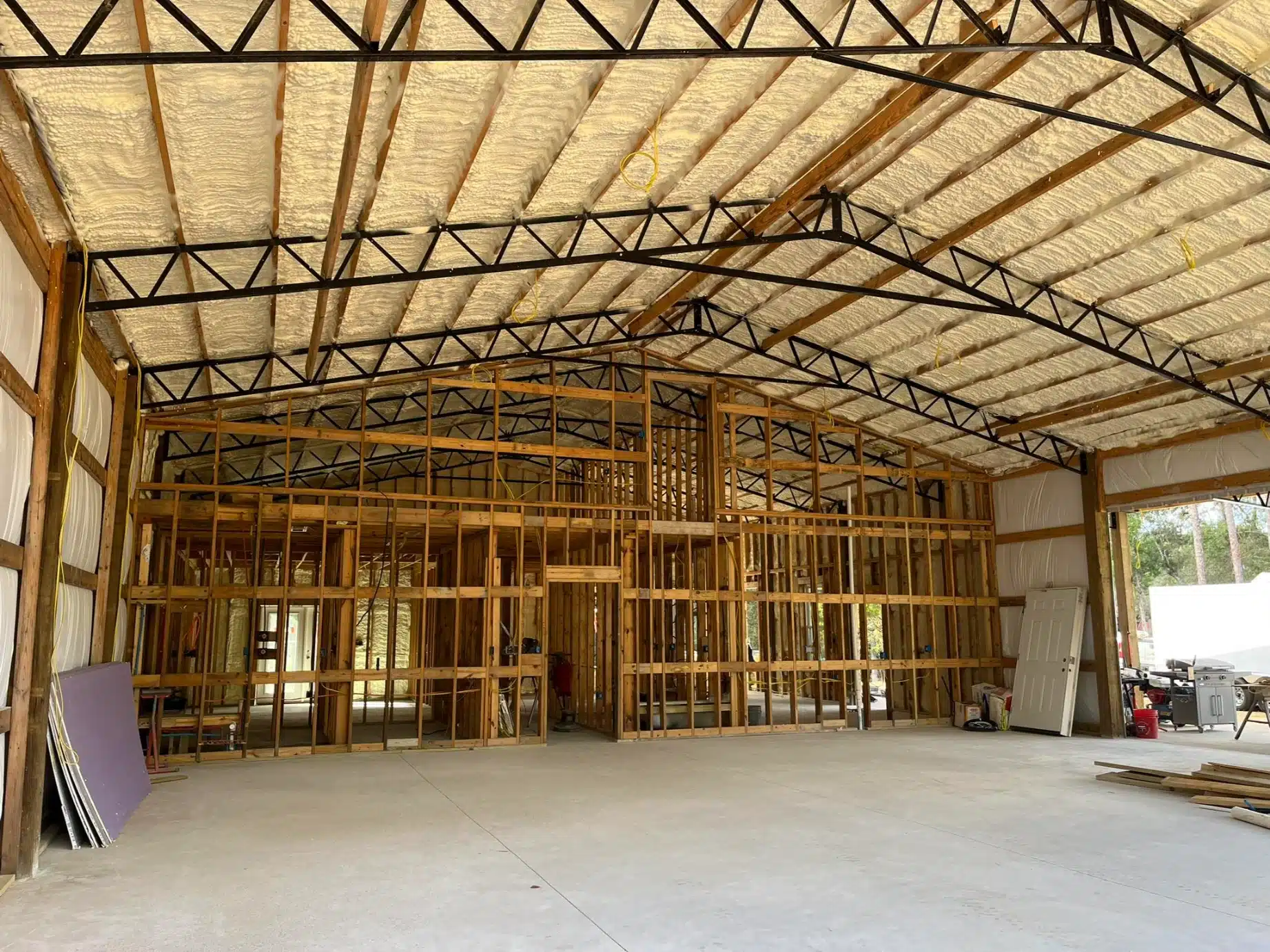
Drafty warehouses in Holley, FL, respond best to commercial insulation solutions that address the region’s warm, humid climate challenges. Closed-cell spray foam insulation provides the best air sealing and moisture control for warehouse facilities, reducing energy costs while preventing mold and structural damage. Our team at Prestige Insulation Solutions LLC specializes in commercial insulation assessments and installations tailored to Florida’s coastal climate, helping warehouse owners eliminate drafts, lower utility bills, and protect their inventory from humidity-related damage through professional spray foam insulation services in Holley, FL.
TL;DR
- Florida warehouses require insulation with both thermal resistance and moisture-barrier properties to handle high humidity year-round.
- Closed-cell spray foam delivers superior R-value per inch compared to traditional fiberglass batts in commercial warehouse applications.
- Air leakage in warehouses typically occurs through roof seams, loading dock gaps, and inadequate wall insulation, accounting for 30-40% of energy loss.
- Proper warehouse insulation can reduce cooling costs by 15-25% in Florida’s hot climate, according to the Department of Energy.
- Building envelope improvements provide faster ROI than equipment upgrades alone in commercial warehouse settings.
- Professional air sealing combined with insulation yields better results than insulation alone in draft reduction
- Florida’s building codes specify minimum R-values for commercial structures that vary by climate zone within the state.
- Warehouse insulation projects typically qualify for commercial energy efficiency tax incentives through the EPA ENERGY STAR program.
Understanding Warehouse Draft Problems in Florida’s Warm Climate
Warehouse facilities in the Florida Panhandle face unique challenges that differ significantly from northern climates. While northern regions worry about heat retention, Holley-area warehouses must manage constant heat intrusion and humidity penetration. The hot, humid conditions create persistent moisture problems that can compromise building integrity and inventory quality if left unaddressed, making a reliable commercial insulation guide essential when evaluating long-term building performance solutions.
Draft problems in commercial warehouses stem from multiple sources that compound over time. Thermal bridging through metal roofing systems creates pathways for heat transfer, while aging sealants around windows, doors, and loading docks deteriorate under Florida’s intense sun exposure. Foundation vents common in older warehouse designs allow humid outdoor air to enter uncontrolled spaces, creating condensation issues throughout the structure.
The coastal location of Holley amplifies these challenges through increased wind pressure and salt air exposure. Wind-driven rain infiltration through roof penetrations and wall gaps introduces moisture that weakens insulation performance and promotes mold growth. Our professionals frequently observe that warehouse owners initially notice comfort complaints from employees working near drafty areas, but the underlying problems affect cooling equipment efficiency and product storage conditions throughout the entire building.
Insulation Performance Comparison for Commercial Warehouses
Selecting the appropriate insulation material requires understanding how each option performs under Florida’s specific conditions. The following comparison evaluates the most common commercial insulation solutions for warehouse applications.
| Insulation Type | R-Value per Inch | Air Barrier | Moisture Resistance | Lifespan | Best Application |
|---|---|---|---|---|---|
| Closed-Cell Spray Foam | 6.5-7.0 | Yes, complete | Excellent | 20+ years | Roof decks, wall cavities |
| Open-Cell Spray Foam | 3.5-4.0 | Partial | Moderate | 15-20 years | Interior wall cavities |
| Fiberglass Batts | 3.1-4.0 | No | Poor | 15-25 years | Open-web roof systems |
| Mineral Wool | 3.0-3.3 | No | Moderate | 20+ years | Fire-rated wall assemblies |
| Rigid Foam Board | 5.0-8.0 | No | Good | 20-30 years | Exterior wall sheathing |
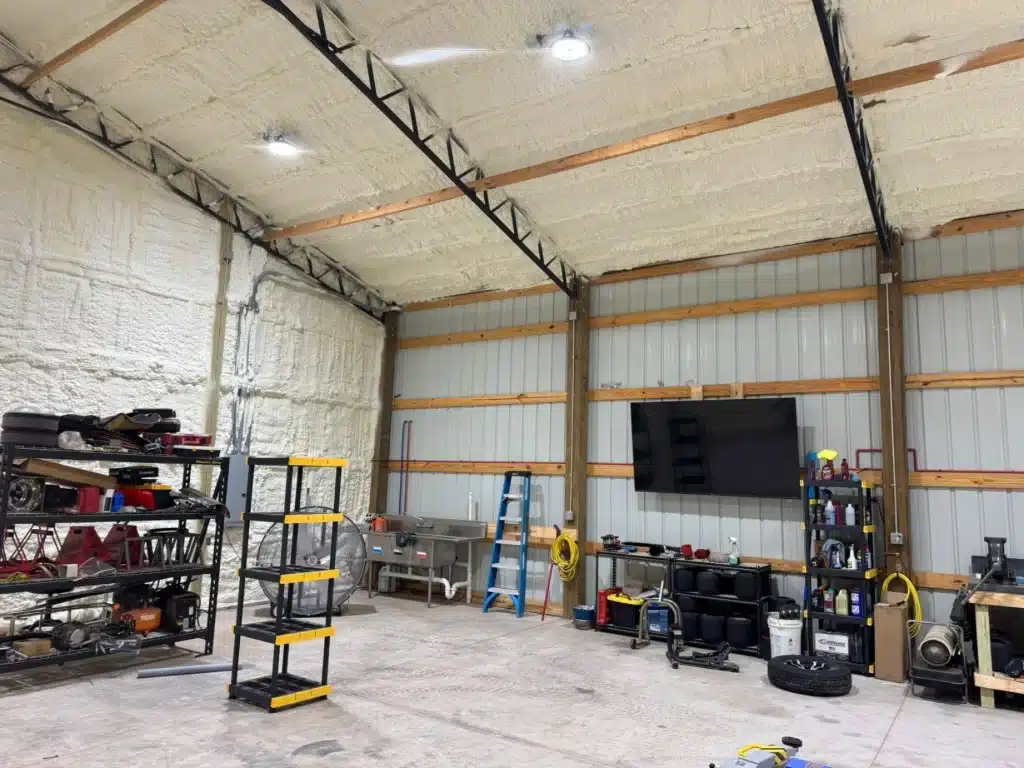
Closed-cell spray foam insulation delivers the most comprehensive solution for Holley warehouses because it simultaneously provides air sealing, thermal resistance, and moisture blocking. The rigid structure adheres directly to building substrates, eliminating gaps and voids that plague other insulation methods. For roof deck applications where condensation risk is highest, closed-cell foam prevents moisture migration that leads to mold and wood rot in Florida’s humidity.
Fiberglass batts remain common in older warehouse construction but require careful air barrier installation to perform effectively. Without continuous vapor diffusion protection, humid air passes through fiberglass and condenses on cold surfaces, reducing thermal performance and creating health hazards. Our team typically recommends upgrading from fiberglass to spray foam when addressing draft complaints in existing warehouses as part of a detailed commercial insulation audit for 2026 compliance and efficiency.
Energy and Cost Implications of Warehouse Insulation
Commercial warehouse energy consumption in Florida consists primarily of cooling loads, with HVAC systems working continuously to manage heat buildup from solar radiation and ambient temperatures. The Department of Energy estimates that commercial buildings waste 30% of energy through inefficient envelopes, with insulation deficiencies responsible for the majority of envelope-related losses.
Poor insulation forces cooling equipment to work harder during peak summer months when electricity rates are highest. Each degree of temperature differential across the building envelope translates directly into additional energy consumption. Warehouses with inadequate roof insulation experience surface temperatures exceeding 140 degrees Fahrenheit on metal roofing during summer afternoons, creating enormous cooling demands.
Effective insulation reduces peak cooling loads by limiting heat transfer through the building envelope. This translates to smaller HVAC equipment requirements for new construction and extended equipment life for existing buildings. Building owners who invest in comprehensive insulation improvements typically see operating cost reductions within the first year of installation.
The EPA ENERGY STAR program tracks commercial building energy performance and provides benchmarking tools for warehouse facilities. Buildings that achieve top performance ratings demonstrate 40-60% lower energy consumption compared to average facilities, with insulation quality representing one of the primary differentiating factors.
Professional Installation Process for Warehouse Insulation
Successful warehouse insulation projects require systematic assessment and execution by qualified commercial contractors. Our process begins with a comprehensive building envelope analysis to identify air leakage locations, thermal bridging points, and existing insulation conditions.
Thermal imaging technology reveals temperature variations across walls, ceilings, and floors that indicate insulation gaps and air infiltration pathways. This diagnostic step prevents guesswork and ensures that problem areas receive targeted treatment. Many draft complaints trace to specific locations such as roof-to-wall intersections, utility penetrations, and loading dock perimeters rather than uniform insulation failure.
Following the assessment, our crew prepares work areas and establishes containment measures appropriate for commercial occupancy during construction. Warehouse operations typically continue functioning during installation, requiring careful coordination and dust management. Flexible scheduling around production schedules and shift changes minimizes operational disruption.
Spray foam application requires precise temperature and humidity conditions for proper chemical reaction and adhesion. Our installers monitor substrate moisture content and ambient conditions to ensure optimal cure times and bond strength. Post-application inspection confirms complete coverage and identifies any areas requiring touch-up before final trimming and sealing.
Common Warehouse Insulation Mistakes to Avoid
Warehouse insulation projects frequently underperform due to avoidable installation errors and specification choices. Understanding these pitfalls helps building owners ask better questions and recognize quality workmanship.
Insufficient thickness represents the most common specification error. Building codes specify minimum R-values, but optimal performance often requires greater thickness than minimums. Closed-cell foam at 2 inches satisfies code requirements in many applications, but 3-4 inches provides substantially better performance for Florida’s cooling-dominated climate. Our professionals recommend upgrading thickness when the budget allows, as the marginal cost difference is small compared to long-term energy savings.
Ignoring air sealing is another critical mistake. Insulation alone cannot stop air movement through building assemblies. Air leakage carries moisture into wall cavities and roof spaces, compromising insulation and promoting mold growth. Comprehensive air sealing around penetrations, seams, and joints must accompany any insulation installation.
Improper material selection for specific applications causes premature failure in some warehouse settings. Foam plastic insulation in contact with certain roofing materials may require separation barriers to prevent chemical interaction. Ventilation requirements for crawl spaces and roof assemblies must be balanced against air sealing benefits. Our team evaluates these factors during specification development to match materials to application conditions.
Long-Term Maintenance for Commercial Insulation Systems
Commercial insulation requires minimal ongoing maintenance compared to mechanical systems, but regular inspections extend service life and ensure continued performance. Building owners should schedule annual envelope assessments to identify damage from settling, water intrusion, or tenant modifications.
Loading dock areas receive particular attention because forklift traffic and frequent door cycling stress surrounding insulation and sealants. Compressed or damaged insulation around dock seals reduces thermal performance and increases air infiltration. Prompt replacement of deteriorated sections prevents cascading damage to adjacent building components.
Roof insulation faces exposure to UV radiation, temperature extremes, and occasional water intrusion that degrade materials over time. Access panels and walkway pads protect insulation in high-traffic areas while allowing inspection of underlying conditions. Our maintenance programs include roof inspections coordinated with gutter cleaning and flashing repair to address moisture intrusion sources before they affect insulation.
Pest intrusion occasionally damages insulation in warehouse settings. Rodents and insects create nests within wall cavities and can push aside or contaminate insulation materials. Sealing potential entry points during insulation installation reduces pest pressure, but periodic inspection confirms continued integrity.
Real-World Warehouse Improvement Examples
| Warehouse Location | Facility Type | Primary Issue | Insulation Solution | Results |
|---|---|---|---|---|
| Industrial Park, Milton | Distribution center | High cooling costs, employee complaints | Closed-cell foam roof deck, air sealing | 22% energy reduction, eliminated drafts |
| Port area, Gulf Breeze | Storage facility | Moisture damage, inventory loss | Full envelope upgrade, vapor barrier addition | Protected inventory, reduced dehumidifier run time |
| Commercial district, Pace | Light manufacturing | Hot spots, equipment overheating | Wall and roof spray foam, vent sealing | Stabilized interior temperatures, 18% utility savings |
| Agricultural zone, Navarre | Cold storage warehouse | Condensation, ceiling staining | Closed-cell ceiling spray, dehumidification | Eliminated condensation, improved product storage |
Actionable Steps for Warehouse Owners
Warehouse owners ready to address draft problems should begin with a professional assessment before committing to specific solutions. Our team offers comprehensive building envelope evaluations that identify root causes and quantify improvement potential.
Documentation of current conditions supports insurance claims and financing applications for energy efficiency upgrades. Photographs, thermal images, and utility bills establish baseline performance and justify investment decisions to stakeholders.
Phased implementation works well for budget-constrained projects. Prioritizing roof insulation provides the highest impact initial improvement, followed by wall insulation and air sealing as capital becomes available. Our project managers help owners sequence improvements for maximum benefit per dollar invested.
Coordination with utility providers ensures access to available rebates and incentive programs. Many Florida utilities offer commercial energy efficiency programs that offset insulation upgrade costs. Our administrative team handles documentation and application requirements to maximize available incentives.
Factors That Affect Warehouse Insulation Performance
Successful insulation performance depends on multiple variables that building owners and contractors must consider during specification and installation.
Climate zone classification determines baseline insulation requirements. Holley falls within Florida’s warm, humid climate zone that emphasizes moisture management over thermal mass benefits. Insulation materials selected must perform in sustained high-humidity conditions rather than occasional condensation scenarios.
Building age and construction type influence available insulation methods and preparation requirements. Metal-framed buildings respond differently to insulation than wood-framed or masonry structures. Older buildings may require electrical upgrades or asbestos abatement before insulation installation.
Occupancy patterns affect internal heat and moisture loads that insulation must manage. Warehouses with climate-controlled sections require different specifications than unconditioned storage facilities. Forklift traffic and loading operations create localized heat gains that impact nearby zones.
Ventilation design must balance indoor air quality with energy efficiency. Florida’s mechanical code specifies minimum ventilation rates that interact with envelope performance. Over-ventilation wastes energy, while under-ventilation creates indoor air quality problems.
Maintenance accessibility determines whether insulation can be inspected and repaired as needed. Accessible locations allow routine inspection, while concealed installations require periodic thermal imaging to confirm continued performance.
Trust Prestige Insulation Solutions LLC for Your Warehouse Project
Our professionals at Prestige Insulation Solutions LLC bring decades of combined experience to commercial insulation projects throughout the Florida Panhandle. We understand the unique challenges that Holley warehouses face and design solutions that perform in coastal humidity conditions. Our crew receives ongoing training in commercial application techniques and stays current with evolving building code requirements.
For your next warehouse insulation project, contact us to discuss your facility’s specific needs and develop a tailored improvement plan.
Email: [email protected]
Phone: (850) 429-4969
We offer comprehensive assessments that identify insulation deficiencies and recommend cost-effective solutions. Let our team help you eliminate drafts, reduce energy costs, and protect your warehouse investment for years to come.
Sources
- U.S. Department of Energy – Commercial Building Energy Asset Score – Information on commercial building envelope performance and energy loss statistics in commercial facilities.
- ENERGY STAR – Commercial Buildings – EPA program details on commercial building energy benchmarking and top-performing facility characteristics.
- Building Science Corporation – Hot-Humid Climate Building Performance – Technical resources on building envelope design considerations for warm, humid climate zones.
- Florida Building Commission – Energy Conservation Code – State-specific building code requirements for commercial insulation R-values and installation standards.
- DOE Office of Energy Efficiency and Renewable Energy – Air Sealing – Information on air leakage impacts and sealing techniques for commercial buildings.
Frequently Asked Questions
What is the best insulation type for a warehouse in Florida’s humid climate?
Closed-cell spray foam insulation provides the best combination of R-value, air sealing, and moisture resistance for Florida warehouses. It adheres directly to building substrates, eliminating gaps where humid air could enter and condense. This material also adds structural strength to roof assemblies and performs effectively in the persistent humidity that affects Holley-area facilities.
How much can warehouse insulation reduce cooling costs?
Proper insulation combined with air sealing typically reduces commercial cooling costs by 15-25% in warm climates. The exact savings depend on current insulation condition, HVAC efficiency, and building envelope airtightness. Buildings with severe deficiencies often see larger percentage reductions after upgrades.
How long does commercial spray foam insulation last?
Closed-cell spray foam insulation maintains performance for 20 years or more when properly installed. It does not settle, sag, or degrade like fiberglass insulation can over time. Occasional inspection ensures that surrounding building components remain in good condition and do not compromise the insulation system.
Does warehouse insulation require building permit approval?
Commercial insulation projects typically require permits from local building departments. Requirements vary by municipality and project scope. Our team handles permit applications and scheduling while ensuring all work meets Florida commercial building codes.
Can insulation be installed while the warehouse remains operational?
Yes, our crews can install commercial insulation while your facility continues operating. We coordinate work schedules around production needs, establish dust barriers, and section work areas to minimize disruption. Flexible scheduling allows us to work during off-hours or weekends when needed.

- Everything You Need to Know About Professional Insulation Removal - October 7, 2026
- Which Insulation Upgrades Deliver the Best Long-Term Value in Bagdad, FL? - September 14, 2026
- How Does Blown-In Insulation in Gonzalez, FL Fill Gaps Better Than Traditional Materials? - September 14, 2026