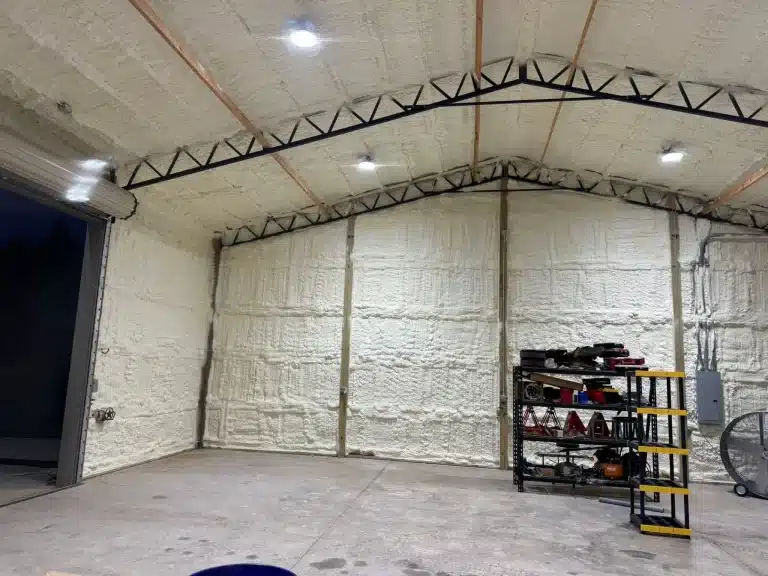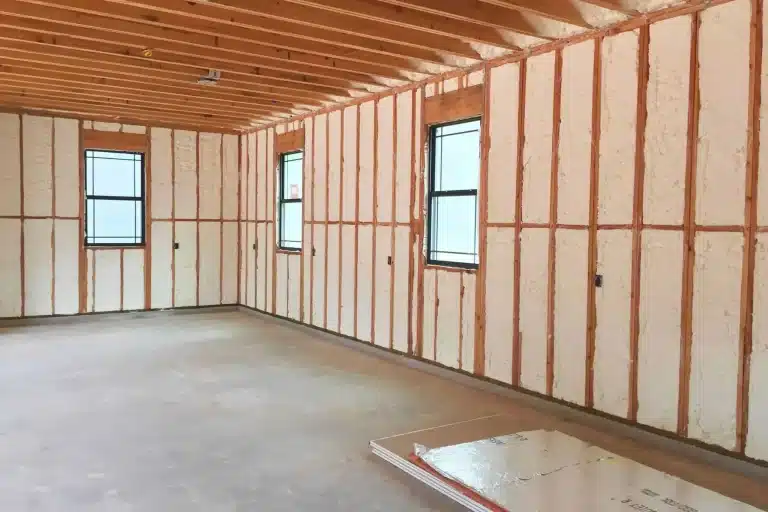
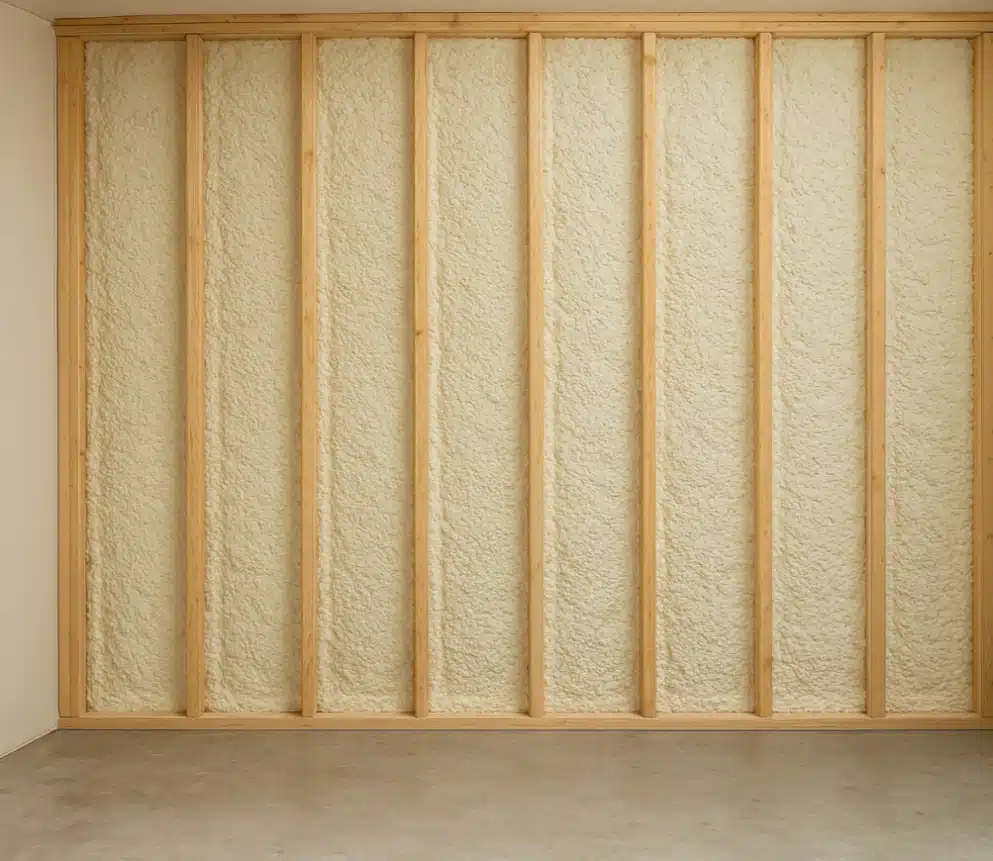
Closed-cell spray foam serves as a highly effective vapor barrier when professionals apply it at a thickness of two inches or more. This material creates a dense structure that blocks the movement of water vapor through walls and ceilings. We find that this dual-action performance simplifies the construction process by combining thermal resistance and moisture control into a single application.
This comprehensive guide explains the technical details of how a spray foam insulation moisture barrier functions within a building envelope. You will learn about permeability ratings, local building codes, and the specific differences between various foam types. Understanding these factors ensures your property remains protected from structural damage caused by hidden condensation. We recommend reading our spray foam insulation guide to build a strong foundation of knowledge on this subject.
Understanding the Difference Between Moisture and Vapor Barriers
Moisture barriers and vapor barriers serve two distinct purposes even though people often use the terms interchangeably. A moisture barrier prevents liquid water from entering a structure, while a vapor barrier limits the amount of water vapor that diffuses through solid materials. We see many homeowners struggle with this distinction during the planning phases of a project.
Liquid water usually enters through leaks in the roof or siding. Water vapor moves on a microscopic level due to differences in air pressure and temperature between the inside and outside of a building. Closed-cell foam addresses both issues by sealing out liquid and resisting the passage of gas.
How Vapor Retarders Manage Humidity
The construction industry uses a “perm rating” to measure how much water vapor can pass through a material. A lower perm rating indicates a more effective barrier. Most building codes classify materials with a perm rating of 1.0 or less as Class II vapor retarders.
Closed cell spray foam vapor barrier systems typically achieve a perm rating below 1.0 once the thickness reaches two inches. This rating makes it ideal for preventing warm, moist air from reaching cold surfaces inside a wall. When warm air hits a cold surface, it turns into liquid water, which leads to rot and organic growth.
Is spray foam a vapor barrier
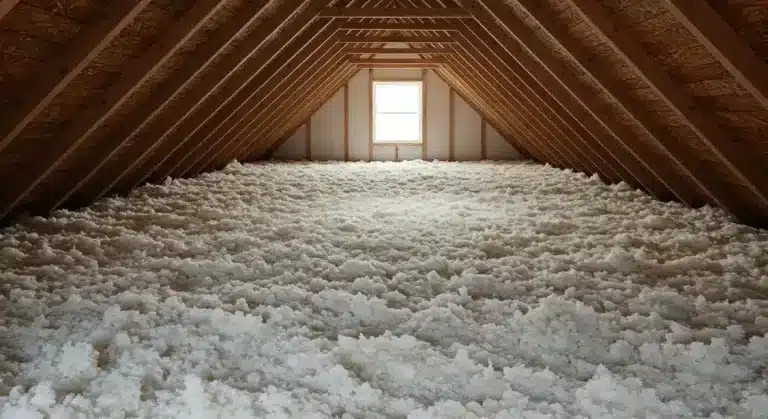
This question depends entirely on the type of foam you choose for your project. Open-cell foam has a high perm rating, usually between 10 and 50, which means it allows vapor to pass through relatively easily. It acts as an air barrier but does not provide a significant defense against vapor diffusion.
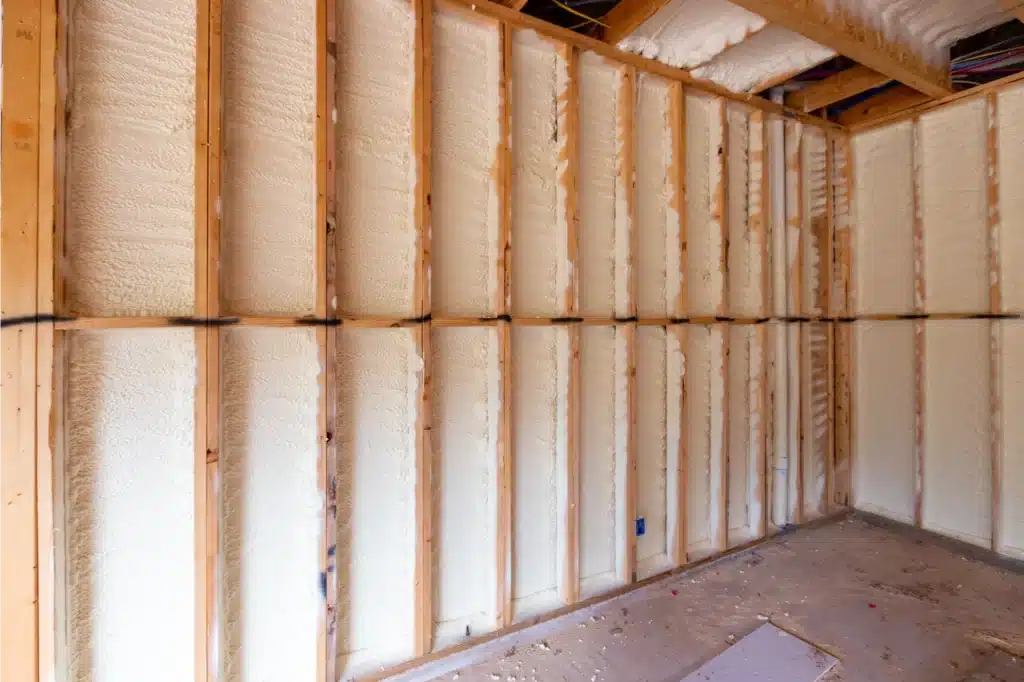
Closed-cell foam features a compact cell structure filled with a specialized gas. This density prevents the movement of moisture molecules. Research from the Building Science Corporation confirms that closed-cell foam functions as a semi-impermeable barrier. We consistently use this material in areas with high humidity to ensure long-term structural integrity.
Comparing Material Permeability
The following table illustrates how spray foam compares to other common building materials regarding vapor transmission.
| Material Type | Permeability Rating (Perms) | Vapor Class |
|---|---|---|
| Open Cell Spray Foam (3.5 inches) | 20.0 to 30.0 | Class III (Permeable) |
| Closed Cell Spray Foam (2 inches) | 0.8 to 1.1 | Class II (Semi-impermeable) |
| Polyethylene Plastic Sheeting | 0.06 | Class I (Vapor Barrier) |
| Unpainted Gypsum Board | 30.0 to 50.0 | Class III (Permeable) |
| Plywood Sheathing | 0.5 to 2.0 | Class II (Variable) |
The Science of Vapor Diffusion in Buildings
Vapor diffusion occurs when humidity moves from an area of high concentration to an area of low concentration. In the winter, indoor air is usually warmer and more humid than outdoor air. This creates pressure that pushes moisture outward through the walls.
A spray foam vapor barrier stops this process by providing a continuous layer of resistance. Unlike traditional fiberglass batts, which allow air and vapor to move through the gaps between the insulation and the studs, spray foam adheres directly to the substrate. This eliminate the “chimney effect” where air travels vertically through wall cavities.
Why Air Sealing Matters for Moisture Control
Air leakage accounts for much more moisture transport than simple diffusion through solid materials. Air movement carries up to 50 times more water than diffusion. Because spray foam expands to fill every crack, it stops the primary vehicle for moisture.
When we use spray foam, we address the air leaks around electrical outlets, plumbing stacks, and top plates. This holistic approach ensures that the building envelope remains tight. By stopping the air, we naturally reduce the amount of vapor that needs to be managed by the material’s perm rating.
Does spray foam insulation need a vapor barrier
In most climate zones, closed-cell foam does not require an additional plastic vapor barrier. Adding a layer of polyethylene over closed-cell foam can actually cause problems. It creates a “moisture sandwich” where water gets trapped between two impermeable layers, leading to wood rot.
However, open-cell foam often requires a separate vapor retarder, such as vapor-retardant paint, especially in very cold climates. You should consult with spray foam insulation contractors to determine the specific requirements for your local building code and weather patterns. Local regulations often dictate which class of vapor retarder is necessary for specific wall assemblies.
Benefits of Moisture Resistance in Crawl Spaces
Crawl spaces are notorious for high humidity levels. Ground moisture constantly evaporates and rises into the floor joists of a home. We often suggest using closed-cell foam on the underside of the floor or on the crawl space walls to block this moisture.
By creating a barrier against the damp earth, the foam keeps the wooden structure dry. This prevents the subfloor from warping and stops the growth of mold that can affect indoor air quality. This type of insulation makes homes stable secure by protecting the literal foundation of the living space.
Factors for Choosing the Right Barrier System
Before starting an insulation project, you must evaluate several variables. Climate is the most important factor. In northern regions, the vapor barrier belongs on the interior side of the wall. In southern, humid regions, the vapor barrier often belongs toward the exterior.
1 Regional Climate Zones
The International Residential Code (IRC) divides the United States into different climate zones. Each zone has different rules for vapor retarders. We follow these guidelines to ensure the walls can “dry” if moisture ever manages to enter the cavity.
2 Building Occupancy and Use
Buildings with high interior humidity, such as indoor swimming pools or commercial kitchens, require more robust vapor management. The high moisture load in these environments can overwhelm standard insulation. Closed-cell foam provides the high-performance seal needed for these extreme conditions.
3 Wall Assembly Components
The other materials in your wall, such as brick, stone, or wood siding, affect how the wall breathes. A wall with “reservoir” claddings like brick holds water after a rainstorm. The insulation must be compatible with how that water eventually evaporates.
Bonus Tip: Always ensure the substrate is dry before application. Spraying foam onto wet wood traps moisture inside the timber, which can lead to structural failure over time.
Installation Accuracy and Performance
The effectiveness of a barrier depends on the quality of the installation. If there are gaps in the foam, vapor will find those pathways. We use specialized equipment to maintain the correct temperature and pressure, ensuring the chemical reaction creates a consistent cell structure.
Professional installers also monitor the thickness of the application. Since the vapor barrier properties are depth-dependent, achieving a uniform two-inch layer is vital. We use depth gauges throughout the process to verify that every square inch meets the required specifications for moisture resistance.
Bonus Tip: Monitor the humidity levels in your home after installation. A tighter home may require a heat recovery ventilator (HRV) to manage indoor air quality, as the foam stops the natural “leaking” that older homes rely on for fresh air.
Financial Impact of Proper Moisture Management
Investing in a high-quality moisture barrier reduces long-term maintenance costs. Water damage is one of the most expensive issues a property owner can face. By preventing condensation, you avoid the cost of replacing rotted studs, mold remediation, and ruined drywall.
Furthermore, a study by the National Institute of Building Sciences suggests that moisture control significantly extends the lifespan of a building’s HVAC system. When the air is drier, the air conditioner does not have to work as hard to dehumidify the space. This leads to lower monthly utility bills and fewer equipment repairs.
Common Myths About Foam and Water
A common misconception is that all spray foam acts like a sponge. This is only true for open-cell foam. If you submerge open-cell foam in water, it will absorb liquid. Closed-cell foam is hydrophobic, meaning it repels water and does not allow it to wick through the material.
Another myth is that spray foam masks leaks. While it is true that foam can hold back water, a significant leak will eventually show itself. The benefit of closed-cell foam is that it does not degrade or lose its R-value when it gets wet, unlike fiberglass or cellulose.
Final Decision Points for Property Owners
When deciding on a moisture strategy, look at the long-term goals for the property. If the goal is maximum energy efficiency and structural protection, closed-cell foam is usually the superior choice. It offers the highest R-value per inch and the most reliable vapor control.
If the budget is the primary concern and moisture is not a major threat in your specific climate, open-cell foam might suffice. However, you must then account for the cost and labor of installing a separate vapor retarder. We always recommend looking at the total system cost rather than just the price of the insulation itself.
Summarizing Moisture Control Strategies
A spray foam insulation moisture barrier provides a comprehensive solution for modern buildings. By combining air sealing with a Class II vapor retarder, closed-cell foam prevents the most common causes of moisture-related structural decay. This material creates a durable, long-lasting envelope that protects against both liquid water and vapor diffusion. We encourage property owners to consider the climate and specific building needs when selecting an insulation type. Evaluate your local codes and current humidity levels to make an informed choice for your future comfort and safety.
Contact Us for a Professional Assessment
We provide expert guidance and high-quality installation for all your residential and commercial needs. Our team focuses on creating efficient and dry environments for every client. If you have questions about which insulation type fits your project, contact Prestige Insulation Solutions today. We offer a free quote to help you plan your upgrades. Reach us at (850) 429-4969 or via email at [email protected] to schedule your consultation.
Questions About Spray Foam Barriers
What thickness is needed for a vapor barrier?
To function as a Class II vapor retarder, closed-cell spray foam typically requires a minimum thickness of two inches. This depth ensures the perm rating drops below the 1.0 threshold.
Does spray foam prevent mold growth?
Closed-cell foam prevents mold by eliminating the food source and the moisture. It provides no organic material for mold to eat and stops condensation from forming inside the wall cavities.
Can I use spray foam in a basement?
Yes, closed-cell foam is excellent for basement masonry walls. It blocks the moisture that naturally migrates through concrete, keeping the finished basement dry and preventing the typical “musty” basement smell.
Will spray foam trap moisture in my walls?
Spray foam only traps moisture if the wood is already wet during installation. When applied to dry materials, it protects the wood from future moisture exposure by sealing out humid air.
Is open cell foam a vapor barrier?
No, open-cell foam is not a vapor barrier. It allows water vapor to pass through its structure. It requires a separate vapor retarder if used in cold or very humid climates.
Sources
- Building Science Corporation – A leading research firm providing technical data on vapor diffusion and material perm ratings.
- International Code Council – The source for building codes regarding vapor retarder requirements in different climate zones.

- Which Insulation Upgrades Deliver the Best Long-Term Value in Bagdad, FL? - September 14, 2026
- How Does Blown-In Insulation in Gonzalez, FL Fill Gaps Better Than Traditional Materials? - September 14, 2026
- How Does Residential Spray Foam Insulation in Gulf Breeze, FL Create a More Airtight Home? - September 9, 2026