For most homes in Bagdad, FL, the insulation upgrade with the strongest long-term value is an insulation company in Bagdad, FL, for professional attic air sealing combined with blown-in insulation brought up to R-38 or higher. The right mix depends on your home’s construction, though. Sealed (unvented) attics benefit most from spray foam, homes with ductwork in the attic gain an added advantage from a radiant barrier, and raised-floor homes in this humid Panhandle climate often need crawl space and floor insulation as well. Bagdad sits in Florida Building Code Climate Zone 2, where attics require a minimum of R-38, and because our area is cooling-dominated, upgrades that reduce heat gain pay off year after year in lower cooling costs.
TL;DR
- Attic insulation is the highest-value starting point. More heat per square foot moves through your ceiling than any other part of a house, and the attic is the easiest, most cost-effective place to add insulation.
- Air sealing before insulating is what makes the upgrade last. The EPA estimates homeowners save an average of 15% on heating and cooling costs by air sealing and adding insulation in attics, floors over crawl spaces, and basements.
- Florida Building Code Climate Zone 2, which covers Bagdad and Santa Rosa County, requires a minimum R-38 in attics, and current 2021 IECC guidance points to R-49 ceilings in new construction.
- Spray foam delivers top performance in unvented attics and rooflines, but it requires a certified installer, and the Florida Building Code sets specific conditions for sealed attics in our climate.
- Radiant barriers cut heat flow from the attic into the home by roughly 40%, which typically equals 8% to 12% of annual cooling costs, but they add little once an attic already sits at R-30 or better.
- Installation quality controls long-term value. Studies show a poorly installed thermal envelope can lose 30% or more of its rated performance, so who installs matters as much as what is installed.
- Adding wall insulation to existing Florida homes is rarely cost-effective, so most budgets should stay focused on the attic, ducts, and floor systems.
Why the Attic Comes First in Bagdad’s Climate
Bagdad’s location in Santa Rosa County puts it squarely in a hot-humid, cooling-dominated climate, where air conditioning runs most of the year, and attics routinely climb well past outdoor temperatures. According to the University of Florida’s My Florida Home Energy insulation guide, more heat per square foot travels through the ceiling than any other structure in a house, and adding attic insulation is the easiest and most cost-effective way to insulate a Florida home.
Florida’s building code splits the state into two climate zones. The seven southern counties fall in Zone 1 with an R-30 attic minimum, while every other county, including Santa Rosa, is Climate Zone 2 with an R-38 minimum. The Department of Energy’s insulation and air-sealing guide notes that the 2021 IECC raises that ceiling target to R-49 for Zone 2 construction, a useful benchmark when topping up an older home.
The Insulation Upgrades That Deliver the Best Long-Term Value
1. Air Sealing + Blown-In Attic Insulation
This combination is the workhorse upgrade for Bagdad homes. Sealing gaps around wiring penetrations, recessed lights, plumbing chases, and the attic hatch stops conditioned air from escaping; then blown-in fiberglass or cellulose brings the attic floor to target depth. Most common loose-fill materials run R-3 to 3.5 per inch, so a quick depth measurement multiplied by 3 estimates your current R-value, a check the EPA’s ENERGY STAR attic insulation guide recommends before hiring anyone. If your insulation sits at or below the level of the joists, you need more. The payback is durable because loose-fill insulation and sealed penetrations keep working for decades without moving parts.
2. Spray Foam for Sealed (Unvented) Attics
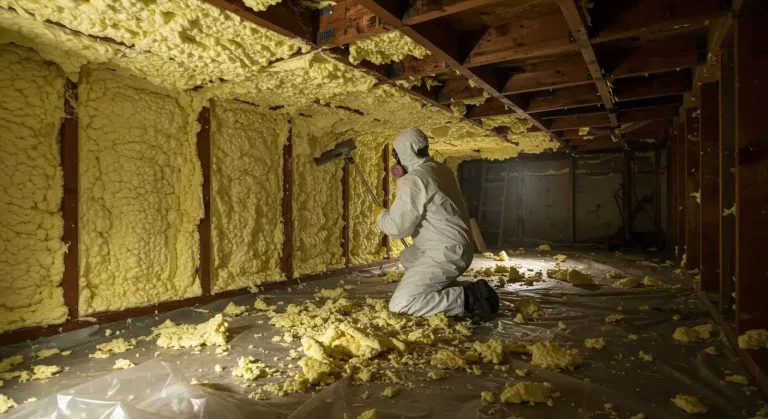
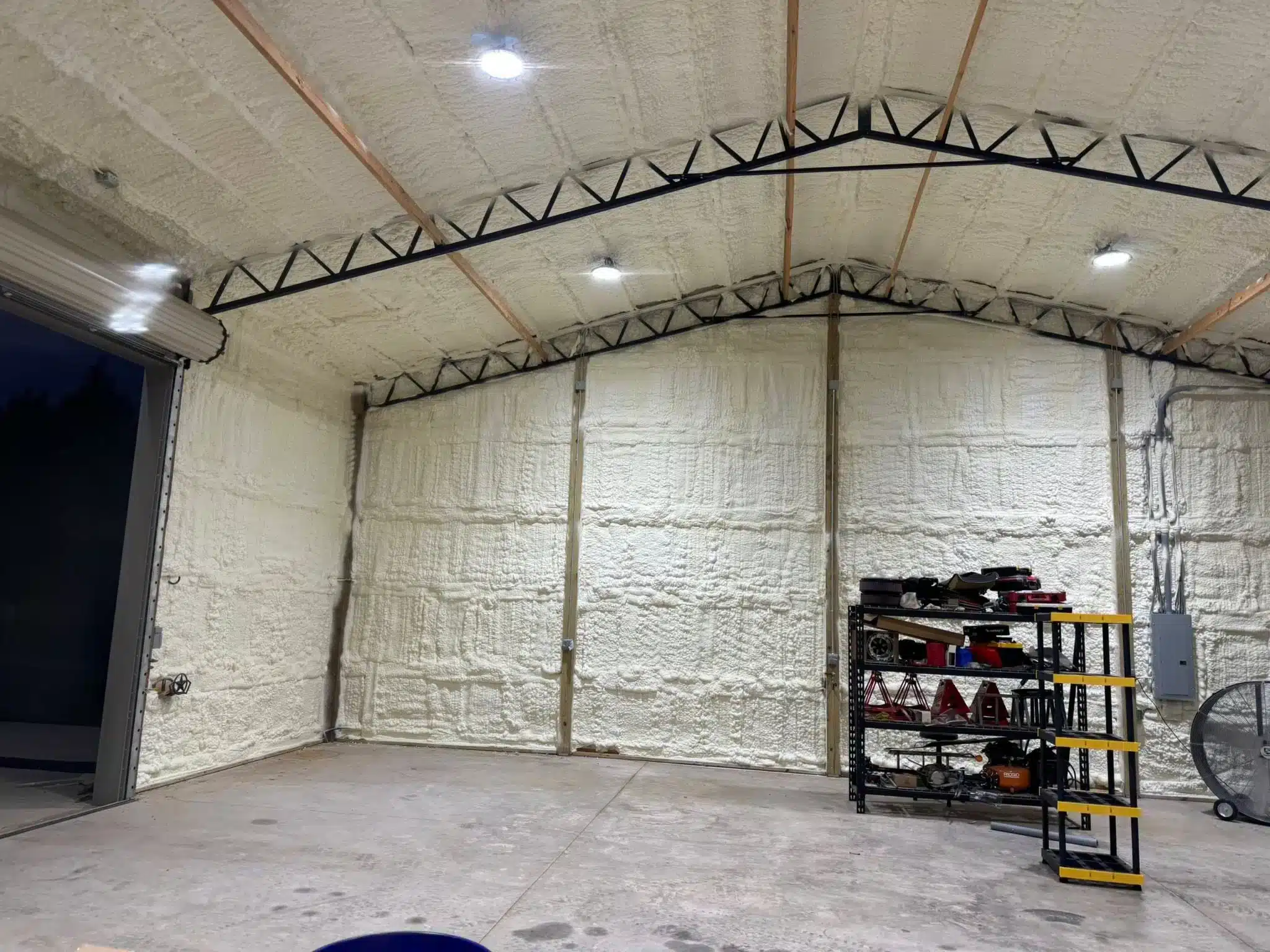
Open-cell and closed-cell spray foam applied to the roof deck turns a vented attic into a sealed, semi-conditioned space, which protects HVAC equipment and ducts that live in the attic. Closed-cell foam delivers roughly R-6 per inch, the highest rating of common materials, and it doubles as an air barrier. The Florida Building Code permits the unvented attic approach, though it sets conditions on insulation air permeability and condensation control that matter in our humid climate. ENERGY STAR – Rule Your Attic! For Comfort and Savings classifies spray foam as an advanced-skill product requiring a certified installer, and that requirement is real: this is not a material to gamble on.
3. Radiant Barriers
A reflective foil barrier stapled to the rafters or laminated to the roof deck blocks radiant heat before it reaches the attic floor. Research summarized by the Department of Energy’s Building America Solution Center shows a radiant barrier cuts heat flow from the attic into the home by about 40%, typically equal to 8% to 12% of annual cooling costs. The payoff is strongest when ducts run through the attic, and the barrier also reduces wear on air conditioning equipment during heat waves. Perforated products deserve consideration here, since moisture passage becomes more important in humid climates.
4. Crawl Space and Floor Insulation
Many Bagdad-area homes are raised off the ground, and floors over unconditioned crawl spaces are one of the three locations the EPA names in its 15% savings estimate. Moisture management matters as much as R-value in these spaces, so vapor control and proper coverage belong in the scope alongside insulation.
5. Duct Sealing and Insulation
Ducts running through a hot attic lose energy before air ever reaches a room. The 2021 IECC calls for R-8 on ducts three inches and larger outside conditioned space, and the DOE notes that simple caulking and weatherstripping measures often pay for themselves within a year. Explore our local customer reviews to see feedback from homeowners in the area.
Comparing Your Options
| Upgrade | Best For | Why It Holds Value | Watch-Outs |
|---|---|---|---|
| Air sealing + blown-in attic insulation | Most existing homes in Bagdad | Attic is the biggest heat-loss point, long service life, code-aligned R-38+ target | Must seal leaks first or performance drops |
| Spray foam (unvented attic) | Homes with attic HVAC, low-slope or tight rooflines | Highest R per inch, air and moisture barrier in one, protects ducts | Requires certified installers and code-compliant condensation control |
| Radiant barrier | Attics with ductwork, homes with high sun exposure | Cuts attic heat flow about 40%, cools ducts, eases AC load | Little benefit over R-30+ insulation, dust defeats exposed foils |
| Crawl space + floor insulation | Raised-floor homes, pier-and-beam construction | Addresses a named EPA savings location, improves comfort underfoot | Vapor control must accompany insulation |
| Duct sealing + R-8 duct insulation | Any home with attic ducts | Fast payback, protects cooling investment | Ducts should be sealed before being buried in insulation |
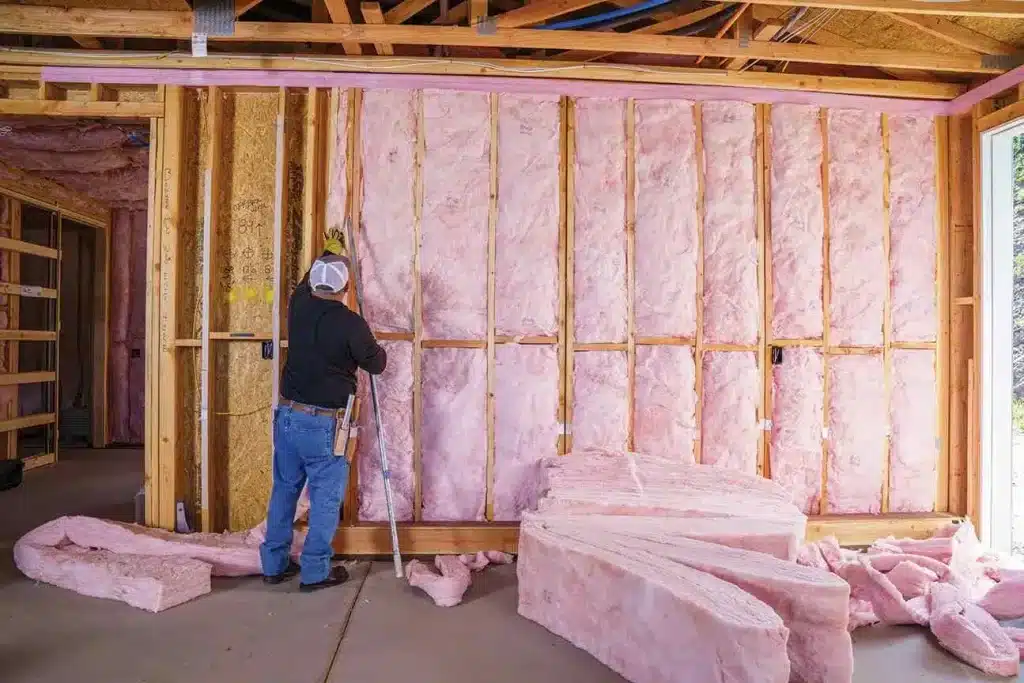
What Long-Term Value Really Means
Value is not just the number on the invoice. It is how much rated performance survives the next twenty years. Three factors decide that in Bagdad:
- Installation quality. The University of Florida reports that an improperly installed thermal envelope can lose 30% or more of its rated performance. Compressed batts, gaps, and shallow coverage quietly erase R-value.
- Moisture durability. Insulation must be paired with air sealing and moisture control. Wet, moldy, or pest-contaminated insulation should be removed, not covered, and soffit vents need baffles so new insulation does not choke attic ventilation.
- Material behavior over time. Loose-fill settles slightly, closed-cell foam does not, and reflective foils fail if dust settles on them. Matching material to location is what keeps the R-value you paid for.
Our Recommendations by Home Type
| Home / Situation | Recommended Priority | Key Notes | Expected Outcome |
|---|---|---|---|
| Older home, shallow attic insulation | Air seal, then blow in to R-38+ | Measure depth first; most existing insulation can stay if dry | Lower cooling bills, more even temperatures |
| Home with attic HVAC and ducts | Radiant barrier + duct sealing, plus attic R-value | Ducts benefit most from a cooler attic | Reduced AC runtime and longer equipment life |
| Home due for a roof replacement | Consider spray foam or foil-faced decking | Unvented attic must meet Florida code conditions | Sealed, semi-conditioned attic space |
| Raised-floor home with crawl space | Floor insulation + moisture control | Vapor management belongs in the same scope | Warmer floors, less humidity migration |
| Home that still feels uncomfortable after insulating | Check ducts and air leakage before adding wall insulation | Adding wall insulation to existing Florida homes is rarely cost-effective | Budget directed where it actually pays |
Common Mistakes That Shorten the Payback
- Insulating over air leaks instead of sealing them first
- Compressing insulation by storing boxes or walking on the attic floor
- Blocking soffit vents because baffles were skipped
- Covering wet or moldy insulation instead of removing it
- Ignoring the attic hatch, which should be weatherstripped and insulated like the surfaces around it
- Treating spray foam as a DIY project
Signs You’ve Found the Right Approach
The right partner measures your current insulation depth before quoting anything, and insists on sealing before insulating. A complete insulation guide can help homeowners understand what to expect from a properly planned insulation project. Expect clear R-value targets for Climate Zone 2, a written scope that includes ventilation baffles and hatch treatment, proof of licensing and insurance, and documentation of the installed R-value when the job is complete. If a contractor talks about moisture and ventilation as willingly as they talk about R-value, you are in good hands. Our team at Prestige Insulation Solutions LLC builds every Bagdad project around exactly that standard.
Upgrade Your Bagdad Home With Confidence
Prestige Insulation Solutions LLC helps homeowners across Bagdad, FL, and Santa Rosa County choose insulation upgrades built for lasting value, not quick fixes. Our team handles air sealing, blown-in attic insulation, spray foam, radiant barriers, crawl space insulation, and duct sealing with the installation quality that protects your R-value for decades. Call us at (850) 429-4969 or email [email protected] to get started.
Your home’s comfort is worth doing right the first time. Reach out today and let our team show you where your insulation dollars will work hardest.
FAQs
What R-value should attic insulation reach in Bagdad, FL?
Florida Building Code Climate Zone 2, which includes Santa Rosa County, sets an R-38 attic minimum, and 2021 IECC guidance points to R-49 for Zone 2 ceilings. We evaluate your existing depth and recommend the target that fits your home.
Is spray foam worth it in a humid Gulf Coast climate?
Yes, when installed by a certified installer on an appropriate roofline. Spray foam seals air leaks and resists moisture movement, but unvented attics in Florida must follow specific code conditions for condensation control.
Does a radiant barrier replace attic insulation?
No. A radiant barrier complements insulation by blocking radiant heat, cutting attic heat flow by roughly 40%, which equals about 8% to 12% of annual cooling costs. It adds little value once an attic already exceeds R-30.
Can new insulation be installed over old insulation?
Usually yes. If the existing insulation is dry, clean, and free of mold or animal waste, new loose-fill can go right on top. Wet or contaminated insulation should be removed first.
How long do insulation upgrades last?
Quality-installed blown-in insulation, spray foam, and air sealing typically perform for decades. The biggest threat to long-term performance is poor installation, which can cut rated performance by 30% or more.
Sources
- My Florida Home Energy – Insulation – University of Florida and Florida Solar Energy Center guide covering Florida attic R-value requirements, Climate Zone 2 standards, R-values per inch, and installation quality research.
- ENERGY STAR – Rule Your Attic! For Comfort and Savings – EPA estimates on the 15% average heating and cooling savings from air sealing plus attic and floor insulation.
- Building America Solution Center – Attic Radiant Barriers – Department of Energy research summaries on radiant barrier performance, including the 40% attic heat flow reduction and 8% to 12% cooling cost impact.
- U.S. Department of Energy – Energy-Efficient Home Improvement Credit Insulation and Air-Sealing Essentials – IECC climate zone R-value tables, duct insulation requirements, and air sealing guidance for cooling-dominated southern climates.
- ENERGY STAR – Well-Insulated and Sealed Attic – EPA guidance on measuring attic insulation levels, choosing insulation types, hiring qualified contractors, and ensuring the job is done right.

- What Types of Insulation Can Be Professionally Removed From Your Home Safely and Efficiently in Pensacola, FL? - October 16, 2026
- What Should You Know Before Hiring Professional Insulation Removal Services in Pensacola, FL? - October 13, 2026
- Everything You Need to Know About Professional Insulation Removal - October 7, 2026