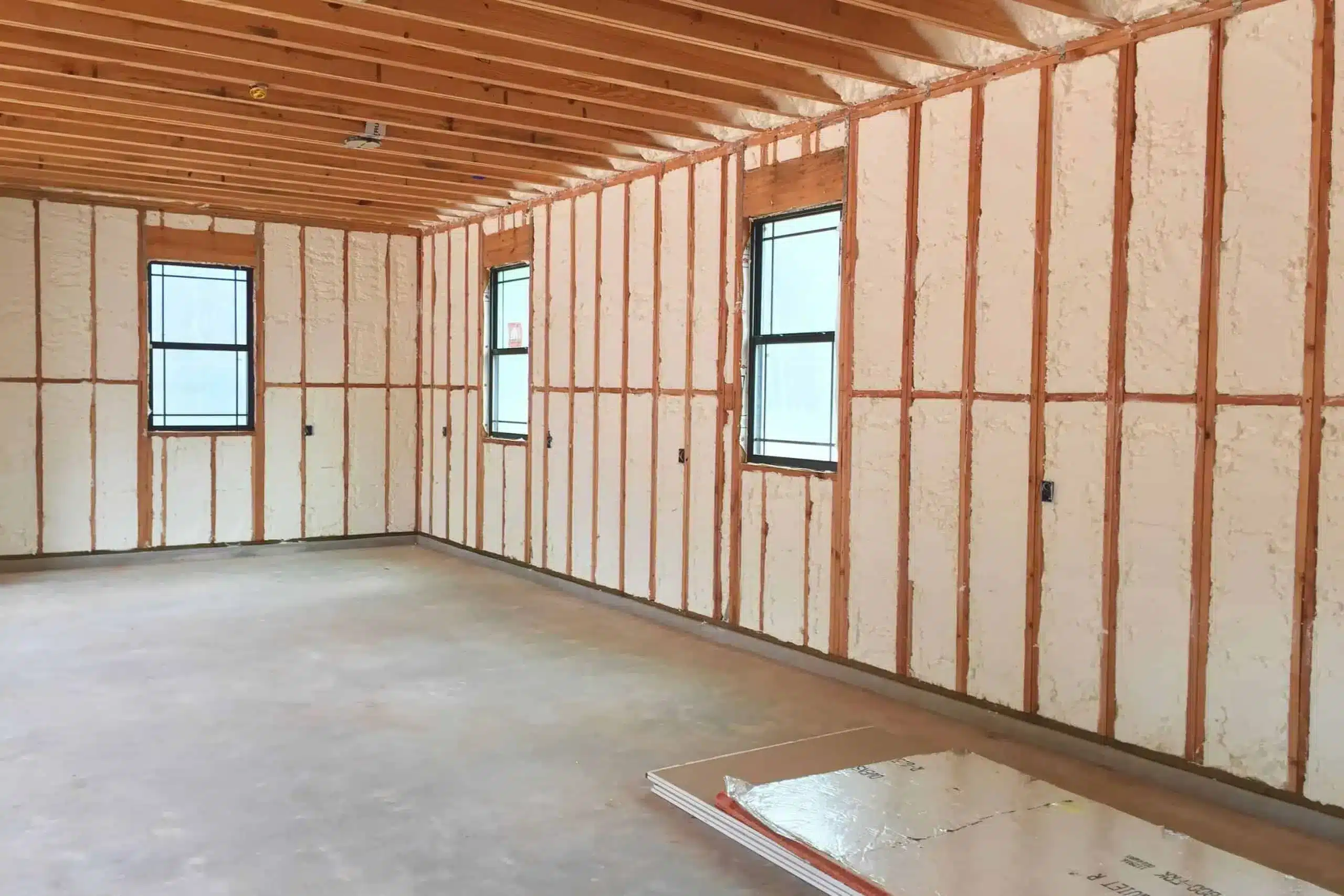
Residential spray foam insulation in Gulf Breeze, FL creates a more airtight home by expanding up to 30 to 60 times its liquid volume on application, filling the cracks, gaps, and penetrations that batt insulation and caulk routinely miss. As it cures, it adheres to framing, sheathing, and joints, delivering insulation and a continuous air barrier in a single step. residential spray foam insulation guide can help explain why that approach matters here, where homes sit on low-lying land between Pensacola Bay and Santa Rosa Sound, summer highs average near 90°F, and roughly 63 inches of rainfall each year. Leaky envelopes pull hot, humid air into attics and walls, forcing air conditioners to run longer and inviting moisture trouble. The right mix depends on the home: closed-cell foam suits coastal, moisture-exposed assemblies, open-cell works well for attic decks and sound control, and hybrid approaches pair foam with targeted sealing.
TL;DR
- Spray foam is the only common insulation that insulates and air seals at the same time, expanding to fill voids that batts leave open.
- EPA estimates homeowners save an average of 15% on heating and cooling costs (11% on total energy costs) by air sealing and adding insulation.
- DOE research attributes about 40% of a home’s energy loss to air infiltration through walls, windows, and doorways, which is why sealing beats adding thickness alone.
- Closed-cell foam delivers roughly R-5.1 to R-6 per inch and acts as an air and vapor barrier at about two inches of thickness; open-cell runs near R-3.8 per inch and becomes an air barrier at 5.5 inches or more.
- DOE identifies 19 key air leak locations in a typical home, with the attic plane and rim joists usually the biggest offenders in Florida homes.
- In Gulf Breeze’s coastal climate, airtightness also means moisture control, since the EPA notes mold growth requires a wet surface.
- Airtightness must be paired with planned ventilation, and a blower door test is the accepted way to verify results.
Why Airtightness Matters in Gulf Breeze’s Coastal Climate
Gulf Breeze occupies a narrow peninsula surrounded by water on three sides, with an average elevation of just 13 feet and July and August highs around 90°F, according to Wikipedia’s Gulf Breeze, Florida climate profile. That geography shapes how homes perform. Warm Gulf air holds substantial moisture, and every unsealed penetration in the envelope becomes a pathway for that humid air to reach cooler interior surfaces, where it condenses.
The consequences stack up quickly:
- Higher cooling bills, because infiltrating hot air forces longer AC run times through Florida’s long cooling season.
- Humidity problems, since outside air carries water vapor directly into the attic and wall cavities.
- Mold risk, because the EPA explains that mold grows when spores land on a wet spot, and mold control comes down to moisture control.
- Dust, pollen, and pests entering through the same gaps; a comfort issue ENERGY STAR links directly to leaky envelopes.
ENERGY STAR puts the scale of the problem plainly: add up all the leaks in a typical home, and it is the equivalent of leaving a window open every day of the year. It also reports that 9 out of 10 U.S. homes are under-insulated, so home spray foam solutions can address both problems at once for many Gulf Breeze homes.
How Spray Foam Physically Creates an Airtight Envelope
Air sealing works differently from insulation, and the DOE’s Consumer Guide to Air Sealing uses a useful comparison: insulation is a sweater, air sealing is a windbreaker. A sweater traps heat but does nothing when wind blows through it. Fiberglass and cellulose behave the same way, slowing heat flow but letting air pass through if gaps exist.
Spray polyurethane foam does both jobs. Read our customer reviews to see what homeowners say about their insulation experience. Two liquid components mix at the spray gun, react, and expand into a foam that fills cavities, wraps around wiring and plumbing, and bonds to irregular surfaces. Per Wikipedia’s spray foam overview, this expansion produces a high insulating value with virtually no air infiltration, and foam’s most important attribute is its ability to air seal, blocking convective heat transfer between interior and exterior. Closed-cell foam at adequate thickness also contributes to structural rigidity and resists moisture, which is valuable in flood-adjacent coastal assemblies.
Open-Cell vs. Closed-Cell for Gulf Breeze Homes
| Attribute | Open-Cell (ocSPF) | Closed-Cell (ccSPF) |
|---|---|---|
| Approximate R-value | About R-3.8 per inch | About R-5.1 to R-6 per inch |
| Air barrier performance | At 5.5 inches or more | Yes, at roughly 2 inches |
| Vapor performance | Vapor-permeable | Functions as a vapor barrier at min thickness |
| Texture | Soft, sponge-like | Rigid and dense |
| Best use | Attic decks, interior sound control | Coastal walls, rooflines, rim joists, crawl spaces |
Our team matches the foam to the assembly. Attic roofline applications often use open-cell applied to the required depth, while walls and rim joists near the water favor closed-cell for its density and moisture resistance.
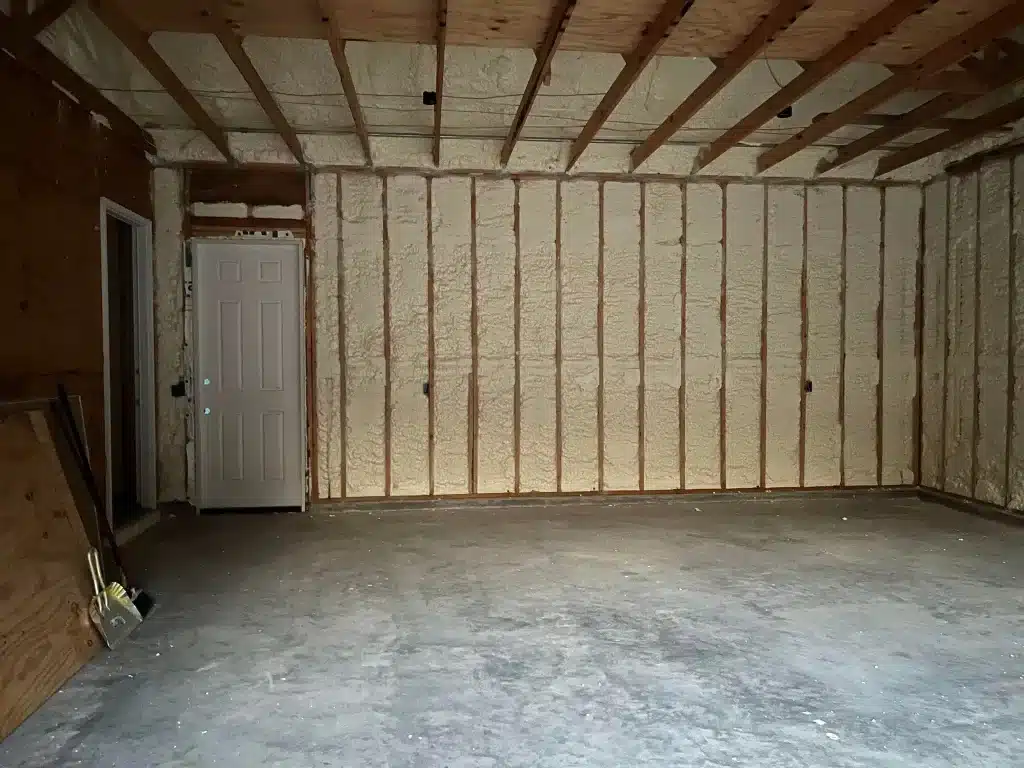
Where Air Leaks Happen and How Foam Stops Them
The DOE guide maps 19 key leak areas across a typical house. The most damaging in Gulf Breeze homes include:
- Attic penetrations: wiring holes, recessed lights, and the chase for the attic ladder, all sitting under a roof deck that can exceed the outdoor temperature.
- Rim joists and sill plates: where the frame meets the foundation, a classic open-cell and closed-cell target.
- Wall penetrations: hose bibs, vents, and electrical runs, plus joints where brick or siding meets framing.
- Duct chases and ceiling registers: leaks here pull attic air straight into the supply air you paid to cool.
Because foam is applied as a liquid and expands in place, it seals these irregular, hard-to-reach gaps in one pass instead of one caulk bead at a time.
Spray Foam vs. Traditional Insulation for Airtightness
| Factor | Spray Foam | Fiberglass Batts | Blown Cellulose |
|---|---|---|---|
| Air sealing | Insulates and seals together | Minimal; needs separate sealing | Minimal; settles over time |
| Coverage of gaps and voids | Expands to fill them | Gaps around wiring and piping | Settles, leaves low spots |
| Moisture handling | Closed-cell resists water absorption | Can hold moisture, loses R-value | Absorbs and holds water |
| R-value per inch | R-3.8 to R-6+ | About R-3 to R-4 | About R-3.5 |
| Verification | Blower door before/after | Rarely tested | Rarely tested |
A one-line way to think about it: batts slow heat, foam stops the air that carries the heat.
Recommendations by Homeowner Situation
- Existing Gulf Breeze homes with attics: An unvented, foam-sealed roofline assembly usually delivers the biggest airtightness gain, because it brings ducts inside the conditioned space and removes the hottest attic air from your cooling system’s path.
- Coastal and flood-prone properties near the Sound: Closed-cell foam in walls, rim joists, and crawlspace assemblies pairs airtightness with moisture resistance, a priority the EPA’s mold guidance makes clear for damp climates.
- New construction and additions: Foaming during framing, before drywall, gives the crew full access to every cavity and makes blower-door targets easy to hit.
- Allergy and comfort concerns: Sealing the envelope reduces pollen, dust, and outside noise, benefits ENERGY STAR credits to a tight envelope, and closed-cell adds useful rigidity to older wall assemblies.
- Budget-focused planning: Since air sealing is among the most cost-effective efficiency upgrades per the DOE, many homeowners phase the work, starting with the attic plane and rim joists where leakage concentrates.
Signs You’ve Chosen the Right Airtightness Approach
- The installer proposes a blower door test or infrared imaging to find leaks first and verify results after, the method the DOE describes for certified assessors.
- Ventilation is discussed as part of the plan, not skipped. The DOE warns that tight homes still need planned fresh air and combustion safety, so a crew that raises this is protecting your indoor air quality.
- Open-cell versus closed-cell is explained in terms of your specific assembly and Gulf Breeze’s humid coastal exposure, not a one-size-fits-all pitch.
- Thickness, coverage, and cure times are stated up front, and the crew protects the home and observes proper re-entry intervals during application.
- You get a written scope showing where foam goes, where it does not, and how the finished assembly meets Florida code.
Make Your Gulf Breeze Home Airtight With Our Team
Prestige Insulation Solutions LLC installs residential spray foam insulation across Gulf Breeze, FL, and the surrounding coastal communities, and our crew treats airtightness as the goal, not a side effect. We match open-cell and closed-cell foam to each assembly, seal the 19 leak areas the DOE identifies, and build ventilation into every plan. Call us at (850) 429-4969 or email [email protected] to get started.
A tight, dry, comfortable home starts with one conversation about your envelope.
FAQs
How long does a spray foam installation take in a typical Gulf Breeze home?
Most single-family attic or roofline projects are completed in one to two days, depending on square footage and access. Larger or multi-assembly projects may run longer.
Will my home be too tight to breathe after spray foam is installed?
No, as long as ventilation is planned as part of the project, which is exactly how the DOE recommends approaching air sealing. We account for fresh air needs so humidity and indoor air quality stay healthy.
Which is better for a coastal home, open-cell or closed-cell spray foam?
Closed-cell suits moisture-exposed assemblies like walls, rim joists, and crawl spaces because it resists water and acts as a vapor barrier at about two inches. Open-cell performs well on attic rooflines and interior sound control when applied to full depth.
Can spray foam help with humidity and mold concerns?
Yes, indirectly and significantly, because it blocks the humid outside air that condenses on cool surfaces inside the home. The EPA stresses that mold needs moisture to grow, so controlling air-driven moisture is the control strategy.
How do we verify the home is actually more airtight afterward?
A blower door test measures air changes per hour before and after the work, giving you a number instead of a promise. Our team pairs that measurement with infrared imaging to confirm the envelope performed.
Sources
- ENERGY STAR – Why Seal and Insulate? – EPA program data on the 15% average heating and cooling savings from air sealing and insulation, plus comfort and humidity benefits of a tight envelope.
- U.S. Department of Energy – Consumer Guide to Air Sealing the Home – DOE guidance on the 19 key air leak locations, the insulation-as-sweater analogy, blower door testing, and ventilation pairing.
- U.S. Environmental Protection Agency – Mold and Health – EPA explanation of why moisture control is the key to mold control, relevant to humid coastal climates.
- Wikipedia – Gulf Breeze, Florida – Local geography and climate data, including coastal setting, elevation, summer temperatures, and annual rainfall for Gulf Breeze, FL.

- What Types of Insulation Can Be Professionally Removed From Your Home Safely and Efficiently in Pensacola, FL? - October 16, 2026
- What Should You Know Before Hiring Professional Insulation Removal Services in Pensacola, FL? - October 13, 2026
- Everything You Need to Know About Professional Insulation Removal - October 7, 2026