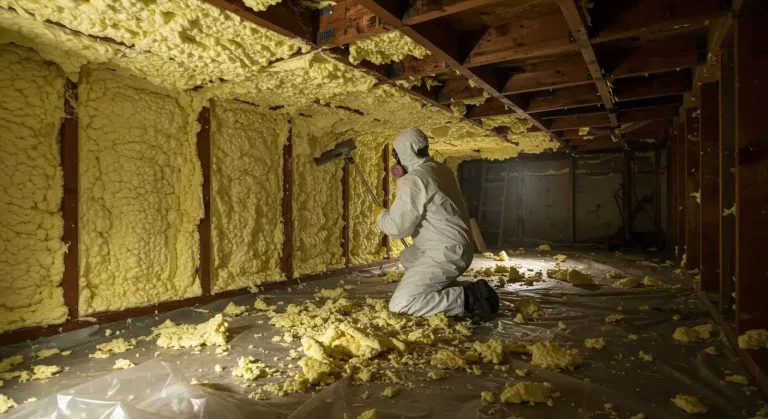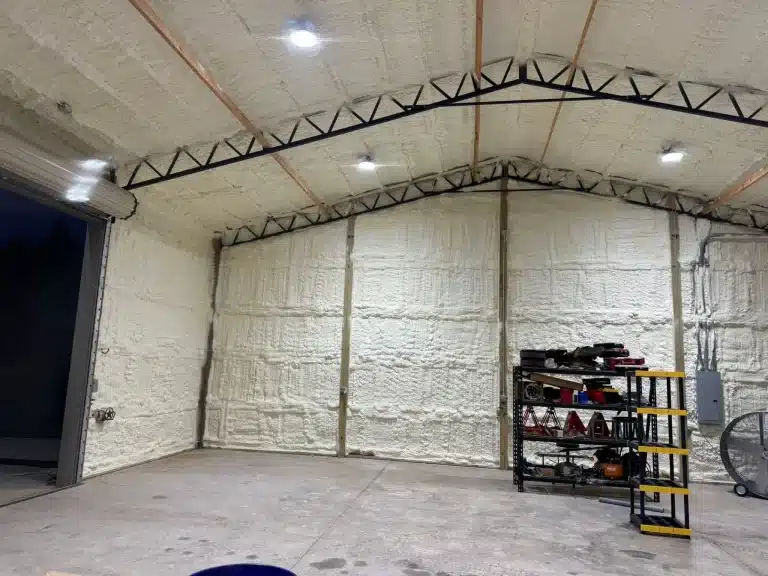
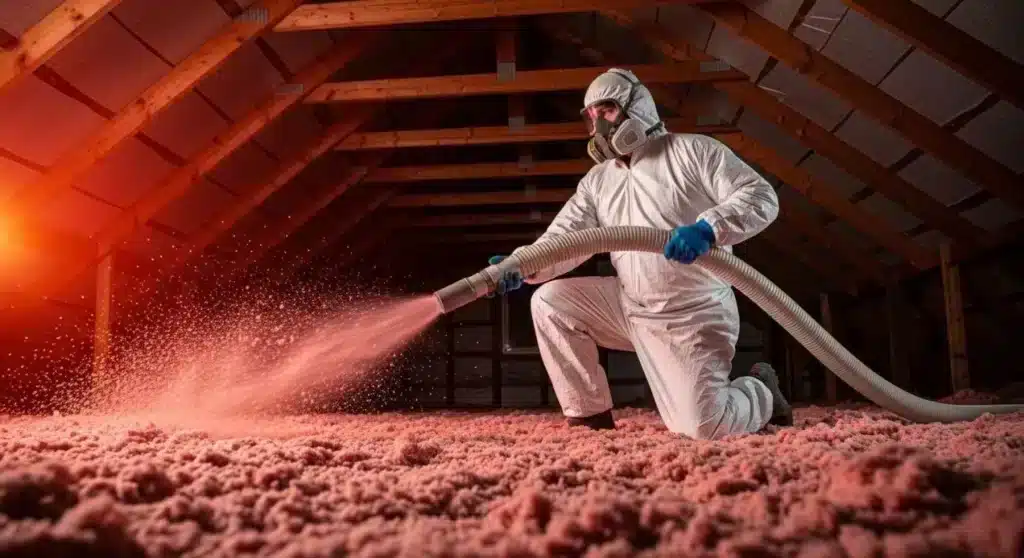
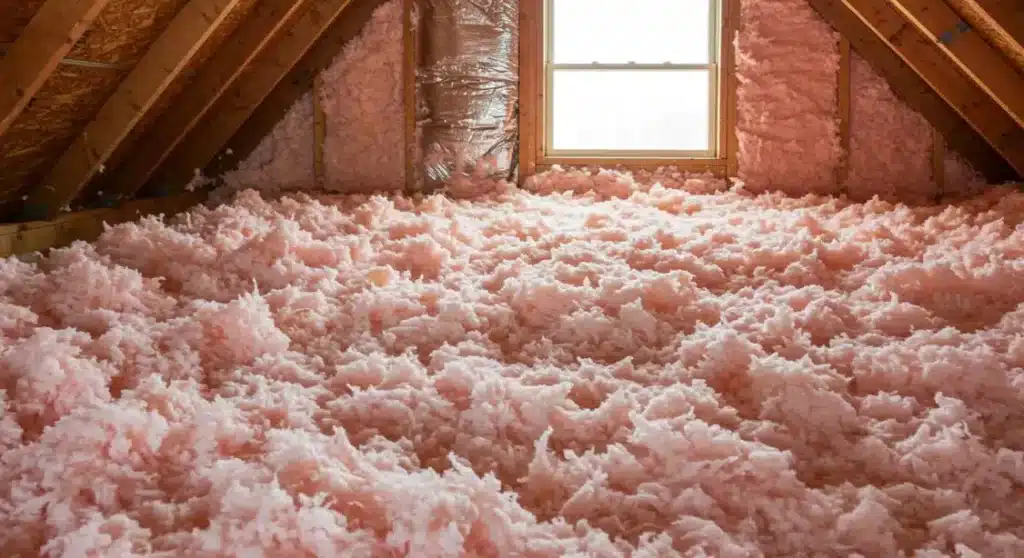
Blown-in insulation is a loose-fill material, typically made from cellulose, fiberglass, or mineral wool, that gets pneumatically installed into attics, wall cavities, and hard-to-reach spaces throughout your home. The material composition you choose directly affects thermal performance, moisture resistance, fire safety, and how long the insulation holds up in Crestview’s hot, humid climate. Understanding what goes into each type helps you make a smarter decision about comfort, energy savings, and long-term durability.
TL;DR
- Blown-in insulation is most commonly made from cellulose, fiberglass, or mineral wool, each with distinct properties suited to different home needs.
- Cellulose is made from 82% to 85% recycled paper, treated with borates for fire and insect resistance, making it one of the most eco-friendly options available.
- Fiberglass is produced from molten glass and contains 40% to 60% recycled glass content, offering consistent thermal performance and moisture resistance.
- Mineral wool is manufactured from basalt or slag and averages 75% post-industrial recycled content, providing excellent fire resistance without added chemicals.
- The EPA estimates homeowners can save an average of 15% on heating and cooling costs by adding insulation and air sealing to attics and floors over crawl spaces.
- Crestview, FL sits in Climate Zone 2, where attic insulation recommendations range from R-49 to R-60 for optimal performance.
- Proper installation by trained professionals matters as much as material choice, since incorrect density or gaps reduce effectiveness significantly.
- Material choice matters in humid climates because moisture resistance, settling, and pest deterrence vary between cellulose, fiberglass, and mineral wool.
The Three Main Materials in Blown-In Insulation
Not all blown-in insulation is the same. The material inside the bag determines how the insulation performs, how it handles moisture, and how it protects your home over time. Here is a breakdown of each.
Cellulose: Recycled Paper, Treated for Protection
Cellulose insulation is manufactured from recycled paper products, primarily newsprint. According to the U.S. Department of Energy, cellulose has a very high recycled material content, generally 82% to 85%. The paper is shredded and fiberized into small pieces that pack tightly into building cavities. These characteristics make blown-in cellulose insulation a popular option for improving energy efficiency in existing homes.
During manufacturing, borate (sometimes blended with ammonium sulfate) is added to provide fire resistance and insect deterrence. Without this treatment, raw paper would be a fire hazard, but properly treated cellulose is classified as a fire-resistant material. It can be installed as loose-fill in open attics or dense-packed into wall cavities at a density of 1.5 to 3.5 pounds per cubic foot.
Cellulose offers a slightly higher R-value per inch than fiberglass in loose-fill form, which means it can deliver more thermal resistance for the same thickness. Its dense, packed structure also provides good sound-dampening properties. However, it can absorb moisture more readily than fiberglass or mineral wool, which is a factor to consider in Florida’s humid climate.
Fiberglass: Spun Glass Fibers
Fiberglass insulation is made by melting glass and spinning or blowing it into extremely fine fibers. Most fiberglass products contain 40% to 60% recycled glass content. In blown-in form, fiberglass is applied using a specialized blowing machine that distributes the fibers evenly across attic floors or into enclosed wall cavities. Many homeowners choose blown-in insulation for homes in Crestview, FL, to improve thermal performance and indoor comfort.
Fiberglass does not require additional chemical treatments for fire resistance because glass fibers are naturally noncombustible. It also resists moisture well and will not support mold growth. One trade-off is that fiberglass typically has a slightly lower R-value per inch compared to cellulose, so achieving the same total R-value may require a slightly greater installed thickness.
The Blow-In-Blanket System (BIBS) is a variation where fiberglass is blown behind netting in wall cavities. Tests have shown this method fills cavities significantly better than traditional batts because the loose fibers conform to irregular spaces and obstructions.
Mineral Wool: Basalt and Slag
Mineral wool insulation comes in two forms: rock wool, made from natural minerals like basalt or diabase, and slag wool, produced from blast furnace slag. Both are manufactured by melting the raw material and spinning it into fibers. Mineral wool contains an average of 75% post-industrial recycled content and, like fiberglass, does not require added chemicals to achieve fire resistance.
Mineral wool is naturally fire-resistant to extremely high temperatures, making it one of the safest insulation materials available. It also provides effective sound absorption and resists moisture better than cellulose. Its R-value per inch falls between cellulose and fiberglass, though it tends to maintain its thermal performance well over time with minimal settling.
Why Material Choice Matters in Crestview’s Climate
Crestview, Florida, is located in Climate Zone 2, which means hot summers, mild winters, and significant humidity for much of the year. According to ENERGY STAR’s methodology, homeowners in Climate Zone 2 can expect approximately 6% savings on total energy bills and 9% savings on heating and cooling costs from proper air sealing and insulation upgrades.
The DOE recommends attic insulation levels of R-49 to R-60 for Climate Zone 2. That is a substantial target, and the material you choose determines how thick the insulation layer needs to be, how it performs when exposed to heat cycling, and whether it holds up against humidity over time.
Material Comparison at a Glance
| Property | Cellulose | Fiberglass | Mineral Wool |
|---|---|---|---|
| Primary Source | Recycled newsprint | Molten glass | Basalt or blast furnace slag |
| Recycled Content | 82% to 85% | 40% to 60% | ~75% |
| Fire Treatment | Borate added | Naturally noncombustible | Naturally noncombustible |
| Moisture Resistance | Moderate (can absorb) | Good | Very good |
| Settling Over Time | Minimal at proper density | Minimal | Minimal |
| Sound Dampening | Excellent | Good | Very good |
| Pest Resistance | Borate treatment helps | Not a food source | Not a food source |
Safety Considerations During Installation
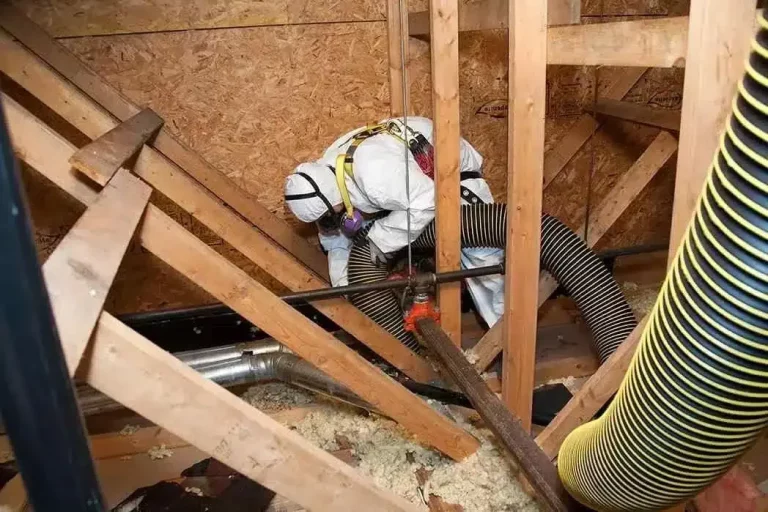
Any insulation project requires attention to safety. According to OSHA, workers installing blown-in materials face specific hazards depending on the material used. Fiberglass primarily causes skin, eye, and respiratory tract irritation during handling. Cellulose is classified as a respiratory irritant, and employers must provide appropriate dust respirators when exposures exceed permissible limits.
Our team follows all OSHA safety guidelines during every installation, including proper respiratory protection, protective clothing, eye protection, and ventilation procedures. This protects both our crew and your home during the insulation process, which is why many property owners rely on a spray foam expert in Crestview, FL, for professional installation.
Which Material Is Right for Your Home?
The right choice depends on several factors specific to your home and priorities.
For older homes with existing wall cavities, Cellulose dense-packing works well because it fills gaps and voids around framing, wiring, and plumbing that batts cannot reach.
For homes prone to moisture concerns, Fiberglass or mineral wool may be preferable since they resist moisture absorption and do not support mold growth.
For homeowners prioritizing fire safety, Mineral wool offers the highest natural fire resistance, followed closely by fiberglass.
For maximum recycled content, Cellulose leads with its 82% to 85% recycled paper content, making it an environmentally strong choice.
For homes with sound transmission issues: Both cellulose and mineral wool provide excellent acoustic dampening between rooms and from exterior noise.
Signs You Have Found the Right Insulation Contractor
Choosing the right installer matters as much as choosing the right material. Here are clear indicators that you are working with a qualified professional:
- They explain material options in terms of your specific home, climate zone, and existing conditions rather than pushing a single product.
- They reference R-value targets for your climate zone and show how their recommended depth and density achieve those levels.
- They discuss air sealing alongside insulation, since sealing air leaks before insulating is recommended by the DOE for maximum performance.
- They provide written documentation covering the scope of work, materials, R-values, and warranty terms.
- Their crew arrives with proper protective equipment and follows established safety protocols during the entire installation.
Ready to Upgrade Your Home’s Insulation?
Proper insulation starts with choosing the right material and having it installed by professionals who understand Crestview’s specific climate demands. At Prestige Insulation Solutions LLC, we evaluate your home’s current insulation, recommend the best blown-in material for your situation, and install it to meet or exceed the R-value targets for Climate Zone 2. Whether you need attic insulation topped off or wall cavities dense-packed, our team handles every project with precision and care.
Reach out to us at [email protected] or call (850) 429-4969 to get started. Let us help you stay comfortable and save on energy costs year-round.
Frequently Asked Questions
How does blown-in insulation compare to batt insulation?
Blown-in insulation conforms to irregular shapes and fills gaps around framing, wiring, and obstructions better than batts. This makes it particularly effective for retrofitting existing walls and attics where standard batt sizes do not fit well.
How long does blown-in insulation last in a humid climate?
When installed at proper density and protected from moisture intrusion, blown-in insulation can last 20 to 30 years or more. Fiberglass and mineral wool resist moisture particularly well in humid conditions.
Is blown-in insulation fire-resistant?
Yes. Cellulose is treated with borate fire retardants during manufacturing, while fiberglass and mineral wool are naturally noncombustible and do not require added chemical treatments for fire resistance.
Can blown-in insulation be installed in existing walls without removing drywall?
Yes. Installers drill small holes through the exterior siding or interior wall, insert a fill tube into the cavity, and blow the insulation in. The holes are then plugged and repaired, leaving your walls intact.
Will adding insulation in my attic actually lower my energy bills?
The EPA estimates that sealing air leaks and adding attic insulation can save homeowners an average of 15% on heating and cooling costs. Results vary based on your current insulation levels, climate zone, and how well air sealing is done before installation.
Sources
- Department of Energy – Insulation Materials – Comprehensive reference covering all insulation material types, including cellulose, fiberglass, mineral wool, their compositions, recycled content percentages, and installation methods.
- Department of Energy – Types of Insulation – Detailed overview of insulation forms, including loose-fill and blown-in, with information on where each type is applicable, installation methods, and advantages.
- Department of Energy – Insulation and R-Values – Guide to how insulation works, R-value definitions, climate zone recommendations, and the relationship between insulation thickness and thermal performance.
- ENERGY STAR – Methodology for Estimated Energy Savings – EPA’s energy modeling methodology showing estimated savings percentages by climate zone, with Climate Zone 2 savings data and baseline home assumptions.
- OSHA – Green Jobs: Weather Insulating/Sealing – Workplace safety guidance for insulation workers covering fiberglass and cellulose hazards, respiratory protection requirements, and proper handling procedures.

- What Should You Know Before Hiring Professional Insulation Removal Services in Pensacola, FL? - October 13, 2026
- Everything You Need to Know About Professional Insulation Removal - October 7, 2026
- Which Insulation Upgrades Deliver the Best Long-Term Value in Bagdad, FL? - September 14, 2026