Blown-in insulation can be an excellent choice for many Crestview, FL homeowners, but whether it is the right fit depends on your home’s age, where insulation is needed most, and your specific goals for comfort and energy savings. Crestview sits in IECC Climate Zone 2A, classified as hot and humid, which means the priority is blocking heat gain during long summer months while managing moisture. Blown-in insulation, available in fiberglass and cellulose forms, is particularly well-suited for attics and existing wall cavities, making it a go-to solution for retrofitting older homes without tearing down drywall. The two main types serve different purposes: cellulose offers a slightly higher R-value per inch and better air sealing, while fiberglass is lighter and resistant to moisture. Understanding how each performs in Crestview’s climate will help you make the right decision for your home. A blown-in insulation guide can help compare these options and determine the best fit for your property.
TL;DR
- Crestview, FL, falls within IECC Climate Zone 2A, requiring a minimum of R-38 for attic insulation and R-13 for wood-framed walls per the Florida Building Code.
- Blown-in cellulose delivers R-3.0 to R-3.7 per inch, while blown-in fiberglass ranges from R-2.2 to R-4.0 per inch, according to the University of Florida’s Florida Solar Energy Center.
- Attics are the highest-priority area for insulation in Florida homes, as more heat per square foot travels through the ceiling.
- Blown-in insulation can be installed in existing wall cavities through a drill-and-fill method without removing drywall, Department of Energy’s Building America Solution Center.
- The U.S. Department of Energy recommends dense-packing blown insulation in walls to the manufacturer-recommended density for proper performance.
- My Florida Home Energy notes that adding wall insulation to existing Florida homes is rarely cost-effective unless the home is completely uninsulated, making attic upgrades the higher-return priority.
- Infrared cameras are the recommended tool for verifying that blown-in insulation has filled wall cavities without voids or gaps.
- Florida’s hot-humid climate demands proper moisture management alongside insulation, making air sealing and vapor control a necessary companion to any blown-in insulation project.
How Blown-In Insulation Works in Crestview’s Climate
Blown-in insulation, also called loose-fill insulation, consists of small particles of fiberglass, cellulose, or mineral wool that are pneumatically blown into wall cavities, attics, or hard-to-reach spaces using a specialized machine. The material conforms to the shape of the space, filling around obstacles like wiring, plumbing runs, and framing members that would leave gaps with traditional batt insulation.
In Crestview’s Climate Zone 2A, the primary challenge is keeping outdoor heat and humidity from penetrating the conditioned living space. The University of Florida’s My Florida Home Energy program explains that insulation rated by R-value measures resistance to heat flow, and higher R-values mean less heat enters your home during warm months and less escapes during cooler periods. Blown-in insulation works by creating a thick thermal barrier that slows conductive heat transfer through your ceiling and walls. Understanding what blown-in insulation is can help homeowners make informed decisions about improving energy efficiency.
The dense, conforming nature of blown-in material also reduces convective air movement within cavities, which is especially relevant in attic spaces where hot air naturally rises and presses against ceiling surfaces. For Crestview homeowners, this means your air conditioning system does not have to work as hard to maintain comfortable indoor temperatures.
Understanding Crestview’s Code Requirements
Before choosing any insulation material, it helps to understand what the Florida Building Code actually requires. According to the IECC Compliance Guide for Homes in Florida, Okaloosa County, where Crestview is located, falls within Climate Zone 2. The minimum prescriptive requirements under the IECC for this zone include:
| Building Component | Minimum R-Value Requirement (Zone 2) |
|---|---|
| Ceiling / Attic (wood frame) | R-38 |
| Wood Frame Wall (cavity + sheathing) | R-13 |
| Mass Wall | R-4/6 |
| Floor over unconditioned space | R-13 |
| Skylight U-Factor | 0.65 |
| Window U-Factor | 0.40 |
| Glazed Fenestration SHGC | 0.25 |
These are the legal minimums. Most building science professionals recommend exceeding these values for meaningful energy savings, particularly in attic spaces where achieving R-49 or higher is common practice.
Blown-In Insulation Types Compared
The two most common blown-in materials have distinct characteristics that affect their suitability for Crestview homes.
| Feature | Blown-In Cellulose | Blown-In Fiberglass |
|---|---|---|
| R-Value per Inch | 3.0 to 3.7 | 2.2 to 4.0 |
| Material | Recycled newsprint treated with fire retardant | Spun glass fibers |
| Weight | Heavier (2 to 3 lbs per cubic ft when dense-packed) | Lighter |
| Moisture Resistance | Absorbs moisture, can dry if ventilated | Naturally moisture resistant |
| Air Sealing | Excellent when dense-packed, fills gaps tightly | Moderate, less dense than cellulose |
| Fire Resistance | Treated with borate fire retardant | Naturally non-combustible |
| Settling | Minimal settling when properly dense-packed | Very little settling over time |
| Sound Dampening | Strong acoustic performance | Moderate acoustic performance |
| Best Application | Attics and existing wall cavities (drill-and-fill) | Attics and open cavities |
The R-value data above comes from the University of Florida’s Florida Solar Energy Center. Both materials can achieve the R-38 attic requirement when installed at sufficient depth. Cellulose typically requires roughly 10 to 12 inches to reach R-38, while fiberglass needs about 11 to 14 inches, depending on the specific product.
Where Blown-In Insulation Makes the Biggest Impact
Attics: The Top Priority
The My Florida Home Energy program explicitly states that more heat per square foot travels through your ceiling than any other part of a house. They also identify attic insulation as the easiest and most cost-effective way to insulate your home. For Crestview homeowners, attic insulation upgrades should almost always be the first step before considering wall insulation.
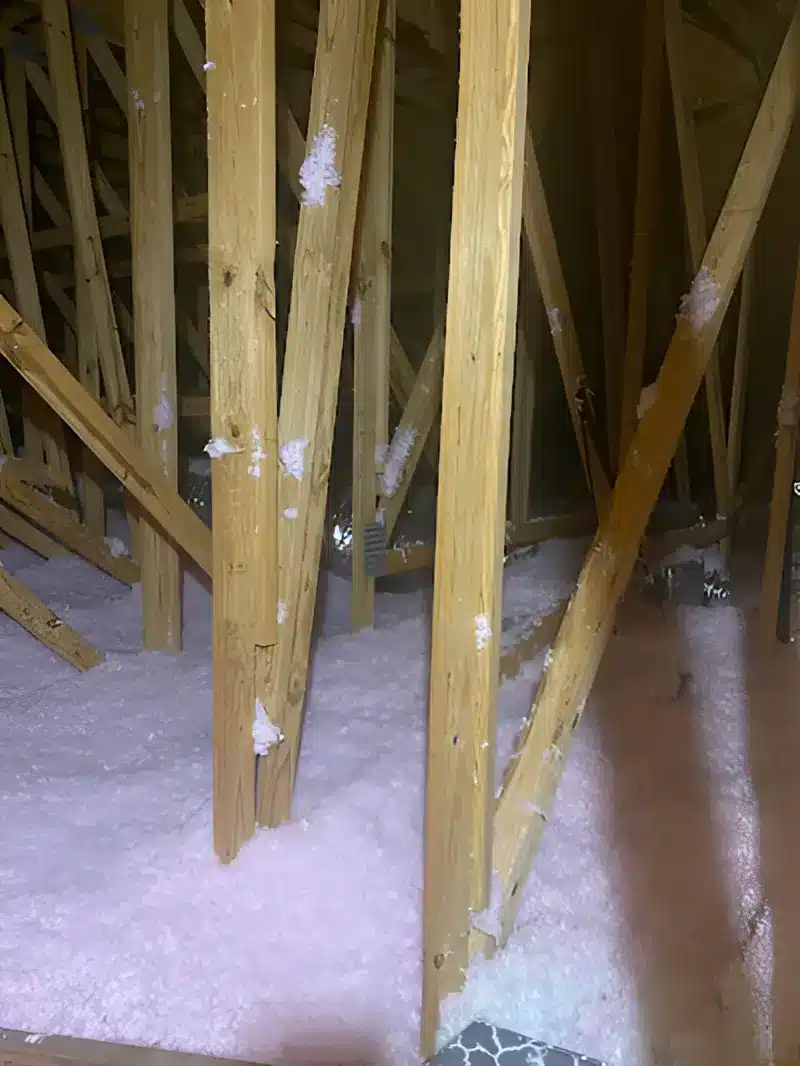
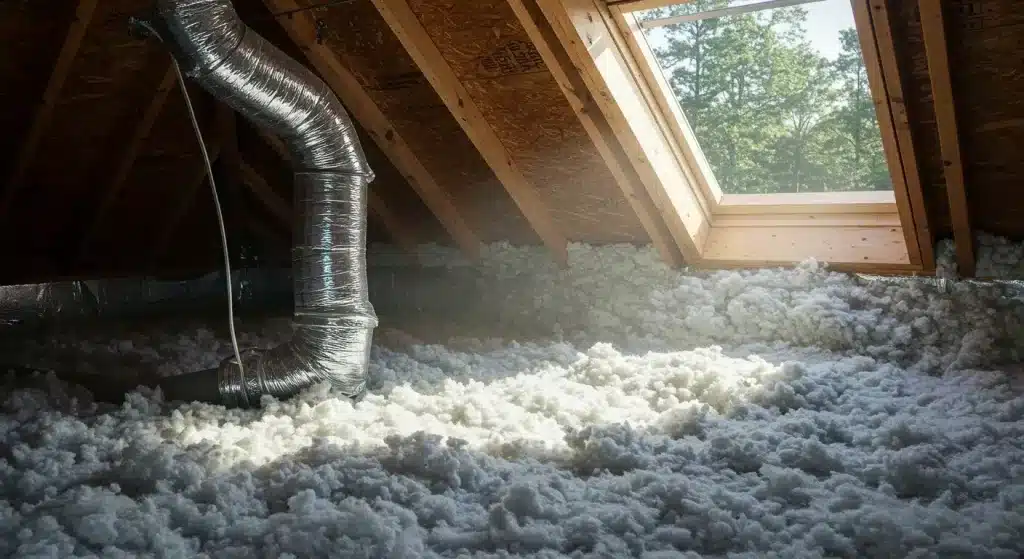
Blown-in material is ideal for attics because it blankets the floor joists and fills irregular shapes, valleys, and slopes that would be difficult to cover with batts. It spreads evenly over the entire attic floor, creating a continuous thermal barrier. Homeowners comparing insulation options often consult a spray foam expert in Crestview, FL, to determine which solution best fits their attic and energy-efficiency goals.
Existing Walls: The Drill-and-Fill Method
For older Crestview homes with little or no wall insulation, blown-in insulation can be added through a process the DOE’s Building America Solution Center describes as “drill and fill.” Small holes are drilled into the wall (from the interior or exterior), insulation is blown into each stud cavity, and the holes are patched. The DOE recommends dense-packing the material to the manufacturer’s recommended density, then verifying coverage with infrared imaging to ensure no voids remain behind blocking, headers, or other obstacles.
However, the University of Florida notes that in most areas of Florida, it is rarely cost-effective to add wall insulation to an existing home unless the walls are completely uninsulated. If your attic already has adequate insulation and your home still feels uncomfortable, they recommend checking ductwork and HVAC equipment first before investing in wall insulation.
What Crestview Homeowners Should Consider
Newer Homes vs. Older Homes
Newer construction in Crestview likely already meets or exceeds code requirements, though upgrading from minimum code to above-code levels in the attic can still provide noticeable comfort improvements. Older homes, especially those built before modern energy codes, may have thin or degraded insulation, or none at all. Blown-in insulation is particularly advantageous for these older properties because it can be added with minimal disruption.
Moisture and Humidity Management
Crestview’s humid climate means moisture management must be part of any insulation strategy. Cellulose, while offering superior air sealing, can absorb moisture and must be allowed to dry. Fiberglass is naturally moisture-resistant but provides less air sealing. In both cases, proper ventilation in attic spaces and attention to the drainage plane in wall assemblies are essential for long-term durability and performance.
Air Sealing Goes Hand in Hand
The University of Florida’s insulation guide emphasizes that an improperly installed thermal envelope can reduce overall performance by 30 percent or more. Blown-in insulation alone does not create an airtight seal at edges, around penetrations, or at transitions between building assemblies. Air sealing around recessed lights, top plates, ductwork, and other penetrations should always accompany insulation installation for maximum effectiveness.
Signs You’ve Found the Right Insulation Contractor
Choosing the right installation team matters as much as choosing the right material. Look for installers who conduct a thorough assessment of your existing insulation levels before recommending a solution, not just a quick visual check. The best contractors will explain why they recommend a specific material for your particular home and climate, rather than pushing a one-size-fits-all approach. They should also discuss air sealing and moisture control alongside insulation, since these elements work together. Transparent pricing, clear timelines, and a willingness to show you the R-value targets they plan to achieve are all good indicators of a reliable installer. A solid warranty covering both materials and workmanship is also a mark of a contractor who stands behind their work.
Get a Professional Insulation Assessment for Your Crestview Home
Prestige Insulation Solutions LLC has the experience and local knowledge to help Crestview homeowners determine whether blown-in insulation is the right solution for their specific needs. Our team evaluates your home’s current insulation levels, identifies air sealing opportunities, and recommends the best approach based on your home’s construction, age, and your comfort goals. Reach out to us at [email protected] or call (850) 429-4969 to get started.
Frequently Asked Questions
How much blown-in insulation do I need in my Crestview attic?
The Florida Building Code requires a minimum R-38 for attic insulation in Climate Zone 2A, which covers Crestview and Okaloosa County. Achieving this typically requires 10 to 14 inches of blown-in material, depending on the type used.
Can blown-in insulation be added to my walls without tearing out drywall?
Yes. The drill-and-fill method allows insulation to be blown through small holes drilled in your walls, either from the interior or exterior side. The holes are then patched, leaving your walls intact.
Does blown-in insulation help with Florida’s humidity?
Blown-in insulation reduces heat transfer but does not directly control humidity. It should be paired with proper air sealing and ventilation to manage moisture effectively in Crestview’s hot-humid climate.
How long does blown-in insulation last?
When properly installed, both cellulose and fiberglass blown-in insulation can last the lifetime of your home without significant degradation, as long as it remains dry and undisturbed.
Is blown-in cellulose or fiberglass better for my attic?
Both can achieve the R-38 requirement. Cellulose offers better air sealing and sound dampening, while fiberglass is lighter and more moisture resistant. The best choice depends on your specific attic conditions and priorities.
Sources
- My Florida Home Energy – Insulation (University of Florida / Florida Solar Energy Center) – Comprehensive guide on insulation types, R-values, installation methods, and Florida-specific recommendations, including Climate Zone requirements and moisture management.
- DOE Building America Solution Center – Blown Insulation for Cavities of Existing Exterior Walls – Detailed technical guide covering drill-and-fill installation methods, dense-packing requirements, infrared verification, and climate zone considerations for retrofitting wall insulation.
- U.S. Department of Energy – Guides and Case Studies for Hot-Humid Climates – DOE Building America program resources documenting best practices and case studies for energy-efficient construction and retrofitting in hot-humid climate zones, including the Florida panhandle.
- Rmax – Florida Building Code Insulation Requirements – Breakdown of Florida’s Climate Zone 1A and 2A classifications, IECC minimum R-value requirements for residential and commercial buildings, and Florida Energy Conservation Code references.
- Alliance to Save Energy – IECC Compliance Guide for Homes in Florida – County-by-county climate zone map for Florida with prescriptive IECC insulation, window, and air sealing requirements for Climate Zones 1 and 2.

- What Should You Know Before Hiring Professional Insulation Removal Services in Pensacola, FL? - October 13, 2026
- Everything You Need to Know About Professional Insulation Removal - October 7, 2026
- Which Insulation Upgrades Deliver the Best Long-Term Value in Bagdad, FL? - September 14, 2026