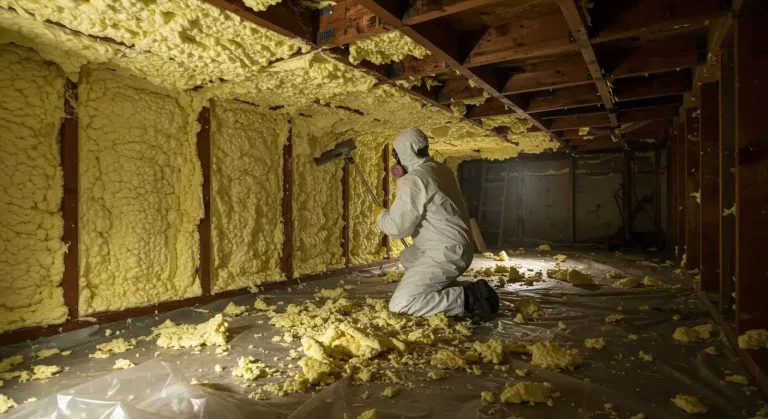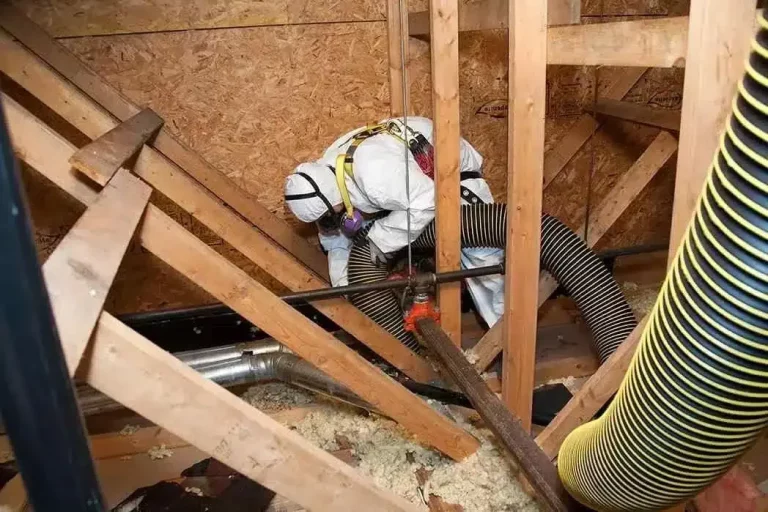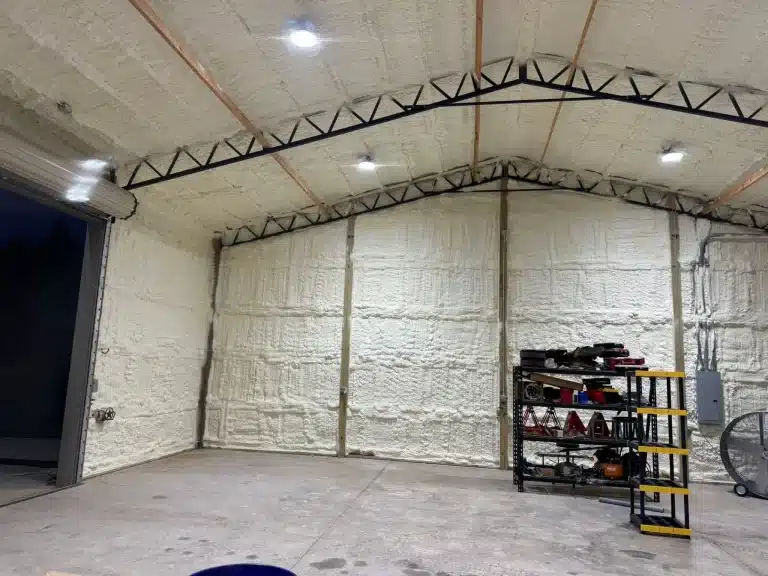
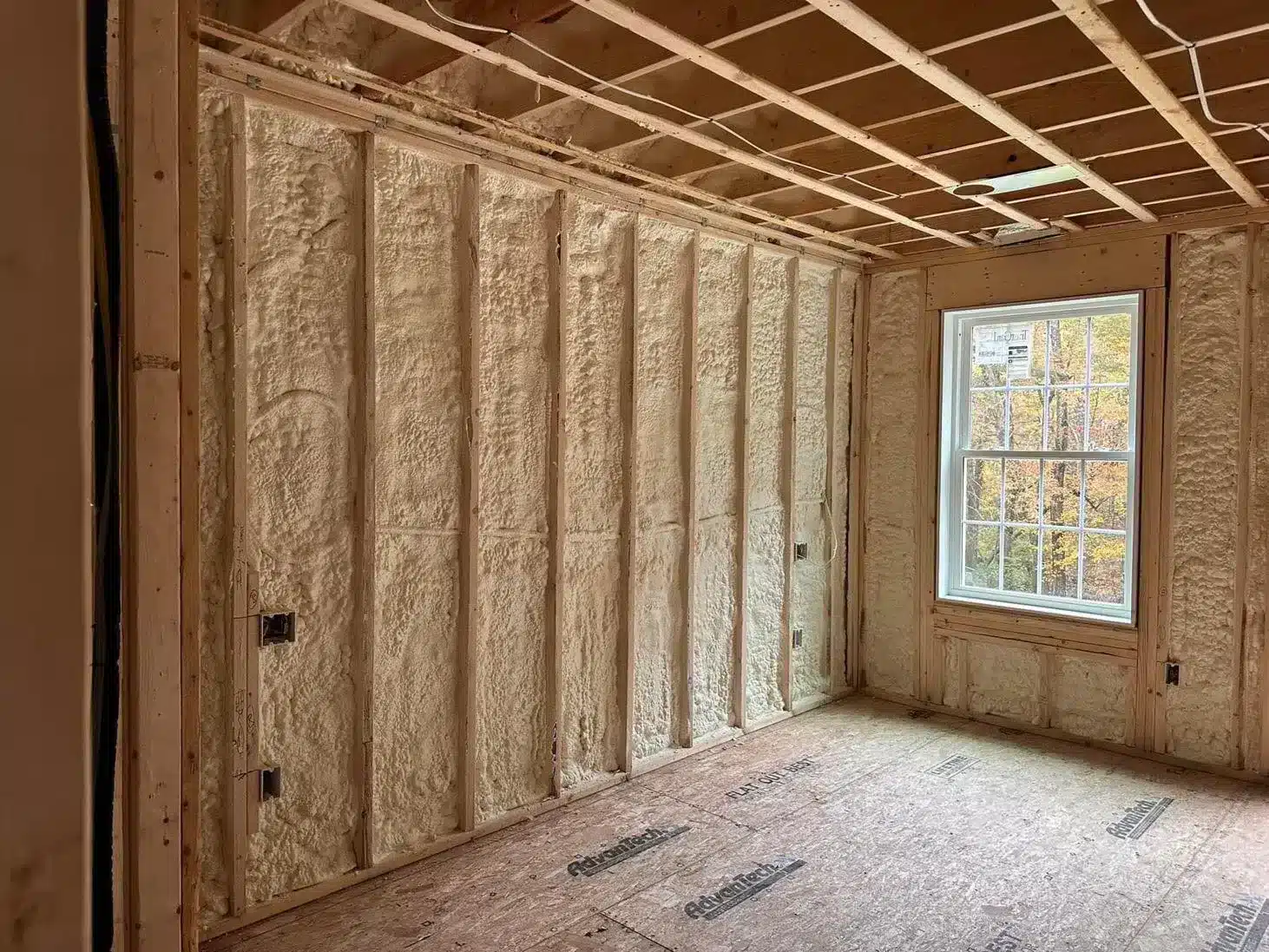
Spray foam insulation stands apart from every other insulation option because it simultaneously seals air leaks, resists moisture, and delivers high thermal resistance in a single application. For homeowners in Pensacola, Florida, where hot-humid summers and unpredictable storms create relentless challenges for the building envelope, that combination matters more than most people realize. The U.S. Department of Energy identifies heating and cooling as accounting for 50 to 70% of energy use in the average American home, with inadequate insulation and air leakage being the leading causes of energy waste. Spray foam addresses both problems at once by expanding into every gap and crack to form a continuous barrier. When you pair that performance with a lifespan that often exceeds the life of the building itself, you begin to understand why so many Pensacola homeowners treat spray foam as a permanent upgrade rather than a recurring maintenance item. A comprehensive spray foam insulation guide can help homeowners understand the long-term benefits and applications of this insulation system.
TL;DR
- Spray foam delivers an aged R-value of approximately R-6.0 per inch (closed-cell) or R-3.6 per inch (open-cell), according to the DOE, meaning it outperforms fiberglass and cellulose per inch of thickness.
- Pensacola sits in IECC Climate Zone 2, which requires a minimum of R-38 for attics and R-13 for wood-frame walls under the Florida Building Code.
- Closed-cell spray foam acts as both an air barrier and a vapor retarder, making it the recommended choice for hot-humid climates like the Florida Gulf Coast.
- The expanding application process fills gaps, cracks, and voids that batt insulation cannot reach, eliminating drafts and uncontrolled air infiltration.
- Studies at the University of Florida have documented that closed-cell foam improves racking strength of roof decking in hurricane-prone areas, an important benefit for Pensacola homeowners.
- ENERGY STAR estimates homeowners can save an average of 15% on heating and cooling costs through proper air sealing and insulation.
- Spray foam retains its R-value over decades without settling, sagging, or degrading, unlike loose-fill and batt alternatives.
How Pensacola’s Climate Demands More From Insulation
Pensacola falls squarely within IECC Climate Zone 2, a hot-humid region where heat flows inward for most of the year, pushing your air conditioning system harder than almost any other component in the house. The My Florida Home Energy program, run by the University of Florida’s Program for Resource Efficient Communities, notes that more heat per square foot travels through your ceiling than any other structural surface in a home. That makes attic insulation your single most important thermal investment.
Under the 2015 IECC requirements adopted by Florida, Zone 2 homes must meet a minimum ceiling insulation level of R-38 and wood-frame wall insulation of R-13. Standard fiberglass batts and blown cellulose can meet those minimums on paper, but their real-world performance often falls short because they leave gaps around studs, pipes, wiring, and irregular framing cavities. Spray foam eliminates that shortfall by adhering to every surface and expanding to fill voids on contact.
Air Sealing: Where Spray Foam Separates From Every Other Option
R-value tells only part of the story. The DOE Insulation Fact Sheet explicitly states that insulation placed between studs and joists does not stop air movement through cracks between building parts. Air leaks around electrical outlets, plumbing penetrations, framing joints, and window openings can account for a substantial portion of energy loss, even in homes with code-compliant insulation levels.
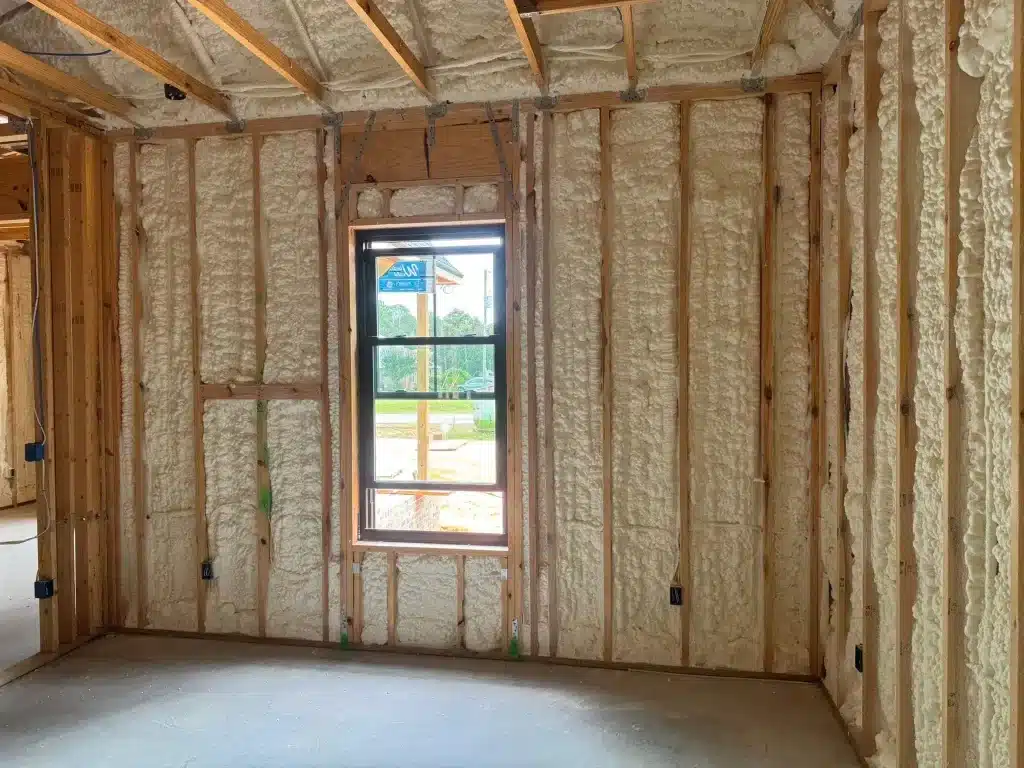
Spray foam addresses this problem because the liquid-to-expanding-foam application seals and insulates simultaneously. As the material expands up to 150 times its original volume (open-cell) or 35 to 50 times (closed-cell), it fills the exact gaps and penetrations that traditional insulation materials leave untouched. The DOE notes that air sealing is important not only for comfort but because air leaks carry both moisture and energy in the direction you do not want it, making spray foam’s dual capability especially valuable in humid climates. This is why air sealing works best with spray foam in areas where energy efficiency and moisture control are priorities.
Open-Cell vs. Closed-Cell: Choosing the Right Type for Your Home
Understanding the two types of spray polyurethane foam is essential before investing. Each has distinct properties that make it better suited for specific applications within your home.
| Property | Open-Cell SPF | Closed-Cell SPF |
|---|---|---|
| R-Value per Inch | R-3.6 | R-6.0 to R-6.8 |
| Density | ~0.5 lb/cu ft | ~2.0 lb/cu ft |
| Vapor Permeance | High (moisture passes through) | Low (acts as a vapor retarder) |
| Expansion Ratio | Up to 150x | 35 to 50x |
| Structural Strength | Low | High (adds wall rigidity) |
| Best Applications | Interior walls, attics, sound control | Exterior walls, crawlspaces, foundations, and hurricane zones |
According to the DOE Building America Spray Foam Guide, closed-cell foam is the preferred choice for hot-humid climates like Pensacola’s because it provides effective air sealing and moisture-vapor control at the exterior of the wall assembly. The guide specifically notes that in hot-humid climates, closed-cell SPF can provide a redundant moisture control layer that keeps water out of the cavity even in the event of a leak or drainage plane failure, a real concern during Pensacola’s heavy storm seasons.
Hurricane Resistance and Structural Benefits
Pensacola homeowners understand the threat of severe weather better than most. Studies referenced in the DOE Building America guide have documented that closed-cell spray foam improves the racking strength of frame walls and can function as a structural adhesive, bonding roof decking to trusses in hurricane-prone areas. While no insulation product replaces proper construction techniques, the added rigidity and adhesive properties of closed-cell foam provide an additional layer of structural integrity that fiberglass, cellulose, and other traditional materials simply cannot offer. Property owners looking to maximize these benefits often consult local spray foam insulation experts for project-specific recommendations.
Why Spray Foam Is a Permanent Solution
Traditional insulation materials come with predictable limitations. Fiberglass and cellulose can settle over time, losing effective R-value. Batts can shift, compress, or leave gaps when poorly installed. The DOE Insulation Fact Sheet warns that compressed insulation will not deliver its full rated R-value and that improperly installed thermal envelopes can reduce overall performance by 30% or more.
Spray foam, by contrast, cures into a rigid or semi-rigid solid that bonds to the substrate. It does not settle, sag, or degrade with age. The material is inert once cured, resistant to pests and mold (closed-cell especially), and does not absorb moisture in its closed-cell form. For homeowners who want to insulate once and never revisit the project, spray foam delivers on that promise in a way no other material can match.
Signs You Have Found the Right Insulation Contractor
Choosing the right installer matters as much as choosing the right material. Look for these indicators when evaluating a spray foam contractor:
- Thorough assessment process: A strong contractor inspects your attic, walls, crawlspaces, and ductwork before recommending any product, rather than quoting a price over the phone.
- Knowledge of local building codes: Pensacola’s Zone 2 requirements mean specific R-values must be met. Your contractor should reference these codes and explain how their recommended installation complies.
- Transparent explanation of open vs. closed cell: A trustworthy installer will explain which type suits each area of your home and why, rather than pushing the most expensive option across the board.
- Clear documentation and product labels: The FTC requires R-value labels on all residential insulation products. Your contractor should provide product labels from every package used.
- Air sealing integration: The best installers treat air sealing and insulation as a single system, not separate tasks.
Recommendations by Home Type
| Home Type | Recommended Approach | Key Notes |
|---|---|---|
| Older homes (pre-1990) | Closed-cell flash-and-batt or full closed-cell in walls | Address air leaks, improve R-value beyond code minimums, and add structural rigidity |
| New construction | Closed-cell in walls and crawlspaces, open-cell in attics | Optimize during the build phase when cavities are accessible |
| Homes with unvented attics | Closed-cell on the roof deck underside | Meets Florida Building Code unvented attic requirements, protects ductwork |
| Crawlspace homes | Closed-cell on crawlspace walls | Moisture resistance and air sealing prevent humidity and mold issues |
| Homes with cathedral ceilings | Closed-cell between rafters | High R-value per inch achieves code requirements in a limited cavity depth |
Get a Professional Insulation Assessment for Your Pensacola Home
Prestige Insulation Solutions LLC has been helping Pensacola homeowners upgrade their building envelopes with spray foam insulation designed to perform in the Gulf Coast’s demanding climate. Our team evaluates every area of your home, from the attic down to the crawlspace, and recommends the right combination of open-cell and closed-cell spray foam to meet your comfort, efficiency, and durability goals. We take the time to explain your options and ensure your installation meets or exceeds Florida Building Code requirements for Climate Zone 2.
📞 Call us at (850) 429-4969 or email [email protected] to get started.
Frequently Asked Questions
Is spray foam insulation worth the investment in a hot-humid climate like Pensacola?
Yes. The combination of air sealing, high R-value per inch, and moisture resistance makes spray foam particularly effective in hot-humid climates where both heat gain and humidity infiltration are constant challenges.
Does spray foam insulation help with hurricane protection?
Closed-cell spray foam adds structural rigidity to wall assemblies and has been shown in studies at the University of Florida to improve the bonding strength between roof decking and trusses, offering additional resistance to wind uplift forces.
What R-value does spray foam insulation provide?
Closed-cell spray foam delivers an aged R-value of approximately R-6.0 per inch, while open-cell foam provides about R-3.6 per inch, both of which exceed fiberglass on a per-inch basis according to DOE data.
Can spray foam be installed in an existing home?
Yes. Spray foam can be retrofitted into existing wall cavities through small access holes, applied to attic floors or roof decks, and used in crawlspaces, making it a versatile option for older Pensacola homes.
How does spray foam handle Pensacola’s humidity and storm moisture?
Closed-cell spray foam acts as a vapor retarder and will not absorb water, creating a moisture-resistant barrier that protects your wall cavities from humidity-driven condensation and bulk water intrusion during storms.
Sources
- DOE Building America – Which Spray Foam Is Right For You? – Comprehensive guide comparing open-cell and closed-cell spray polyurethane foam properties, applications, and climate-specific recommendations for residential construction.
- ENERGY STAR – Insulation Fact Sheet (DOE/CE-0180) – Department of Energy publication covering how insulation works, R-value comparisons, air sealing importance, and installation best practices.
- ENERGY STAR – Methodology for Estimated Energy Savings – EPA methodology estimating 15% average savings on heating and cooling costs from air sealing and insulation, with climate-zone-specific breakdowns.
- My Florida Home Energy – Insulation Guide – University of Florida extension resource covering Florida climate zones, R-value requirements, insulation types, and installation tips specific to Florida homes.
- ASE – IECC Compliance Guide for Homes in Florida – Alliance to Save Energy guide listing Florida counties by climate zone with prescriptive IECC insulation, fenestration, and air sealing requirements.

- What Should You Know Before Hiring Professional Insulation Removal Services in Pensacola, FL? - October 13, 2026
- Everything You Need to Know About Professional Insulation Removal - October 7, 2026
- Which Insulation Upgrades Deliver the Best Long-Term Value in Bagdad, FL? - September 14, 2026