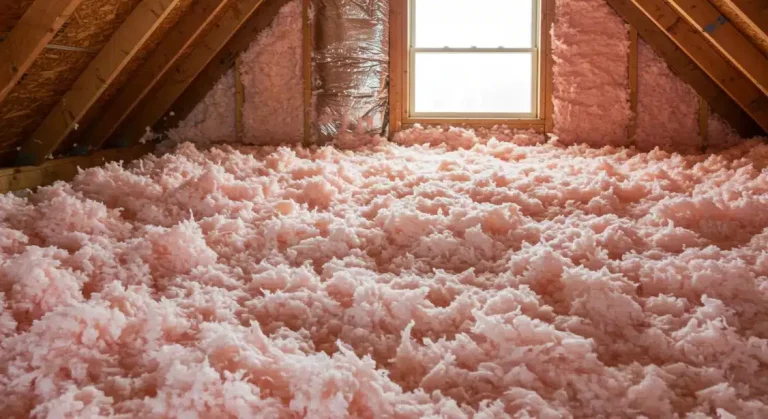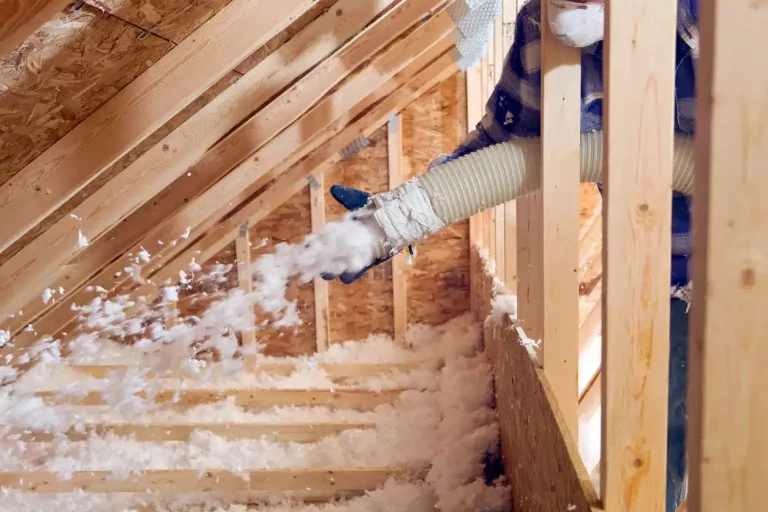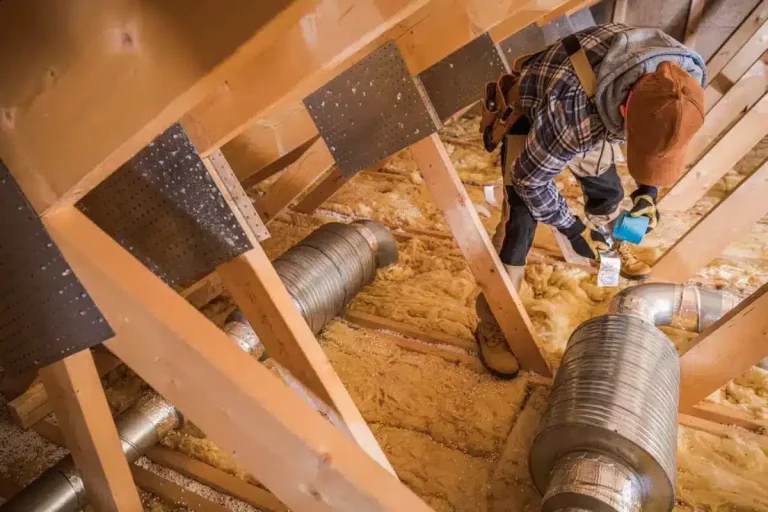
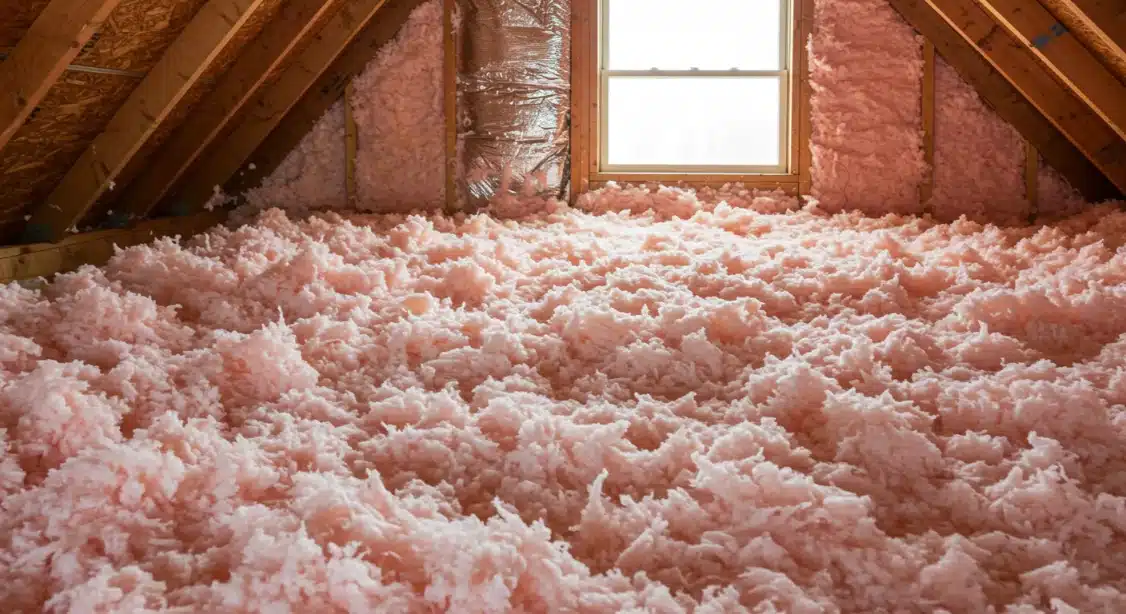
Blown-In Insulation is loose cellulose, fiberglass, or mineral wool that a machine blows into attics and wall cavities. It fills odd gaps around pipes and wires without tearing out drywall, which makes it a practical upgrade for older homes. Small access holes are all our crew needs to reach cavities.
TL;DR
- Attics get a deep, even layer.
- Walls get dense-packed through small holes.
- Price depends on material, depth, and access.
Why Do Homeowners Choose Loose-Fill Insulation?
Loose-fill is an installation method more than a product. A blower pushes small particles into a space, and they settle around whatever is in the way.
Blown-In Insulation for Existing Homes works because our crew only needs small access points, not demolition. The U.S. Department of Energy says loose-fill conforms to any space without disturbing finishes, and it’s well suited to finished walls and spaces around obstructions. These blown-in insulation benefits make it a practical choice for improving comfort and insulation coverage without removing drywall.
Blown-In Insulation Benefits show up as steadier room temperatures. Material reaches around pipes, wires, and framing where rolled products tend to leave gaps. Residential Blown-In Insulation jobs usually fall into two groups: attic floors and wall cavities. Attics are open, so we spread an even layer. Walls are closed, so the material goes in through drilled holes.
Which Material Fits Your Home?
Cellulose, fiberglass, and mineral wool are the common choices. Each trades off R-value, air movement, and moisture behavior, so the right pick depends on your attic depth, your walls, and your budget.
Blown-In Insulation Types differ most in density. Fine Homebuilding puts the numbers like this:
- Loose-Fill Fiberglass: About R-2 to R-2.7 per inch, the lowest of the common options.
- Attic Cellulose: About R-3.2 per inch.
- Dense-Packed Cellulose: Up to about R-3.8 per inch in closed wall cavities.
Cellulose Blown-In Insulation is denser, so it cuts more air leakage. The trade-off is that it absorbs water, and a roof leak can spread unnoticed until it reaches drywall. Fiberglass Blown-In Insulation resists moisture better, though air moving through it can cut performance in very cold attics. Either one works well when the R-value is right, and the install is clean.
How Much Does Each Space Need?
Depth is where many jobs go wrong. Thicker isn’t always the target, and thinner is never a shortcut. Blown-In Insulation R-Value doesn’t scale in a straight line with thickness. The Department of Energy notes that loose-fill settles under its own weight, so manufacturers publish charts showing settled thickness and bags needed for each R-value. We work from those charts instead of eyeballing it.
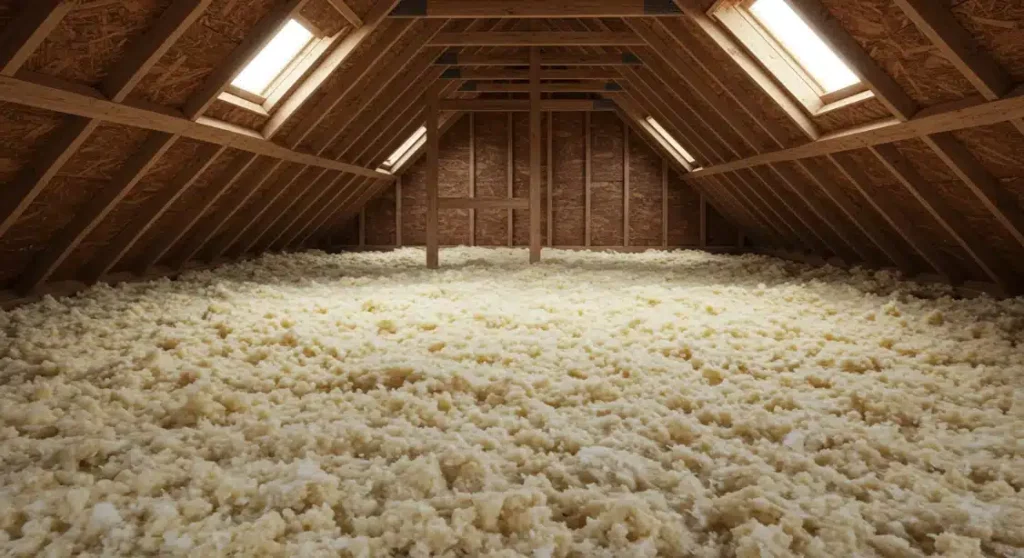
Blown-In Insulation Coverage follows the same logic. A bag stretches over a lot of floor at a low R-value and far less at a high one, so a square-foot guess alone can leave you short. Blown-In Attic Insulation is the simplest place to start. The goal is an even layer at the depth that matches your target R1-valu2-inchh soffit vents left clear so air can still move.
How Do We Fill Existing Walls?
Walls are the harder job because the cavity is closed and we can’t see inside. The goal is a full, dense fill with no voids. Blown-In Wall Insulation starts with small holes near the top of each stud cavity. The Building America Solution Center describes 1- or 2-inch holes about 6 inches below the ceiling, with extra holes below blocking, above headers, and around windows.
Density matters as much as depth. That same guide says each cavity should be filled to the manufacturer’s dense-pack density, and an infrared camera can help confirm nothing was missed before patching. Blocking and deteriorated old batts can leave voids, so we plan for them.
What Affects the Price?
Price swings come from the space, not just the material. Published averages vary widely, so a real quote beats an online number. Blown-In Insulation Cost depends on the material, the R-value you want, and how hard the space is to reach. Walls cost more per square foot than open attics because of drilling, filling, and patching. Hidden problems, like old wiring, can add work.
What Should You Check Before We Start?
A few items can stop a job or change the plan. We’d rather sort them out before the blower turns on.
- Air Leaks: Seal gaps around wires, pipes, and the attic hatch first. Loose-fill slows heat flow but isn’t a full air seal.
- Old Wiring: The same wall guide notes that the National Electrical Code doesn’t allow insulation to be applied to or surround knob-and-tube wiring.
- Home Age: Homes built before 1980 may fall under lead safety rules, depending on how much wall material gets disturbed.
- Recessed Lights: Older fixtures not rated for insulation contact need clearance or a barrier.
Blown-In Insulation Installation goes smoother once these are cleared, because surprises like hidden wiring stop work midway.
Get a Free Quote From Prestige Insulation Solutions
If your attic feels thin or your walls run cold, we can look at the space and explain what it needs. We offer free quotes and will walk through this checklist before giving you a number.
- Phone: (850) 429-4969
- Email: [email protected]
Frequently Asked Questions About Blown-In Insulation
Does Loose-Fill Insulation Settle Over Time?
Cellulose can settle up to 20% over several months, so installers start deeper to reach the target settled thickness. Fiberglass generally doesn’t settle unless it was poorly fluffed.
Can You Add New Loose-Fill Over Old Insulation?
In attics, often yes, as long as the old layer is dry and in decent shape. In walls, crumbling batts can block the fill and may need to come out first.
Can I Install It Myself?
Attic floors can be a DIY job with a rented blower. Walls call for an experienced installer who can hit the correct density.
Can Wall Fill Be Too Dense?
Yes. In a closed wall, overpacking can bow or pop the drywall, so installers watch density as they fill.
What Happens If Loose-Fill Gets Wet?
Wet cellulose can hide a leak until it reaches drywall, so fix the source fast. Mold needs warm, very damp conditions, but insulation wet enough to grow mold points to a bigger moisture problem.
Sources
- U.S. Department of Energy – what loose-fill is made of, where it fits, and why settled thickness matters.
- Fine Homebuilding – R-value per inch and moisture behavior of cellulose and fiberglass.
- Building America Solution Center – wall hole placement, density, infrared checks, and wiring and lead cautions.

- Blown-In Insulation: How It Works and When It Makes Sense - November 18, 2026
- Blown-In vs Fiberglass Insulation: Which One Fits Your Attic? - November 13, 2026
- How Much Does Professional Insulation Removal Cost, and Which Factors Affect the Final Price in Pea Ridge, FL? - November 4, 2026