Residential spray foam insulation stands out among insulation options because it simultaneously insulates, air seals, and controls moisture in a single application. Unlike fiberglass batts or blown cellulose, spray polyurethane foam (SPF) expands into gaps, cracks, and irregular cavities to form a continuous barrier against air infiltration and exfiltration. The right choice between open-cell and closed-cell formulations depends on your climate zone, the area of the home being insulated, and whether moisture resistance is a primary concern. Below, we break down exactly why residential spray foam insulation options excel at both air sealing and moisture management, how the two types compare, and what homeowners need to consider before investing.
TLDR: Key Takeaways
- Spray foam insulation simultaneously provides thermal insulation, air barrier performance, and moisture control in one application, something no other common insulation material achieves on its own.
- Open-cell spray foam delivers R-3.6 to R-4.5 per inch and functions as an air barrier at 3.5 to 5.5 inches, while closed-cell spray foam achieves R-5.8 to R-6.9 per inch and becomes an air barrier at just 1.5 inches.
- Closed-cell spray foam has a moisture permeance below 1.0 perms at 1.5 inches, qualifying it as a vapor retarder without additional materials, and is the only spray foam FEMA recognizes as flood-resistant.
- The Department of Energy notes that walls and rim joists account for over 40% of total envelope area, making the comprehensive air sealing spray foam especially impactful on overall energy performance.
- Homes sealed tightly with spray foam require mechanical ventilation to maintain indoor air quality, as natural air leakage is no longer sufficient.
- Professional installation by a trained applicator is non-negotiable, as improper mixing ratios, layer thickness, or substrate preparation can compromise performance and create indoor air quality risks.
How Spray Foam Achieves Air Sealing That Other Insulations Cannot
Air leakage is one of the largest sources of energy waste in residential buildings. The U.S. Department of Energy reports that reducing air leakage is a cost-effective way to lower heating and cooling costs, improve durability, and increase occupant comfort. The DOE specifically notes that walls and rim joists make up more than 40% of the total envelope area, so sealing those components produces measurable improvements in home performance.
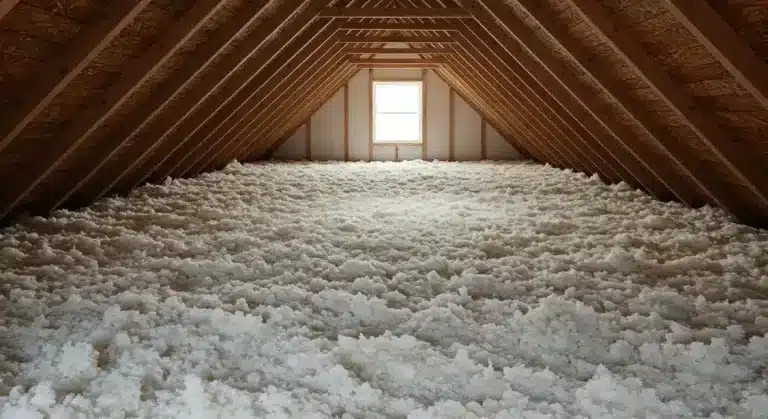
Traditional insulation materials like fiberglass batts and blown cellulose slow heat transfer through conduction, but they do not block air movement. Air simply passes around, between, and sometimes through these materials. Gaps at framing joints, around electrical boxes, at plumbing penetrations, and along rim joists remain open even after batt insulation is installed. The result is a home that holds some heat, but still leaks conditioned air at dozens of unintended pathways.
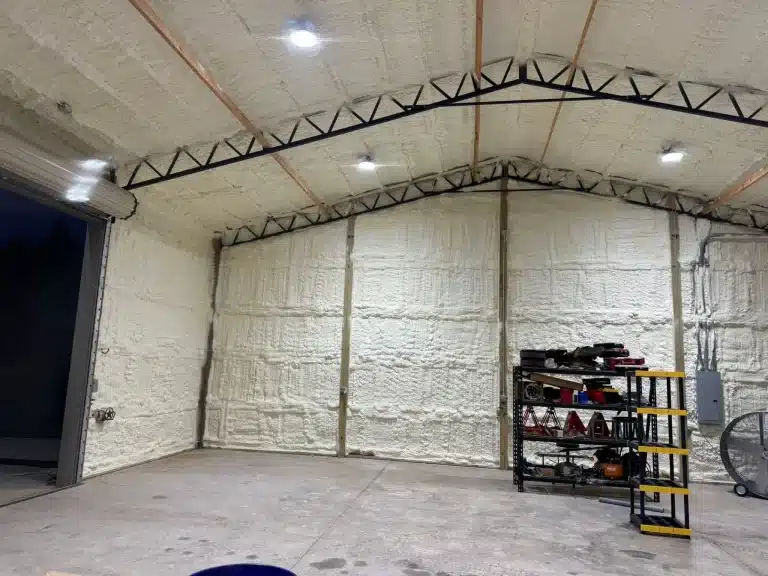
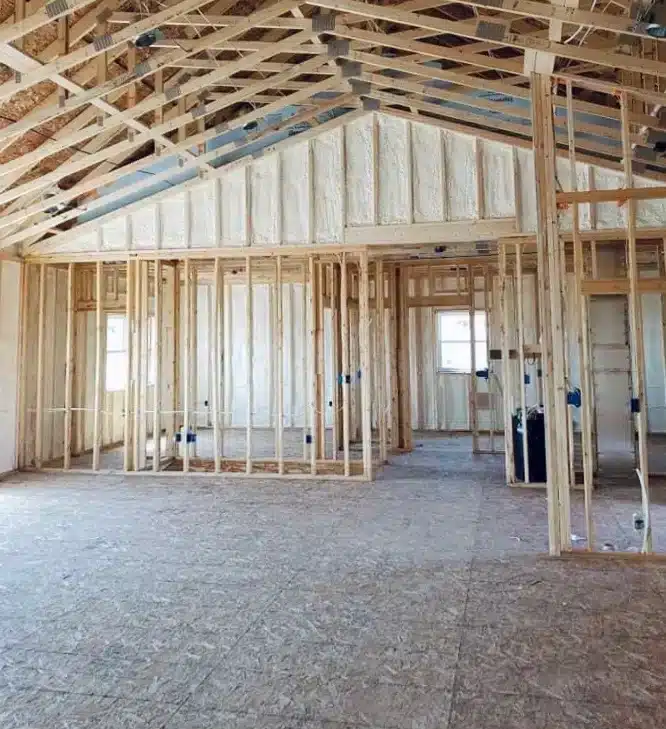
Spray foam works differently. As the two chemical components mix at the spray gun nozzle, the material expands and adheres to every surface it contacts, filling voids and sealing penetrations simultaneously. The Spray Polyurethane Foam Alliance confirms that when applied to certain minimum thicknesses, about 1.5 inches for closed-cell and 3.5 to 5.5 inches for open-cell, spray foam becomes air-impermeable and qualifies as an air-barrier material per building code standards. This means it actively stops the movement of air through the building envelope, not just the transfer of heat.
Common problem areas where spray foam delivers the greatest air-sealing impact include rim joists where framing meets the foundation, attic floor penetrations around ducts and plumbing, wall cavities with multiple utility penetrations, and crawl space interfaces between conditioned and unconditioned space. In each of these locations, spray foam expands into irregular shapes and gaps that would be impractical or impossible to seal with caulk, gaskets, or rigid foam board alone.
Moisture Control: Where Spray Foam Separates from the Pack
Moisture management is arguably more important than thermal performance when it comes to protecting a home’s structural integrity. Uncontrolled moisture leads to mold growth, wood rot, degraded insulation performance, and poor indoor air quality. The challenge is that moisture moves through building assemblies in multiple ways, including bulk water intrusion, capillary action, vapor diffusion, and carried by air leakage.
Spray foam addresses moisture through two primary mechanisms. First, its air-sealing properties eliminate the air leakage pathway, which the Building America Solution Center identifies as one of the most significant vehicles for moisture transport into wall and ceiling assemblies. Warm, humid indoor air leaking into a cold wall cavity during winter can condense on surfaces below the dew point, making residential spray foam insulation an effective option for reducing unwanted air movement and helping control hidden moisture problems. By stopping that air movement, spray foam eliminates the primary mechanism for hidden condensation in enclosed cavities.
Second, closed-cell spray foam functions as a vapor retarder. According to the SPFA, at a thickness of 1.5 inches, closed-cell spray foam has a moisture permeance of less than 1.0 perms, meaning no additional vapor retarder is required for most applications. This is a meaningful distinction from open-cell foam, which is moisture-permeable and may require a separate vapor retarder in colder climates. The EPA’s product type documentation also distinguishes between the two types, noting that closed-cell formulations use different blowing agents and create a denser, more water-resistant structure.
The closed-cell variety’s resistance to water absorption has additional practical benefits. Closed-cell foam is FEMA-approved as a flood-resistant material, making it the only spray foam insulation appropriate for below-grade applications, crawl spaces with a history of moisture issues, and homes in flood-prone regions. Open-cell foam can absorb and retain liquid water, which means it is not suitable for areas where direct water contact is likely.
Open-Cell vs. Closed-Cell: Which Type Serves Your Home Best
Understanding the differences between open-cell and closed-cell spray foam is essential for making the right choice for your home. Both deliver strong air-sealing performance, but they differ in R-value, density, moisture resistance, and ideal application zones.
| Property | Open-Cell Spray Foam | Closed-Cell Spray Foam |
|---|---|---|
| Density (lbs per cubic foot) | 0.5 to 0.8 pcf | 1.8 to 2.3 pcf |
| R-Value per Inch | R-3.6 to R-4.5 | R-5.8 to R-6.9 |
| Air Barrier Thickness | 3.5 to 5.5 inches | 1.5 inches |
| Vapor Retarder at 1.5 inches | No (moisture-permeable) | Yes (below 1.0 perms) |
| Water Absorption | Can absorb and retain water | Water-resistant |
| FEMA Flood-Resistant | No | Yes |
| Flexibility | Soft and flexible | Rigid and hard |
| Structural Reinforcement | None | Adds racking and uplift strength |
| Best Applications | Walls, attics, sound dampening | Rim joists, crawl spaces, below-grade, flood zones |
For most homeowners, the decision comes down to where the insulation is being installed and what the primary concern is. In above-grade wall cavities and vented attics where moisture exposure is limited, open-cell foam offers excellent air sealing at a lower material density. In rim joists, crawl spaces, basements, and any area where moisture contact is possible, closed-cell foam is the better choice.
How Tight Sealing Changes the Ventilation Equation
One consequence of effective air sealing that catches many homeowners off guard is the impact on indoor air quality. When a home’s envelope is tightened significantly, the natural air changes that once occurred through random leaks no longer happen. The Spray Polyurethane Foam Alliance notes that buildings can become too tight without adequate mechanical ventilation. The organization has published guidance on this topic, emphasizing that once spray foam seals the envelope, intentional ventilation systems, such as energy recovery ventilators or heat recovery ventilators, become necessary to maintain fresh air circulation.
This is not a flaw in spray foam insulation. It is a characteristic of any well-sealed building. The solution is straightforward: pair spray foam insulation with a properly sized mechanical ventilation system. Homes with spray foam should also have their air leakage rate tested, typically measured in air changes per hour at 50 Pascals (ACH50), to confirm that the envelope meets code requirements without over-sealing.
Application Considerations and Safety
Spray foam is a site-applied building material, which means the quality of installation directly affects long-term performance. The U.S. Consumer Product Safety Commission has published health and safety recommendations emphasizing that homeowners should vacate the premises during and for at least 24 hours after spray foam application. The CPSC also advises homeowners to verify that their contractor has received appropriate training, carries proper insurance and licenses, and follows manufacturer guidelines for re-occupancy times.
The EPA has also raised awareness about the importance of proper application practices, noting that SPF products contain isocyanates in their chemical formulation, which require careful handling during installation. Once fully cured, spray polyurethane foam is considered relatively inert, but the curing process must be allowed to complete under proper conditions.
Building codes require that spray foam installed in occupied spaces be separated by a 15-minute thermal barrier, typically half-inch gypsum board. In attics and crawl spaces with limited access, an ignition barrier may be permitted instead. These code requirements exist alongside standard insulation provisions, and spray foam use is specifically addressed in the International Building Code Section 2603 and the International Residential Code Section R316.
Recommendations by Home Type and Climate
Not every home benefits equally from the same spray foam approach. Here is guidance based on common scenarios:
- New construction in mixed or warm climates: Open-cell foam in walls and attics paired with mechanical ventilation delivers strong air sealing and thermal performance at a practical cost point.
- Existing homes with rim joist air leakage: Closed-cell foam applied to rim joist bays from the basement or crawl space side addresses one of the most leak-prone areas of any home in a single afternoon.
- Homes in humid or flood-prone regions: Closed-cell foam is the clear choice for crawl spaces, below-grade walls, and any application where moisture resistance matters.
- Retrofit projects with limited cavity depth: Closed-cell foam delivers higher R-value per inch, making it the better option when framing depth restricts how much insulation can fit.
Signs You Have Found the Right Insulation Contractor
Choosing a qualified contractor matters as much as choosing the right product. Look for these indicators:
- The contractor explains the difference between open-cell and closed-cell foam and recommends a specific type based on your home’s conditions rather than applying a one-size-fits-all approach.
- They discuss re-occupancy timelines, ventilation requirements, and building code compliance before the job starts.
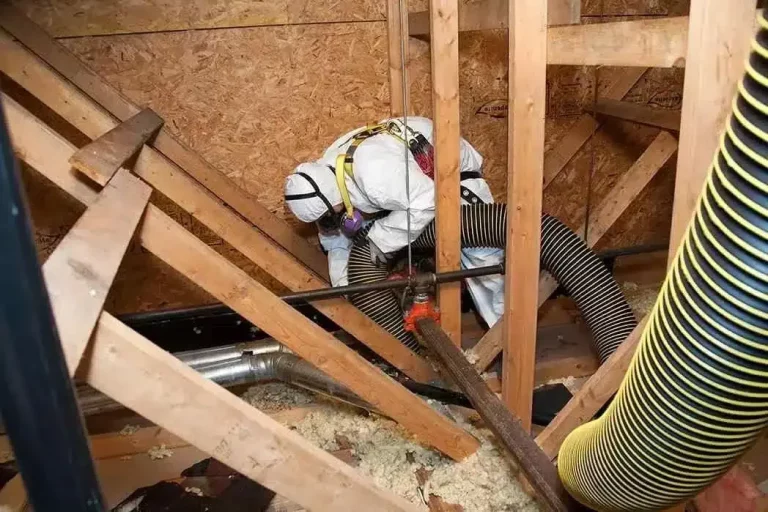
- Crew members wear appropriate personal protective equipment during application and follow manufacturer-specified pass thickness and curing procedures.
- The contractor provides product literature and safety data sheets upon request and can explain what will happen at each stage of the installation.
- They encourage you to vacate the premises during application and provide a clear timeline for safe re-entry.

Ready to Seal and Protect Your Home
At Prestige Insulation Solutions LLC, our team specializes in residential spray foam insulation designed to deliver superior air sealing and moisture control for homes throughout the region. Whether you need closed-cell foam for a crawl space encapsulation or open-cell foam for an attic air barrier upgrade, we assess your home’s specific conditions and recommend the right solution. Call us at (850) 429-4969 or email [email protected] to get started.
Request a Quote | Schedule an Insulation Assessment
Frequently Asked Questions
Can spray foam insulation cause indoor air quality problems after installation?
When properly applied and fully cured, spray foam is considered inert and does not present toxicity concerns. Issues arise from improper mixing, inadequate curing conditions, or premature re-occupancy before the material has off-gassed.
Do I still need a separate vapor barrier with spray foam insulation?
Closed-cell spray foam at 1.5 inches or thicker functions as a Class 2 vapor retarder on its own, so no additional barrier is needed for most applications. Open-cell foam is moisture-permeable and may require a separate vapor retarder in colder climates.
Is spray foam insulation permitted by building codes?
Spray foam insulation is explicitly permitted by the International Building Code and International Residential Code, with specific fire protection requirements including thermal barriers and ignition barriers.
How long does it take for spray foam to cure before I can re-enter my home?
The CPSC recommends that homeowners vacate the premises for at least 24 hours after application. Actual re-occupancy times may vary based on product type, building conditions, and manufacturer guidance.
Can spray foam be used in existing homes, or is it only for new construction?
Spray foam is well-suited for retrofit applications, particularly in rim joists, crawl spaces, and attics. It can be used to create unvented conditioned attic and crawl space assemblies in existing homes.
Sources
- U.S. Department of Energy – Energy-Efficient Home Improvement Credit: Insulation and Air-Sealing Essentials – Federal guidance on insulation requirements, air sealing criteria, and climate zone R-value recommendations per the 2021 IECC.
- EPA – Information on the Various Spray Polyurethane Foam Products – Detailed documentation of SPF product categories, chemical composition, application processes, and exposure considerations for both open-cell and closed-cell formulations.
- Spray Polyurethane Foam Alliance – FAQs – Industry trade association technical resource covering R-values, air barrier qualifications, vapor retarder performance, moisture absorption, and building code compliance for spray foam insulation.
- BuildingGreen – EPA Raises Health Concerns with Spray Foam Insulation – Reporting on EPA’s action plan for isocyanates used in SPF, safe installation practices, and the importance of qualified contractors and proper curing.
- U.S. Consumer Product Safety Commission – Spray Polyurethane Foam Insulation: Health and Safety Recommendations for Consumers – Federal consumer safety guidance on re-occupancy timelines, contractor qualifications, DIY considerations, and reporting procedures for improperly applied spray foam.

- Everything You Need to Know About Professional Insulation Removal - October 7, 2026
- Which Insulation Upgrades Deliver the Best Long-Term Value in Bagdad, FL? - September 14, 2026
- How Does Blown-In Insulation in Gonzalez, FL Fill Gaps Better Than Traditional Materials? - September 14, 2026