Temperature imbalance in a home, where some rooms feel too hot while others stay stubbornly cold, is almost always tied to insulation deficiencies. According to the U.S. Department of Energy, the maximum thermal performance of any insulation depends entirely on proper installation, and even small gaps or settled material can allow significant heat transfer. When insulation is missing, damaged, improperly installed, or the wrong type for the application, heat flows freely through walls, attics, and floors, creating uncomfortable hot and cold spots throughout the house. Air leakage compounds the problem by letting conditioned air escape and unconditioned air infiltrate, which the World Health Organization has linked directly to cold indoor temperatures, structural deficiencies, and adverse health effects, including respiratory and cardiovascular conditions.
TL;DR
- Inadequate attic insulation is the single most common cause of whole-house temperature imbalance, allowing heat to escape in winter and enter in summer.
- Air leakage can account for up to 30% of thermal flow across a well-insulated building enclosure, bypassing insulation entirely.
- Thermal bridging through studs, concrete, and metal framing can reduce the effective R-value of insulated assemblies by 50 to 80%.
- Insulation gaps, compression, and settling degrade R-value over time, creating localized cold spots near exterior walls and floors.
- The WHO recommends a minimum indoor temperature of 18 degrees Celsius (64.4 degrees Fahrenheit) to protect occupant health, and proper insulation is the most cost-effective way to maintain it.
- Climate zone-appropriate R-values matter: ENERGY STAR recommends R-38 to R-60 for attics depending on location.
- Air sealing must happen before insulating; failing to seal leaks first means insulation cannot perform as intended.
- Thermal stratification, where upper floors are significantly warmer than lower floors, is a direct symptom of poor envelope insulation and air leakage.
How Insulation Failures Create Hot and Cold Spots
Heat moves through buildings by three mechanisms: conduction through solid materials, convection through air movement, and radiation from warm surfaces to cooler ones. Building Science Corporation explains that effective thermal control requires insulation layers with few thermal bridges, an effective air barrier system, and proper management of solar radiation. When any of these elements are compromised, heat flows unpredictably through the building envelope, causing some rooms to overheat while others cannot hold a comfortable temperature.
The most common insulation failures fall into several recognizable categories, each with distinct symptoms that homeowners can identify.
The Most Common Insulation Problems Behind Temperature Imbalance
Insufficient Attic Insulation
The attic is where the majority of heat loss occurs in winter and heat gain occurs in summer. In homes built before modern energy codes, attic insulation levels often sit at R-11 to R-19, far below the R-38 to R-60 that ENERGY STAR recommends for most U.S. climate zones. When attic insulation is thin or nonexistent, the ceiling of your top floor becomes a near-transparent barrier to heat transfer. Second-story bedrooms overheat in summer while the first floor stays cool, and in winter, heated air rises and escapes through the attic, leaving lower floors cold.
Air Leakage Around the Building Envelope
Insulation only works if air stays still within it. Air leakage through gaps around windows, doors, electrical outlets, recessed lights, plumbing penetrations, and rim joists allows conditioned air to escape and unconditioned air to enter. The Whole Building Design Guide (WBDG) notes that air leakage represents a significant proportion of total heat flows across a building enclosure, and without a continuous air barrier system, insulation effectiveness drops dramatically. Rooms with exterior walls facing prevailing winds are typically the most affected, feeling drafty and cold regardless of thermostat settings.
Thermal Bridging Through Framing
Wood studs, steel framing, and concrete foundations all conduct heat more readily than insulation. In a standard 2×4 wall with R-13 cavity insulation, the studs themselves create thermal bridges that reduce the wall’s effective R-value by 10 to 20%. In steel-framed construction, the reduction can reach 50 to 80%. This means rooms with large areas of exterior framing, such as bonus rooms over garages or rooms with many partition walls meeting exterior walls, will consistently feel colder in winter and warmer in summer than interior rooms, which is why residential insulation solutions are essential for improving overall thermal performance.
Compressed, Settled, or Missing Insulation
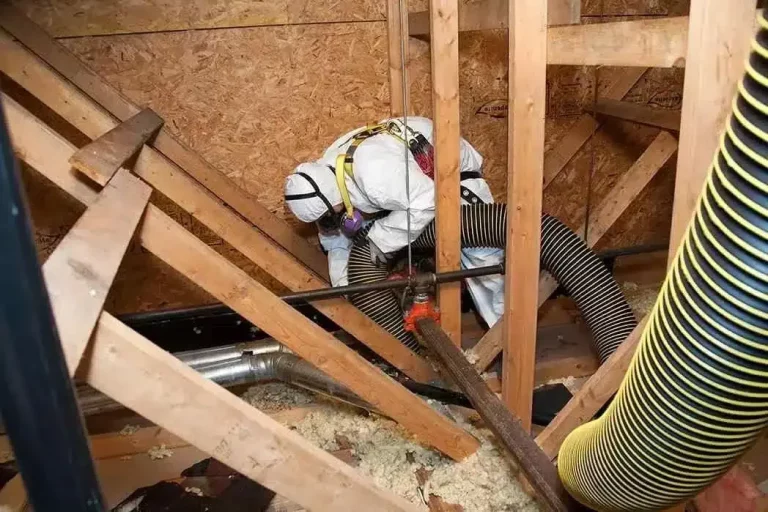
Fiberglass batts that were compressed during installation to fit into narrow cavities lose much of their insulating value. Loose-fill cellulose and fiberglass settle over time, leaving gaps at the top of wall cavities and thinning across attic floors. In older homes, entire wall sections may have no insulation at all. Each gap creates a path for heat to flow unimpeded, and homeowners typically notice these areas as cold spots along exterior walls or floors that are noticeably colder than the rest of the house.
Improper Insulation Type for the Application
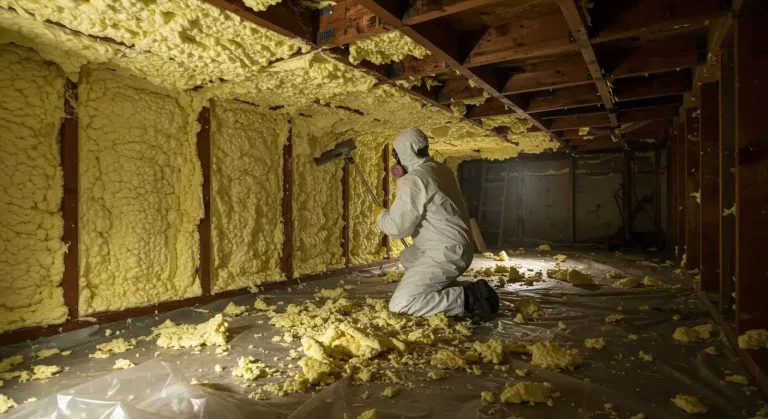
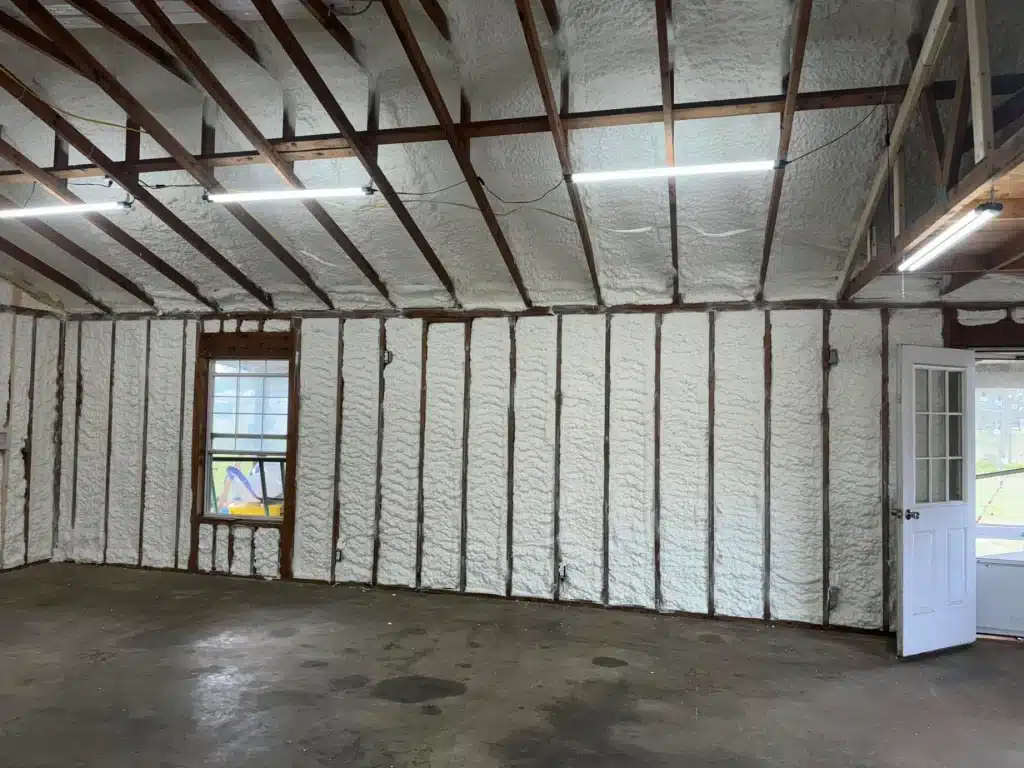
Using the wrong insulation material in a specific location can cause just as many problems as having none at all. Open-cell spray foam should not be used below grade or in areas prone to moisture because it absorbs water. Fiberglass batts perform poorly in irregular cavities where they cannot maintain full contact with all surfaces. Reflective barriers are only effective in hot climates for reducing downward heat flow. Each insulation type has a specific range of conditions where it performs best, and using materials outside those conditions leads to temperature control failures, which is why choosing the right insulation approach is critical for long-term performance and efficiency.
Insulation Type Comparison for Residential Applications
| Insulation Type | R-Value per Inch | Air Barrier | Moisture Resistance | Best Application |
|---|---|---|---|---|
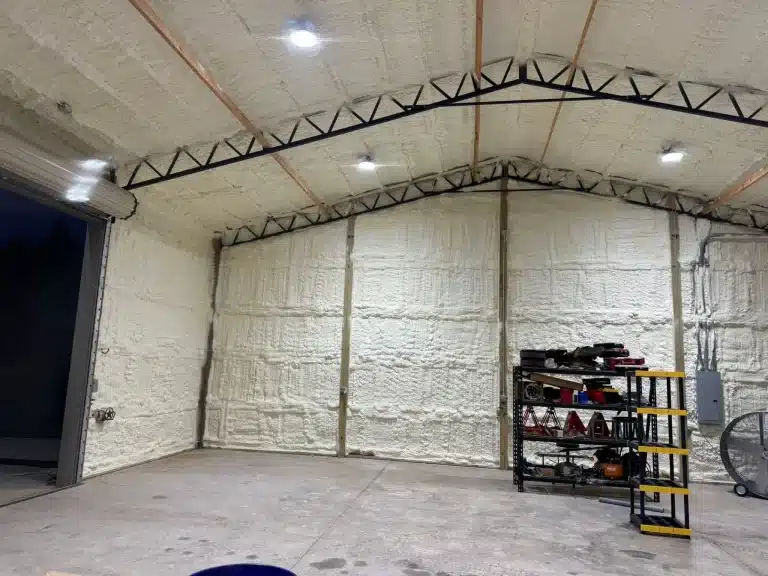
| Closed-Cell Spray Foam | R-6.0 to R-7.0 | Yes | High | Walls, crawlspaces, rim joists, and basements |
| Open-Cell Spray Foam | R-3.6 to R-3.9 | Yes | Low | Wall cavities, attics (above grade) |
| Fiberglass Batts | R-3.1 to R-3.4 | No | Low | Standard stud and joist cavities |
| Blown Fiberglass | R-2.2 to R-3.2 | No | Low | Attic floors, existing wall cavities |
| Blown Cellulose | R-3.1 to R-3.8 | No | Moderate | Attic floors, dense-pack walls |
| Mineral Wool Batts | R-3.1 to R-4.2 | No | High | Walls, fire-rated assemblies |
| Rigid Foam Board | R-4.5 to R-6.5 | No | High | Exterior sheathing, basement walls, and foundations |
Real-World Scenarios: How Insulation Problems Show Up
| Scenario | Home Type | Problem | Solution | Outcome |
|---|---|---|---|---|
| Upstairs bedrooms are overheating in summer | 1990s two-story colonial | Attic insulation settled to R-15; no air sealing at penetrations | Blown fiberglass brought the attic to R-49; all top-plate and penetration leaks were sealed | Upstairs temperatures dropped 6 to 8 degrees Fahrenheit; HVAC run time reduced |
| The bonus room over the garage is freezing in winter | 2005 ranch with finished garage attic | No insulation in garage ceiling; cantilevered floor with no rim joist insulation | Closed-cell foam in garage ceiling and rim joist; R-19 in floor cavity | Room temperature within 2 degrees of the rest of the house |
| The master bedroom is always 5 degrees colder | 1970s split-level | Fiberglass batts compressed and gaps at exterior wall outlets | Dense-pack cellulose in walls; air sealed behind electrical boxes | Eliminated cold wall effect; even temperature throughout the floor |
| First floor drafty near windows | 1980s brick ranch | No insulation in wall cavities; single-pane windows | Drilled and dense-packed cellulose into wall cavities | Reduced drafts noticeably; heating bills decreased |
| The kitchen feels humid and warm in summer | New construction | Open-cell foam is used in the crawlspace; moisture wicks into the floor assembly | Replaced with closed-cell foam; added vapor barrier | Eliminated moisture and heat gain from below |
Factors That Affect Insulation Performance
Understanding why insulation fails requires looking at several variables that influence how well it controls heat flow in practice.
Installation quality is the single largest variable. The Department of Energy explicitly states that the maximum thermal performance of insulation is very dependent on proper installation. Gaps as small as a quarter inch around batts can reduce effective R-value by up to 50%. Compressed insulation, voids, and misaligned vapor barriers all undermine performance.
Climate zone determines the minimum R-value needed for each building component. Homes in Climate Zones 5 through 8 need R-49 to R-60 in attics, while homes in Zones 1 to 2 need R-30 to R-38. Using the same insulation standard across all climates leads to under-insulation in colder regions and wasted spending in milder ones.
Building age plays a significant role. Homes built before 1980 commonly have little or no wall insulation. Homes from the 1980s and 1990s may have code-minimum levels that are now considered inadequate. Even homes built in the last 15 years may have insulation that has settled or been disturbed during renovations.
Moisture is one of the most destructive forces acting on insulation. Wet insulation loses virtually all of its R-value, and fiberglass that has been exposed to roof leaks or condensation can compress and degrade permanently. Crawlspaces and basements without proper moisture barriers allow humidity to infiltrate insulation, reducing its effectiveness and promoting mold growth.
Thermal bridging through structural elements creates paths for heat to bypass insulation entirely. Common culprits include balcony cantilevers without thermal breaks, uninsulated concrete slab edges, steel studs in exterior walls, and framing around windows and doors. Addressing these bridges often requires continuous exterior insulation, which the WBDG identifies as one of the most effective strategies for achieving high-performance enclosures.
Recommended R-Values by Climate Zone for Existing Homes
| Climate Zone | Attic (Uninsulated) | Attic (3-4 Inches Existing) | Floor Over Unconditioned Space |
|---|---|---|---|
| Zone 1 | R-30 | R-25 | R-13 |
| Zone 2 | R-49 | R-38 | R-13 |
| Zone 3 | R-49 | R-38 | R-19 |
| Zones 4A and 4B | R-60 | R-49 | R-19 |
| Zones 5, 6, and 4C | R-60 | R-49 | R-30 |
| Zones 7 and 8 | R-60 | R-49 | R-38 |
Actionable Strategies to Fix Temperature Imbalance
1. Seal Air Leaks Before Adding Insulation
Air sealing should always precede insulation work. Use caulk for gaps less than a quarter inch and spray foam for larger penetrations. Focus on attic floor penetrations (top plates, wire runs, plumbing vents), rim joists in basements and crawlspaces, and around window and door frames. Sealing these areas first prevents air from bypassing the new insulation you are about to install.
2. Upgrade Attic Insulation to Current Standards
For most homes, bringing attic insulation up to your climate zone’s recommended R-value delivers the single biggest improvement in temperature consistency. Blown-in fiberglass or cellulose over existing insulation is cost-effective and fills gaps and irregularities that batts miss. In attics with ductwork, consider air sealing the attic floor and insulating to R-49 or higher to protect the ducts from extreme temperatures.
3. Address Rim Joists and Crawlspaces
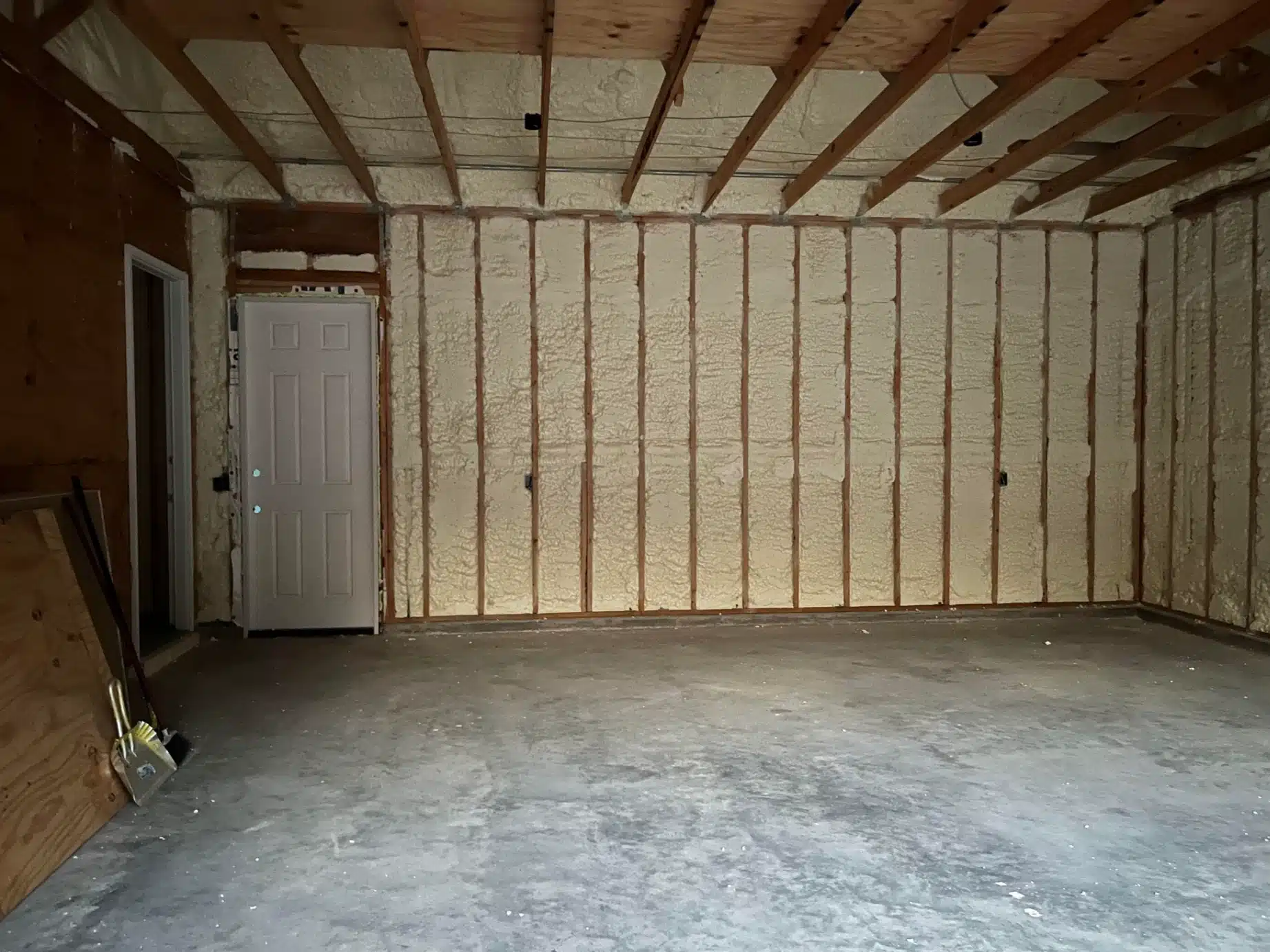
Rim joists at the foundation perimeter are among the most overlooked insulation gaps in residential construction. These areas allow significant air infiltration and heat loss. Closed-cell spray foam is the preferred solution for rim joists because it both insulates and seals in a single application. In vented crawlspaces, insulate the floor above. In unvented crawlspaces, insulate the crawlspace walls and include a ground moisture barrier.
4. Use Dense-Pack Insulation for Existing Wall Cavities
If your home has empty or under-insulated wall cavities, dense-pack cellulose or fiberglass can be blown in through small holes drilled in the exterior or interior. Dense-packing achieves a density of approximately 3.5 pounds per cubic foot, which eliminates air movement within the cavity and provides an effective air barrier in addition to thermal resistance.
5. Break Thermal Bridges with Continuous Insulation
For homes with significant thermal bridging through framing, adding continuous rigid foam insulation over the exterior sheathing (beneath new siding) can dramatically improve wall performance. This approach addresses the bridging effect by wrapping the entire structural frame with a continuous layer of insulation, raising the effective R-value of the entire wall assembly rather than just the cavities.
The Health Connection: Why Temperature Imbalance Matters
Temperature imbalance is not just a comfort issue. The World Health Organization has established that cold indoor temperatures below 18 degrees Celsius (64.4 degrees Fahrenheit) are associated with increased blood pressure, asthma symptoms, and poor mental health. Cold homes contribute to excess winter mortality and morbidity, with the health burden falling heaviest on older adults and children with respiratory conditions. The WHO recommends a minimum indoor temperature of 18 degrees Celsius and advises that efficient thermal insulation should be installed in new housing and retrofitted in older housing to protect occupant health.
Retrofitting insulation has been shown to reduce winter colds and flu, improve respiratory health, and lower blood pressure in building occupants. When insulation upgrades are paired with proper air sealing and controlled ventilation, homeowners experience more consistent temperatures, lower energy bills, and measurably better indoor air quality.
Ready to Fix Your Home’s Temperature Imbalance
If you are living with hot and cold spots, high energy bills, or rooms that never feel comfortable regardless of your thermostat setting, the root cause is likely an insulation problem that a professional assessment can identify and resolve. Our team at Prestige Insulation Solutions LLC has the experience and training to evaluate your entire building envelope, identify exactly where heat is escaping or entering, and recommend the right solutions for your home and climate zone.
Request a Quote | Schedule a Home Energy Assessment
Call us at (850) 429-4969 or email [email protected] to get started. We provide detailed inspections and honest recommendations so you can finally enjoy consistent, comfortable temperatures in every room of your home.
Sources
- U.S. Department of Energy – Types of Insulation – Comprehensive overview of residential insulation types, installation methods, and performance characteristics, including R-values, air barrier properties, and recommended applications for each material.
- ENERGY STAR – Recommended Home Insulation R-Values – Climate zone-specific R-value recommendations for attics, walls, floors, and basements in existing wood-framed residential buildings, based on the 2021 IECC.
- WHO Housing and Health Guidelines – Low Indoor Temperatures and Insulation – Systematic review of health effects from cold indoor temperatures and the benefits of insulation retrofits, including respiratory and cardiovascular outcomes, and recommended minimum indoor temperatures.
- Building Science Corporation – Thermal Control in Buildings – Technical examination of heat transfer mechanisms, insulation performance, thermal bridging, and air leakage effects on building thermal performance and comfort.
- WBDG – Managing Enclosure Heat Flows – Whole building design guidance on conduction, convection, and radiation heat transfer, recommended effective R-values by climate zone, and strategies for thermal resilience in residential buildings.
- Building Science Digest – Thermal Control – Supplemental technical digest on building envelope thermal management.
Frequently Asked Questions
Why is my upstairs always hotter than downstairs?
A: Heat naturally rises through convection, and if your attic insulation is inadequate or air leaks exist at the attic floor, warm air accumulates on upper floors. Upgrading attic insulation and sealing attic penetrations is the most effective fix.
Can poor insulation cause high energy bills even if the house feels okay?
A: Yes. Insulation deficiencies force your HVAC system to run longer and cycle more frequently to maintain set temperatures. You may not notice uneven temperatures, but you will notice the increased energy consumption.
How do I know if my walls have insulation?
A: Check behind electrical outlet covers on exterior walls using a flashlight, or have a professional perform a thermal imaging scan. Homes built before 1980 frequently have empty wall cavities, especially in additions or remodels.
Is air sealing really necessary if I am adding insulation?
A: Absolutely. The Department of Energy recommends sealing air leaks before insulating because insulation cannot stop air movement through gaps and cracks. Without air sealing, much of the insulation’s benefit is lost.
How long does residential insulation last?
A: Most insulation materials last 50 to 80 years when properly installed and protected from moisture. However, fiberglass and cellulose can settle over time, batts can be disturbed by renovations or pests, and any moisture exposure can permanently degrade performance.

- What Should You Know Before Hiring Professional Insulation Removal Services in Pensacola, FL? - October 13, 2026
- Everything You Need to Know About Professional Insulation Removal - October 7, 2026
- Which Insulation Upgrades Deliver the Best Long-Term Value in Bagdad, FL? - September 14, 2026