Choosing the right residential insulation strategies in Pensacola, FL, means balancing the region’s intense summer heat, persistent Gulf Coast humidity, and occasional winter cold snaps. The most effective approach combines proper material selection, air sealing, moisture control, and code-compliant R-values tailored to Climate Zone 2. No single insulation product is universally the best choice for every home. The right solution depends on factors like your home’s age, construction type, budget, and whether you are building new or retrofitting an existing structure. Below, we break down the strategies that deliver consistent year-round comfort and energy savings for Pensacola homeowners, supported by complete insulation solutions designed for long-term performance.
TL;DR
- Pensacola falls in IECC Climate Zone 2, requiring a minimum of R-38 for attic insulation and R-13 for wood-frame walls under the Florida Building Code.
- The EPA’s ENERGY STAR program estimates homeowners in Climate Zone 2 can save roughly 9% on heating and cooling costs through proper air sealing and insulation.
- Closed-cell spray foam delivers the highest R-value per inch (R-5.8 to R-6.8) and doubles as a moisture and air barrier, making it well-suited for Pensacola’s humidity.
- Attic insulation provides the best return on investment because more heat per square foot travels through the ceiling than any other building surface.
- Unvented (sealed) attic assemblies are recommended for hot-humid climates to block moisture-laden outdoor air from entering the attic space.
- Air sealing before insulating is essential. Studies show an improperly installed thermal envelope can reduce overall performance by 30% or more.
- Radiant barriers reflect up to 97% of radiant heat from the sun, reducing attic temperatures and cooling loads during Pensacola’s long summers.
Understanding Pensacola’s Climate Challenges
Pensacola sits in the northwestern Florida Panhandle along the Gulf of Mexico. This location creates a climate that is consistently hot and humid from May through October, with mild but occasionally cold winters. According to the U.S. Department of Energy’s Energy Saver program, insulation works by providing resistance to heat flow through conduction, convection, and radiation. In Pensacola’s climate, all three heat transfer mechanisms work against indoor comfort during the summer months.
The Florida Building Code places Pensacola in Climate Zone 2, which requires specific minimum R-values for different parts of the home. The My Florida Home Energy resource from the University of Florida’s Institute of Food and Agricultural Sciences confirms that Climate Zone 2 requires a minimum of R-38 attic insulation, while Climate Zone 1 (South Florida) requires R-30. Meeting or exceeding these minimums is the baseline for year-round performance.
The main enemies of insulation performance in Pensacola are humidity and air infiltration. Moisture that enters wall cavities or attic spaces can degrade insulation materials, promote mold growth, and reduce effective R-values over time. This makes material selection and installation quality especially important in this market, especially when planning residential insulation upgrades for long-term efficiency and durability.
Best Insulation Materials for Pensacola Homes
Not every insulation type performs equally well in a hot-humid environment. The table below compares the most common options relevant to Pensacola homeowners.
| Insulation Type | R-Value Per Inch | Moisture Resistance | Air Barrier | Best Application in Pensacola |
|---|---|---|---|---|
| Closed-Cell Spray Foam | 5.8 to 6.8 | Excellent (vapor barrier) | Yes | Attic rafters, wall cavities, crawlspaces |
| Open-Cell Spray Foam | 3.6 to 3.8 | Low (absorbs moisture) | Yes (air barrier only) | Interior wall cavities, sound control |
| Fiberglass (Batt/Blown) | 2.2 to 4.0 | Poor when wet | No | Attic floors (vented attics), existing walls |
| Cellulose (Blown-In) | 3.0 to 3.7 | Moderate (treated) | No | Attic floors, retrofit wall insulation |
| Rigid Foam Board | 3.6 to 6.5 | Good to Excellent | Varies | Exterior walls, cathedral ceilings |
| Radiant Barrier | No R-value | N/A | No | Attic roof decking (supplement only) |
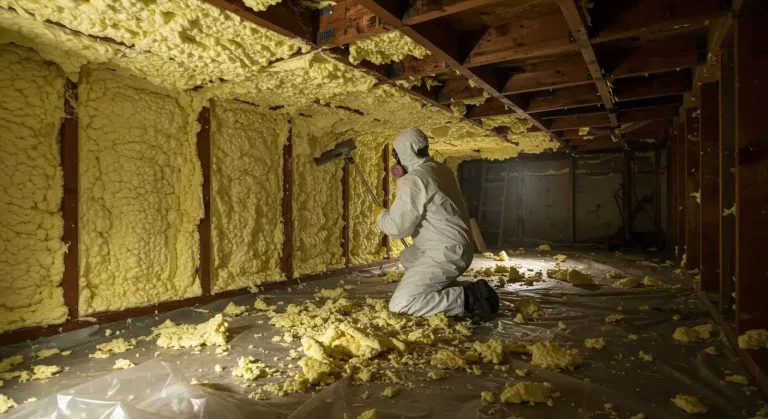
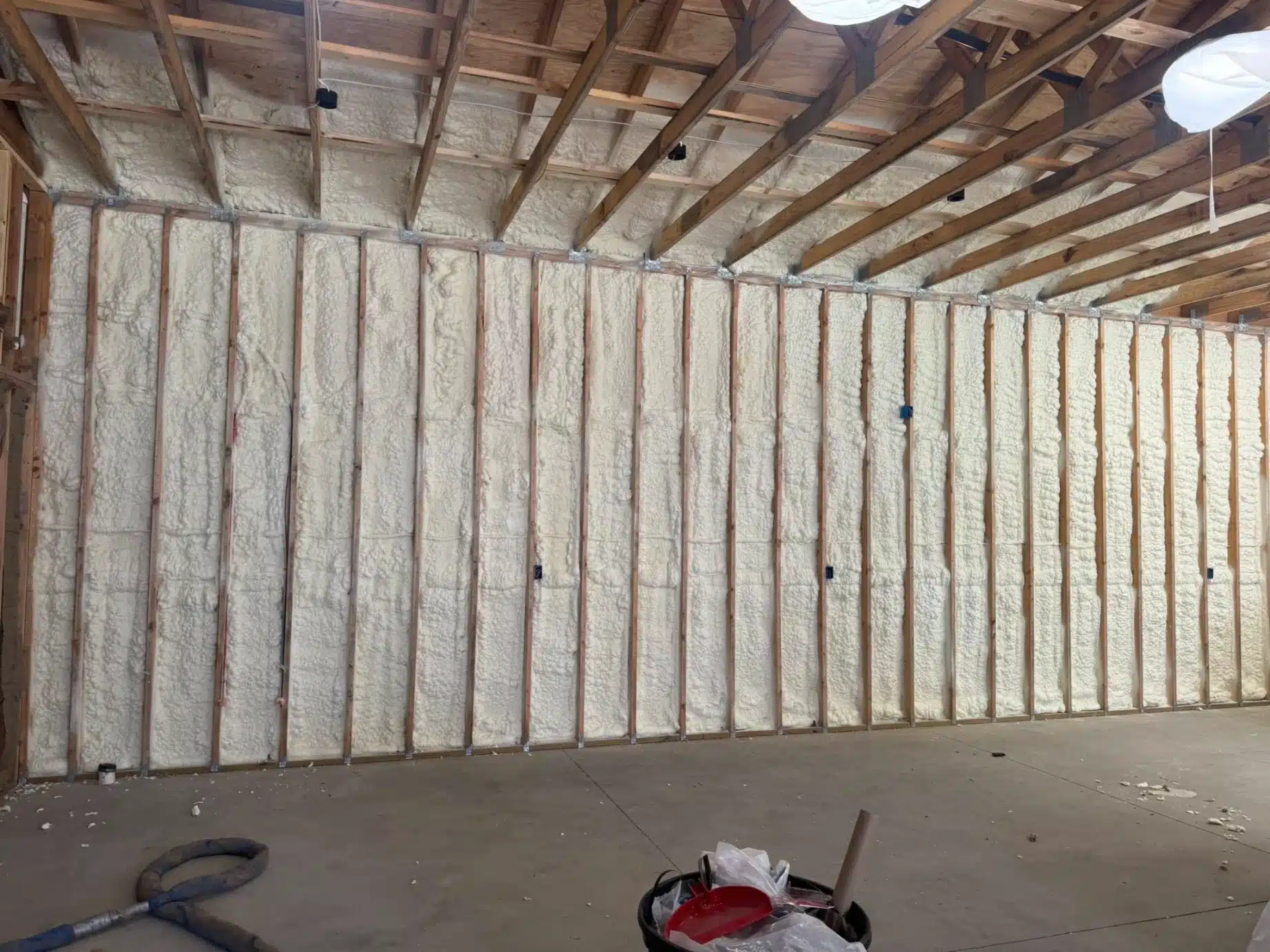
Closed-cell spray foam stands out as the strongest all-around performer for Pensacola because it combines high R-value per inch with an integrated air and moisture barrier. The My Florida Home Energy guide notes that closed-cell spray foam provides R-5.8 to R-6.8 per inch, which means thinner applications can achieve target R-values in spaces where depth is limited, such as cathedral ceilings or 2×4 wall cavities.
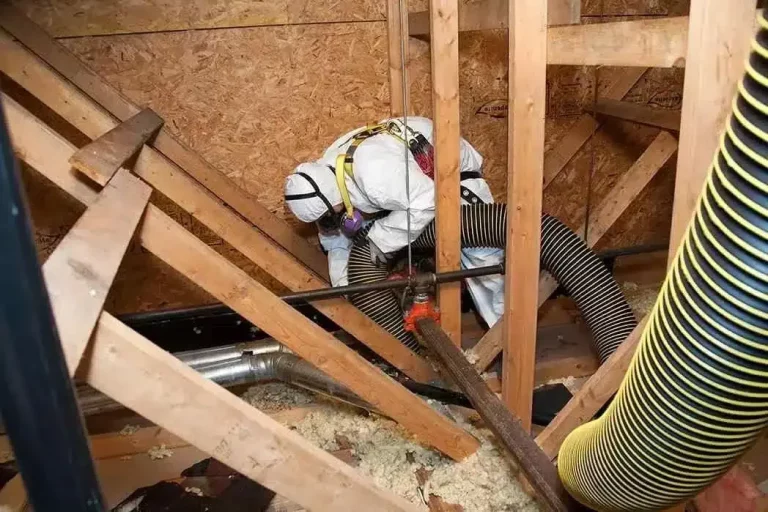
Blown-in fiberglass or cellulose remains a cost-effective option for attic floor insulation in vented attic assemblies. Both materials can achieve R-38 at roughly 10 to 13 inches of depth. Cellulose, made from recycled newsprint and treated with fire retardants, fills gaps around obstructions better than batt insulation and offers modest resistance to moisture when properly installed.
Radiant barriers deserve special mention for Pensacola homes. According to the Department of Energy, radiant barriers work by reflecting radiant heat rather than absorbing it. While they carry no inherent R-value, they can significantly reduce attic temperatures during peak summer months, easing the cooling load on your HVAC system.
Attic Strategies: Vented vs. Unvented Assemblies
The attic is the single most important area to insulate in any Pensacola home. The My Florida Home Energy program states that more heat per square foot travels through the ceiling than any other part of a house. This makes attic insulation the highest-return investment for energy efficiency.
Vented Attic (Traditional Approach)
In a vented attic, insulation is installed on the attic floor above the ceiling, and the attic space itself remains unconditioned. Ridge and soffit vents allow outside air to circulate through the attic. This is the most common and least expensive retrofit option. Blown-in fiberglass or cellulose at R-38 or higher, installed over the ceiling plane, provides effective thermal resistance.
The challenge with vented attics in Pensacola is that humidity-laden Gulf air enters the attic through vents. During warm months, this moisture can condense on cooler surfaces, potentially leading to mold and wood rot over time. Air sealing the attic floor before adding insulation helps reduce but does not eliminate this risk.
Unvented (Sealed) Attic Assembly
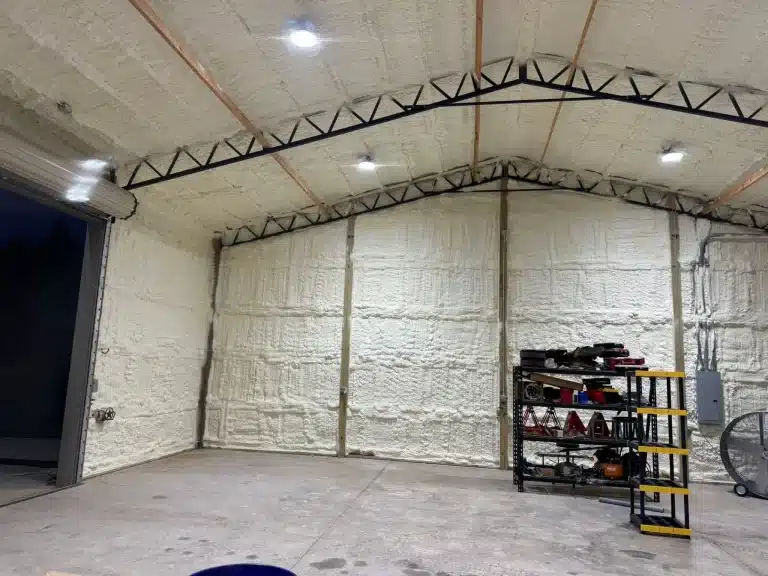
The Building Science Corporation has studied vented and sealed attics in hot climates extensively. Their research found that sealed attic construction, by excluding vents to the exterior, can effectively block moisture-laden outside air from the attic. In a sealed attic, insulation is applied directly to the underside of the roof deck (typically using closed-cell spray foam), and the attic space becomes part of the home’s conditioned envelope.
Benefits of a sealed attic in Pensacola include:
- HVAC ductwork runs in a conditioned space, eliminating duct losses
- Reduced risk of condensation and mold on attic surfaces
- Lower peak attic temperatures during summer
- Better protection against wind-driven rain during storms
The Florida Building Code permits unvented attic assemblies when specific conditions are met, including proper air barrier continuity and insulation air-permeability requirements.
Air Sealing: The Foundation of Insulation Performance
No insulation strategy delivers its rated performance without proper air sealing. The Department of Energy emphasizes that insulation effectiveness depends heavily on how and where it is installed. Gaps, compression, and voids all reduce the effective R-value. The My Florida Home Energy guide notes that an improperly installed thermal envelope can reduce overall insulation performance by 30 percent or more.
Common air leakage points in Pensacola homes include:
- Recessed light fixtures and ceiling penetrations
- Attic hatches and pull-down stairs
- Plumbing and electrical penetrations through top plates
- Ductwork connections and register boots
- Rim joists and band joists in crawlspaces
Sealing these penetrations with appropriate materials (caulk, spray foam, or rigid foam board) before adding insulation creates a continuous air barrier. The ENERGY STAR program estimates that homeowners nationwide save an average of 15% on heating and cooling costs through combined air sealing and insulation upgrades. In Climate Zone 2 specifically, estimated savings are roughly 6% on total energy bills and 9% on heating and cooling costs.
Wall and Crawlspace Insulation Considerations
While attic insulation delivers the best return, walls and crawlspaces also contribute to overall home performance in Pensacola.
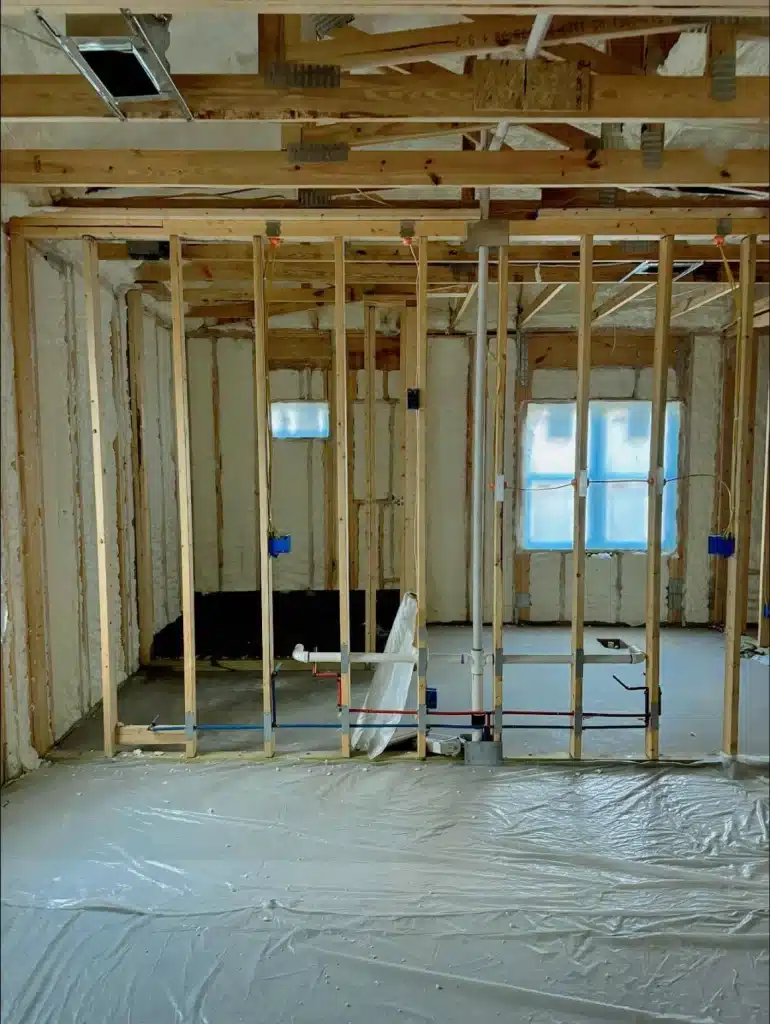
Exterior walls in most Pensacola homes built after the 1970s already contain some form of cavity insulation. Upgrading wall insulation in existing homes is rarely cost-effective due to the disruption and expense of retrofitting. However, for homes undergoing renovation or new construction, adding continuous rigid foam insulation to the exterior wall assembly significantly reduces thermal bridging through wood studs and framing.
Crawlspaces are common in older Pensacola homes. In hot-humid climates, vented crawlspaces often introduce moisture that can affect floor framing and indoor air quality. Sealing the crawlspace, installing a ground vapor barrier, and insulating the crawlspace walls (rather than the floor above) creates a conditioned crawlspace that reduces moisture problems and improves comfort on the floor above.
Recommendations by Home Type
| Home Type | Primary Strategy | Recommended Insulation | Expected Benefit |
|---|---|---|---|
| New Construction | Unvented attic, full envelope sealing | Closed-cell spray foam on the roof deck, continuous exterior wall insulation | Maximum efficiency, moisture control, and comfort |
| Existing Home (Pre-1980) | Attic air sealing + blown-in insulation upgrade | R-38+ blown-in fiberglass or cellulose on attic floor | Significant cooling cost reduction with lower upfront investment |
| Historic Home | Careful retrofit with vapor-permeable materials | Mineral wool or cellulose in walls, blown-in attic insulation | Preserves breathability while improving thermal performance |
| Home with Ducts in Attic | Prioritize moving ducts or sealing the attic | Unvented attic with spray foam, or deeply insulate and air-seal the existing attic floor | Eliminates 15-20% duct losses common in vented attics |
The EPA’s local residential energy efficiency resources highlight that building energy codes, when properly designed and enforced, can lock in more than 30% energy savings compared to standard construction practices. For Pensacola homeowners, exceeding minimum code requirements with the strategies above compounds those savings over the life of the home.
Signs You Have the Right Insulation Strategy
How do you know your insulation approach is working for your home in Pensacola? Look for these indicators:
- Consistent indoor temperatures from room to room and floor to floor, even during peak summer afternoons
- No visible condensation on windows, ductwork, or attic surfaces during humid months
- Stable energy bills that do not spike dramatically during extreme weather periods
- Even comfort near exterior walls and ceilings without hot or cold spots
- No musty odors or signs of moisture in the attic or crawlspace
- Clear communication from your contractor about R-values, air sealing methods, and moisture control measures
- A detailed proposal that specifies insulation type, depth, R-value target, and installation locations, rather than vague language
Get Expert Insulation Guidance for Your Pensacola Home
At Prestige Insulation Solutions LLC, our team evaluates every home’s unique needs, including existing insulation levels and air leakage, duct placement, and moisture risks. We design insulation solutions specifically for Pensacola’s hot-humid climate that deliver real, measurable comfort and efficiency improvements.
Call us at (850) 429-4969 or email [email protected] to get started. Our professionals provide transparent recommendations, detailed proposals, and quality installations backed by local experience on the Gulf Coast.
Sources
- U.S. Department of Energy – Insulation – Comprehensive federal resource covering how insulation works, R-values, climate zone requirements, and material types.
- ENERGY STAR – Methodology for Estimated Energy Savings – EPA data on estimated energy savings from air sealing and insulation by climate zone, including specific figures for Climate Zone 2.
- My Florida Home Energy – Insulation – University of Florida extension resource covering Florida-specific R-value requirements, insulation materials, and installation best practices.
- EPA – Local Residential Energy Efficiency – Federal resource on local government policies for residential energy efficiency, including building energy codes and ENERGY STAR home programs.
- Building Science Corporation – Vented and Sealed Attics in Hot Climates – Research report analyzing the performance of vented versus sealed attic assemblies in hot-humid climates, with findings on moisture control and energy efficiency.
Frequently Asked Questions
Q: What R-value do I need for my attic in Pensacola?
A: The Florida Building Code requires a minimum of R-38 for attic insulation in Climate Zone 2, which covers Pensacola and most of the Florida Panhandle.
Q: Is spray foam insulation worth the cost in a hot-humid climate?
A: Closed-cell spray foam provides both high R-value per inch and an integrated moisture barrier, making it particularly effective in Pensacola, where humidity is a constant concern.
Q: Should I choose a vented or unvented attic?
A: Building science research shows sealed (unvented) attics perform well in hot-humid climates by blocking moisture-laden outdoor air, though the best choice depends on your home’s construction and budget.
Q: Can I add insulation over my existing attic insulation?
A: Yes, in most cases, blown-in fiberglass or cellulose can be installed directly over existing insulation to increase the total R-value, as long as there are no moisture issues or compression problems.
Q: How much can I save on energy bills by upgrading insulation?
A: ENERGY STAR estimates that in Climate Zone 2, homeowners can save approximately 9% on heating and cooling costs through proper air sealing and insulation upgrades.

- What Should You Know Before Hiring Professional Insulation Removal Services in Pensacola, FL? - October 13, 2026
- Everything You Need to Know About Professional Insulation Removal - October 7, 2026
- Which Insulation Upgrades Deliver the Best Long-Term Value in Bagdad, FL? - September 14, 2026