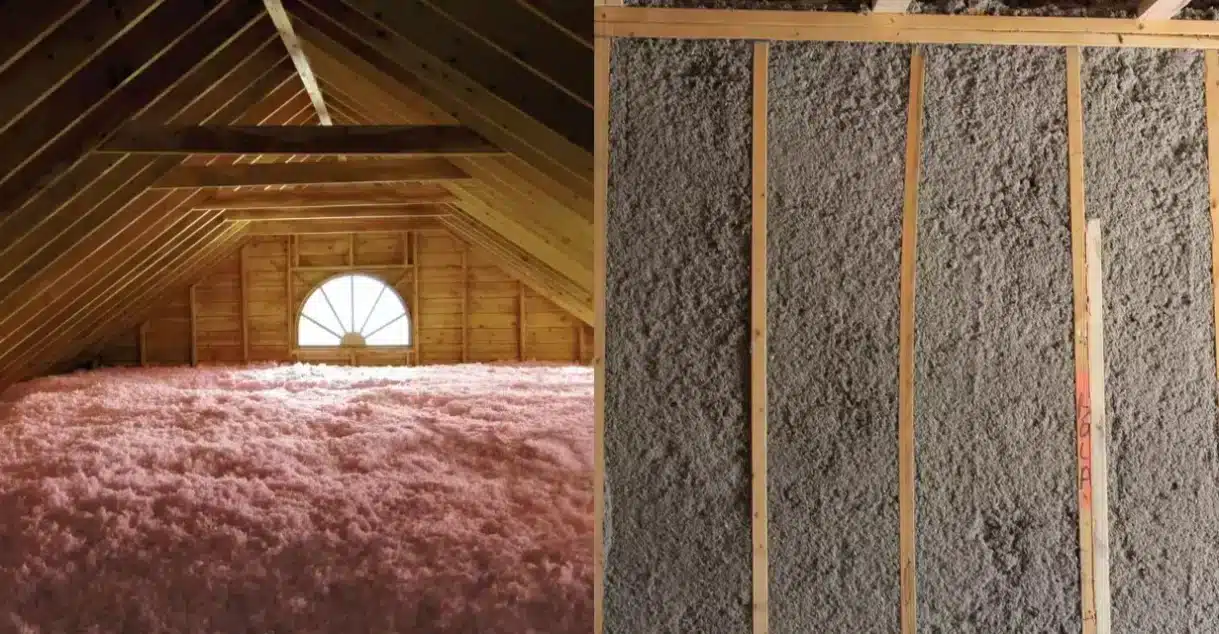
The debate over blown-in insulation installation vs. fiberglass insulation usually comes down to one question: will cellulose or fiberglass do a better job over the life of the home? Both materials get blown loose into open cavities, both are budget-friendly, and both can cut cooling costs, but they behave very differently once they’re in place. Cellulose starts life as recycled paper treated with borate for fire and pest resistance, while fiberglass is produced by spinning molten glass into fine fibers. Which one wins depends on your climate, your attic or wall structure, and what you value most: thermal performance, moisture resistance, sound control, or long-term cost.
Homes along the Gulf Coast fight heavy humidity for most of the year, and that changes the math on this decision. Our team at Prestige Insulation Solutions has installed both materials in attics and walls across Northwest Florida, so the comparison below mixes published performance data with what we actually see on job sites around Pensacola.
Cellulose Insulation vs Fiberglass: Key Differences at a Glance
| Feature | Cellulose Blown-In | Fiberglass Blown-In |
|---|---|---|
| Material Makeup | Recycled paper treated with borate | Fine spun glass fibers |
| R-Value Per Inch | 3.2 – 3.8 | 2.2 – 2.7 |
| Response to Moisture | Absorbs water readily | Repels water |
| Fire Performance | Treated with retardants | Naturally non-combustible |
| Settling | Roughly 20% in the first year | Very little |
| Air Sealing Ability | Excellent | Moderate |
| Sound Dampening | Strong | Weaker |
| Mold Resistance | Moderate | High |
| Recycled Content | High | Low |
R-Value Compared: Fiberglass vs Cellulose Insulation
R-value tells you how well a material blocks heat flow, and higher numbers mean better thermal performance per inch. Blown cellulose lands between 3.2 and 3.8 per inch, while blown fiberglass sits at 2.2 to 2.7. In other words, cellulose can hit a target R-value with noticeably less depth of material.
As an example, a full 2×4 wall cavity reaches roughly R-15 with cellulose. For attics in the Pensacola area, most homes should aim for R-30 to R-38, a range consistent with the ENERGY STAR Recommended Home Insulation R-Values.
How Much R-Value You Actually Need in a Gulf Coast Attic
Northwest Florida sits in a warm, humid climate zone, so code minimums are lower here than up north. Even so, pushing your attic to R-30–R-38 makes a real dent in cooling bills during months of near-constant air conditioning. Air sealing the attic floor first, before any material goes in, multiplies those savings.
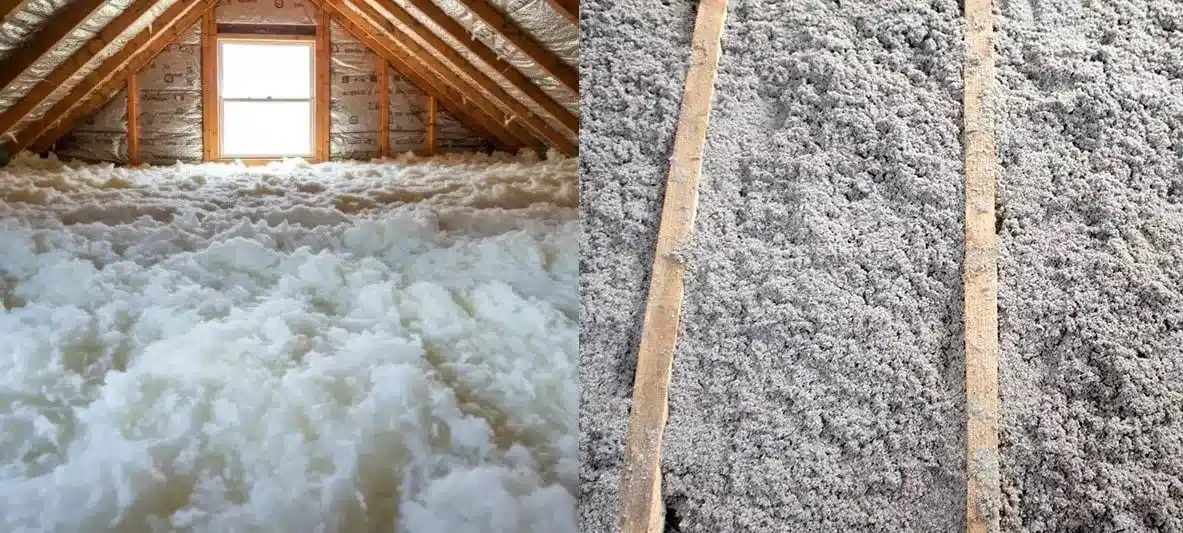
Cellulose vs Fiberglass Attic Insulation: Where the Decision Matters Most
Attics are where this matchup is decided, since both products are usually blown into open attic floors rather than closed walls.
In coastal humidity, fiberglass is the safer pick for attics with weak or missing ventilation. It shakes off moisture, resists mold, and holds its shape. Cellulose soaks up water, and once it does, it compacts and sheds R-value quickly. Threads in the r/HomeImprovement community on Reddit are full of homeowners from humid states describing cellulose that matted down after roof leaks or condensation, and the advice from experienced installers there matches ours: repair leaks, air seal, and fix ventilation before choosing cellulose. With a properly vented and sealed attic, cellulose still performs well in moderately humid conditions, as ENERGY STAR notes in its guidance.
Older homes and retrofit jobs tell a different story. Visit our local business listing to learn more about our insulation services. Cellulose drapes tightly around joists, wiring, and odd framing angles, closing off the small gaps that blown fiberglass tends to leave open. That tight fill is also why cellulose wins on noise reduction between floors and shared walls.
Bonus Tip: Whichever material you pick, add rafter baffles to keep soffit vents clear, and use a vapor barrier where it’s recommended. Ventilation and air sealing affect long-term performance more than the R-value gap between these two materials ever will.
Fiberglass vs Cellulose Blown Insulation: Cost and Coverage
On price alone, fiberglass wins the first trip to the counter because it takes less processing to manufacture. But cellulose packs more R-value into every inch, so you often need fewer cubic feet of it to reach the same target, which closes the gap once material volume is counted. When people compare fiberglass insulation vs. cellulose on total project cost, the blown-in insulation guide can help them understand why depth and coverage matter more than the sticker price on a single bag.
Coverage per bag shows the density difference clearly: a 30 lb bag of cellulose covers roughly 15–20 sq ft at R-19, while the same 30 lb bag of fiberglass covers a much wider 60–70 sq ft at R-19 because the material is far less dense. The Insulation Institute, the education arm of the North American Insulation Manufacturers Association, publishes coverage charts that make these bag-count calculations easy to check.
Is Cellulose or Fiberglass Insulation Better for Your Home?
There’s no universal answer, and anyone who tells you otherwise is skipping steps. In the cellulose vs fiberglass blown-in insulation debate, the right pick depends on your building:
- Pick fiberglass if you live in a high-humidity area, your attic ventilation is limited, or you want a material that holds its R-value without settling.
- Pick cellulose if you’re retrofitting an older home with irregular cavities, want the strongest air sealing, or care most about sound dampening between rooms.
- If sustainability drives your decision, cellulose carries significantly higher recycled content.
- If maintenance-free longevity matters most, fiberglass keeps its shape and thickness for decades.
- If allergies or respiratory sensitivity are a concern, cellulose generally causes fewer irritation issues than glass fibers.
The Difference Between Cellulose and Fiberglass Insulation Shows Up During Installation
Cellulose’s tight fill seals gaps and cuts air leakage, but it settles and may need a top-up after 10 to 15 years. Fiberglass holds its loft far longer and rarely needs reapplication, though it delivers real air sealing only when paired with separate sealing work.
Installation quality is also easier to fake with fiberglass. Blown fiberglass can be “fluffed” to the right depth while still falling short of its rated R-value, and homeowners on Reddit frequently warn about this exact problem. Their recommended fix is simple and worth repeating: check the installer’s bag count against the coverage chart printed on the bag, then measure the depth yourself at several spots after the job. Under-filled cellulose gives itself away because it visibly deflates within months. Discussions on Reddit’s r/homeowners forum make a similar point, noting that reputable installers blow to a settled thickness so the finished R-value matches the spec. If your current insulation is old, damp, or was installed badly, our team can inspect it before a fresh install.
The problems below come up again and again in homeowner forums on Reddit and Quora, and each one has a straightforward fix:
| Common Problem | Why It Happens | The Fix |
|---|---|---|
| Insulation settles and R-value drops | Cellulose compacts roughly 20% in year one | Install to settled depth; schedule a top-up after 10–15 years |
| Fiberglass looks full but underperforms | Loose blowing “fluffs up” without enough material | Verify bag count against the coverage chart; measure depth in multiple spots |
| Damp, matted insulation with musty odor | Roof leaks, condensation, or blocked attic ventilation | Repair leaks first, add rafter baffles, improve airflow before reinstalling |
| Gaps and cold spots around joists | Blown fiberglass skips around wiring and framing in retrofit cavities | Use cellulose for irregular cavities, or dense-pack where possible |
| Clogged rental blower machine mid-job | DIY machines struggle with dense cellulose | Hire a crew with commercial equipment for even, consistent coverage |
| Insulation pushed against soffit vents | Blowing without baffles blocks intake airflow | Install rafter baffles before any material goes in |
Cellulose vs Batt Insulation: Where Blown-In Fits In
Batts, the rolled blanket insulation sold in precut widths, work fine in open, rectangular wall cavities during new construction. But in finished attics and irregular retrofit spaces, batts leave seams and gaps around wiring that blown-in material simply fills on its own. For anyone weighing cellulose vs. batt insulation on sound control, dense blown cellulose is the clear winner because it packs tight around every obstruction.
Get Expert Insulation Guidance
Still unsure which material fits your home? Our technicians will look at your climate exposure, existing insulation levels, and budget, then recommend the option that actually suits your building, not just the easiest sale.
Call now: (850) 429-4969 or email [email protected].
Frequently Asked Questions
Does cellulose insulation soak up moisture?
Yes, cellulose absorbs moisture and can compact and lose R-value as a result. Borate treatment helps it resist mold, but good attic ventilation and vapor barriers are still recommended in humid climates.
Can cellulose be blown in over existing fiberglass?
Generally yes, as long as the old fiberglass isn’t wet, moldy, or damaged. A quick inspection first is worth the time.
Does cellulose insulation draw in pests?
No, the borate treatment deters most common household pests.
Can I use either material in my attic?
Yes, but the better choice depends on your attic’s ventilation, humidity exposure, and whether the job is new construction or a retrofit.
Which type is easier on people with allergies?
Cellulose usually causes fewer irritation problems, since fiberglass fibers can bother skin and airways during handling.
Sources
- ENERGY STAR, Recommended Home Insulation R-Values
- Insulation Institute (NAIMA), Homeowner Insulation Resources
- Reddit, r/HomeImprovement: Blown In Insulation for Attic, Cellulose vs Fiberglass; which is best?
- Reddit, r/homeowners: Attic Insulation Fiberglass vs Cellulose

- What Should You Know Before Hiring Professional Insulation Removal Services in Pensacola, FL? - October 13, 2026
- Everything You Need to Know About Professional Insulation Removal - October 7, 2026
- Which Insulation Upgrades Deliver the Best Long-Term Value in Bagdad, FL? - September 14, 2026