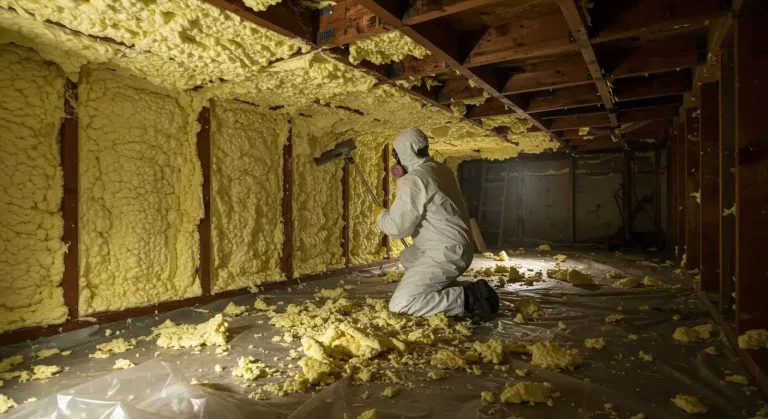
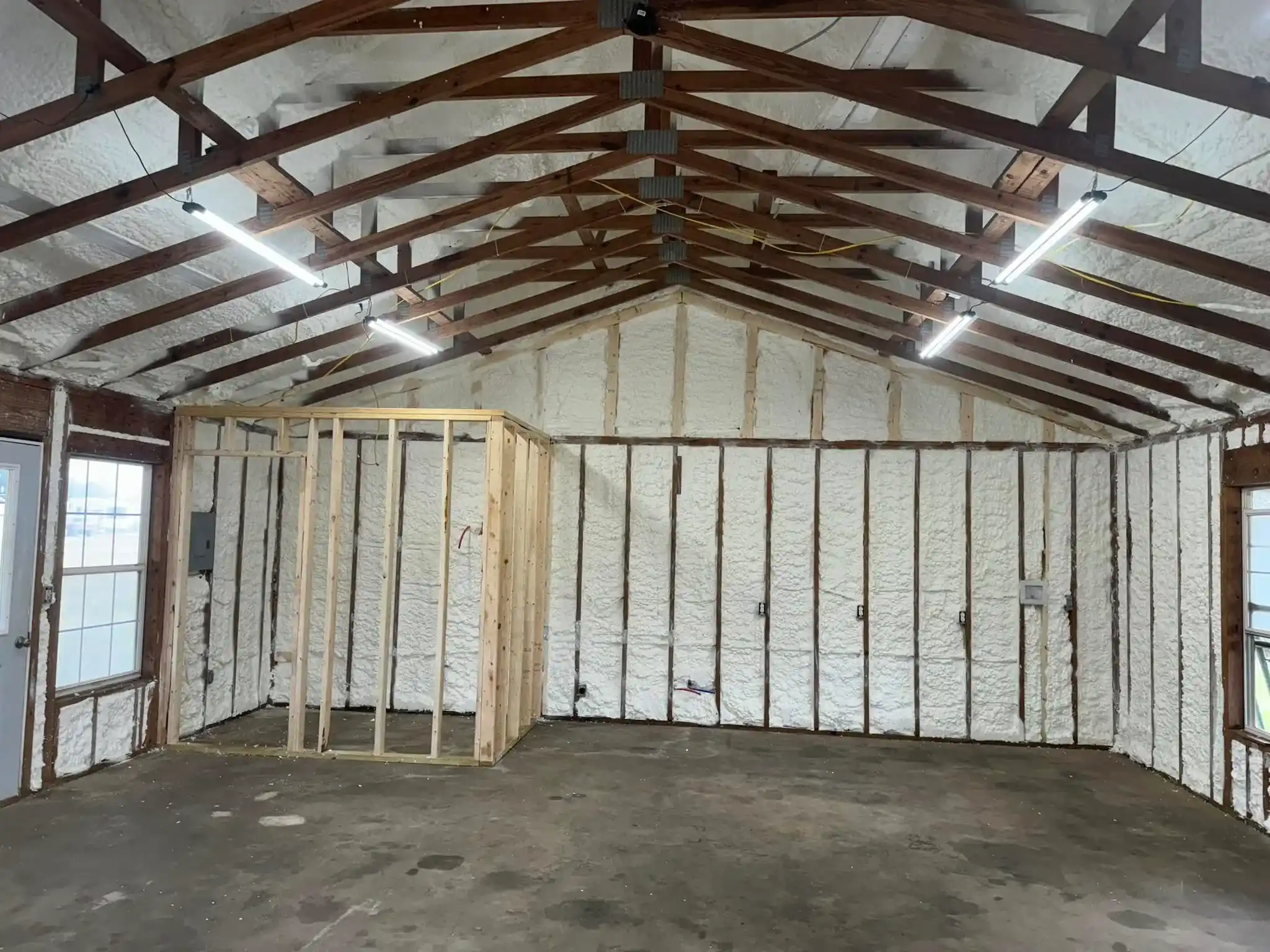
Residential spray foam insulation solves the exact comfort problems Pace, FL homeowners complain about most: high summer power bills, rooms that never match the thermostat, sticky indoor humidity, musty crawl spaces, road noise, and dust that keeps coming back. Unlike batts or blown-in products that sit loosely between framing, spray polyurethane foam expands on contact and seals the gaps where hot, humid Gulf Coast air sneaks in. Because Pace has a humid subtropical climate with roughly 68 inches of rain per year and long, hot summers, home spray foam insulation solutions can provide the airtight and moisture-resistant envelope needed for better performance in these conditions. The right application depends on the problem: closed-cell foam handles moisture-prone areas like crawl spaces and roof decks, while open-cell foam excels at filling wall cavities and quieting interior rooms. Below, we break down each problem, compare the two foam types, and show which approach fits your home.
TL;DR
- Spray foam insulates and air seals in a single step, blocking the convective heat transfer that loose insulation leaves open when air moves through gaps in the building envelope.
- According to ENERGY STAR, sealing air leaks and adding insulation can cut up to 10% off annual energy bills, and foam is the only insulation that also functions as an air barrier as it fills voids.
- The EPA recommends keeping indoor relative humidity between 30 and 50 percent and never above 60 percent to prevent mold, and controlled air infiltration helps hold that line in Pace’s muggy climate.
- Closed-cell foam delivers roughly R-5.1 to R-6 per inch and acts as a vapor barrier at its minimum thickness, while open-cell foam runs near R-3.8 per inch and absorbs sound, so the two solve different problems.
- Department of Energy research shows that about 40% of a home’s energy can be lost to air infiltration through walls, windows, and doorways, which is why sealing matters as much as R-value.
- Foam does not sag, settle, or shift the way batts can, so performance stays consistent year after year instead of slowly degrading in attic heat.
Why Pace Homes Develop These Problems Faster
Pace sits just north of Pensacola in Santa Rosa County, and both communities share the same humid subtropical climate: summer highs in the lower 90s, overnight lows in the mid-70s, and heavy afternoon thunderstorms from June through September in Pensacola, Florida. The area averages about 68 inches of rain annually, with July alone averaging 7.89 inches, and it has taken direct hits from major hurricanes including Ivan in 2004 and Sally in 2020. That combination of heat, moisture, and storm-driven wind creates pressure on every seam in a home’s envelope.
Humid air carries a hidden cost. Research summarized in building insulation literature notes that when air conditioning is used in a hot, humid climate, sealing the building envelope is especially important because dehumidifying all the humid air that leaks in wastes significant energy. In other words, every gap in your attic or walls forces your AC to cool and dry the same muggy air over and over.
6 Common Home Problems Residential Spray Foam Insulation Solves
| Home Problem | Root Cause in Pace Homes | How Spray Foam Helps |
|---|---|---|
| High cooling bills | Air infiltration plus attic heat gain | Air barrier plus high R-value in one layer |
| Hot rooms and drafts | Gaps around framing, wiring, and ducts | Foam expands into voids batts cannot reach |
| Humidity and mold | Moist air entering through leaks | Seals the leak path and repels moisture |
| Outdoor noise | Thin walls and open cavities | Open-cell foam absorbs airborne sound |
| Dust and allergens | Pollen pulled in with infiltration | Tighter envelope means fewer airborne particles |
| Damp crawl spaces | Ground moisture and humid air entry | Closed-cell foam resists water and seals air |
High Energy Bills and an Overworked AC System
ENERGY STAR identifies air sealing and insulation as one of the most cost-effective efficiency upgrades, with potential savings of up to 10% on annual energy bills. Roughly 40% of a home’s energy loss comes from air infiltration, and residential spray foam services can address that loss directly. Studies cited on the spray foam record show buildings treated with spray foam can insulate as much as 50% better than traditional insulation products, which translates into shorter AC run times during Pace’s long cooling season.
Rooms That Are Too Hot, Too Cold, or Drafty
If the bedroom over the garage is five degrees warmer than the rest of the house, the problem is usually air movement, not the thermostat. Foam insulation’s most important attribute is its ability to create a custom airtight envelope that blocks convective heat transfer between interior and exterior. Once that convection path is closed, temperatures even out from room to room.
Humidity, Condensation, and Mold Growth
The EPA is blunt about the relationship between moisture and mold: the key to mold control is moisture control, and indoor humidity should stay below 60 percent, ideally between 30 and 50 percent. Condensation on windows and sticky surfaces are warning signs of excess humidity. By sealing the gaps where moist Gulf air enters, spray foam helps your AC and dehumidifier maintain that target range instead of fighting a losing battle against infiltration.
Outside Noise and Echoing Rooms
Foam insulation serves as a barrier to airborne sound and reduces sound transfer through walls, floors, and roofs compared with uninsulated structures. Open-cell foam in interior walls is a common choice for home offices, nurseries, and media rooms because it blocks and absorbs air leakage that carries noise with it.
Dust, Pollen, and Indoor Air Quality Complaints
Every air leak is also a dust and pollen highway. When the envelope tightens, far fewer airborne particles ride in from outside, and the EPA notes that mold spores, a common allergen trigger, cannot grow when the surfaces they land on stay dry. Families dealing with seasonal allergies in Santa Rosa County often notice the difference first in how often they dust.
Damp Crawl Spaces and Moisture Damage
Closed-cell spray foam is used to insulate crawl spaces because it provides both thermal resistance and moisture protection in fluctuating temperature and humidity conditions. At its required minimum installed thickness, medium-density closed-cell foam functions as both an air barrier and a vapor barrier, which is exactly what a vented, humid crawl space under a Pace home needs. Local spray foam reviews in Pace can also help homeowners compare local experiences before choosing an insulation approach to stop condensation, wood rot, and the mold that follows.
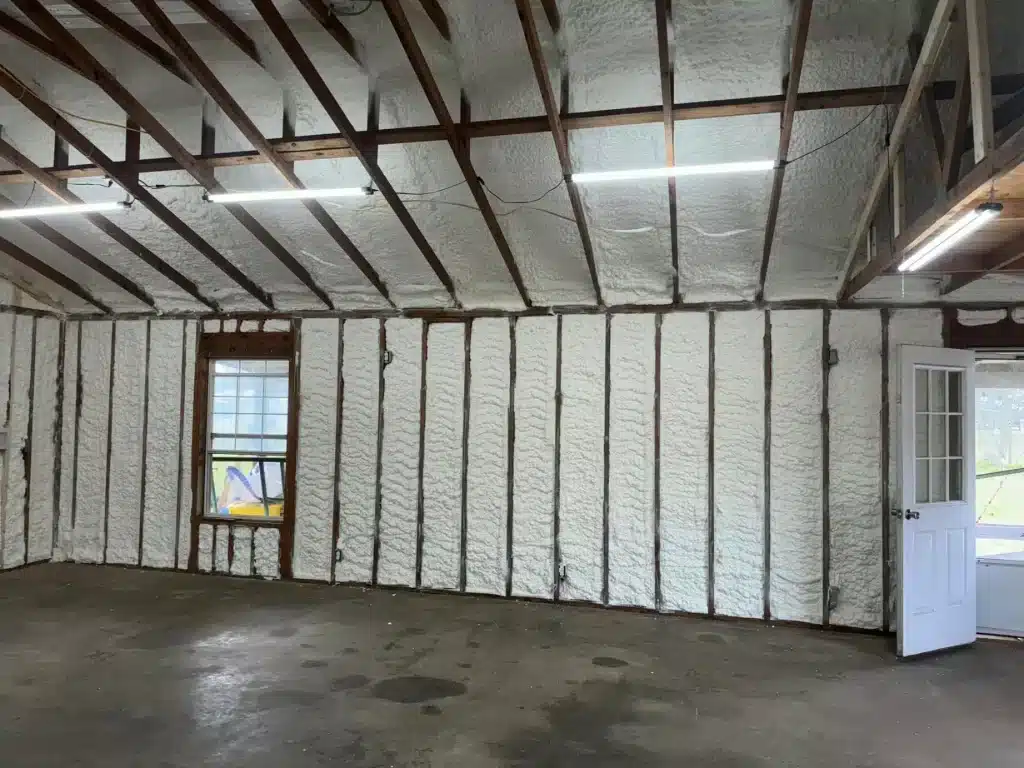
Open Cell vs Closed Cell Spray Foam for Pace, FL Homes
Choosing the wrong foam for the application causes most of the spray foam horror stories you may have read about. The two products behave differently, and each has a clear best use.
| Attribute | Open Cell (ocSPF) | Closed Cell (ccSPF) |
|---|---|---|
| R-value per inch | About R-3.8 | About R-5.1 to R-6 |
| Density and feel | Half-pound, sponge-like, semi-rigid | Two-pound, rigid, dense |
| Vapor barrier | No, air-permeable (air barrier at 5.5+ inches) | Yes, at minimum installed thickness |
| Sound control | Excellent, absorbs airborne sound | Good, adds mass |
| Water contact | Absorbs and holds moisture | Resists water absorption |
| Best applications | Wall cavities, roof decks, sound dampening | Crawl spaces, rim joists, flood-prone areas, metal buildings |
Our team matches the foam to the location, not the other way around. Open-cell belongs inside the conditioned envelope, and closed-cell belongs wherever water or ground moisture might find it.
Which Approach Fits Your Home
- Subdivision homes with vented attics: Sealing and insulating the attic floor or encapsulating the roof deck with foam delivers the largest measurable change in comfort, since attics drive most summer heat gain.
- Homes on pier-and-beam or crawl space foundations: Closed-cell foam on the crawl space walls and rim joist blocks ground moisture and humid air at the same time.
- Two-story homes with problem rooms: Targeted foam in bonus rooms, knee walls, and garage-adjacent bedrooms fixes temperature imbalances without treating the whole house.
- Home offices and nurseries: Open-cell foam in interior partitions dampens sound between rooms.
- New construction and additions: Spraying the roof line with open-cell foam brings ductwork inside the conditioned space, a strategy that works especially well in hot climates where attic ducts waste cooling.
Signs You’ve Found the Right Insulation Approach
- Your installer inspects the attic, crawl space, and rim joist before quoting anything, because the leak locations tell you where the work belongs.
- The proposal explains open-cell versus closed-cell and states exactly which product goes where, rather than one price for “foam.”
- Ventilation implications are addressed, since sealing a home tightly changes how the building breathes and may require mechanical ventilation.
- The crew protects the home, monitors temperature and substrate moisture during application, and keeps occupants out until the foam cures.
- You receive a written scope, and a walkthrough confirms coverage thickness before cleanup.
Solve Your Home’s Comfort Problems With Our Team
At Prestige Insulation Solutions LLC, we live and work in the same Gulf Coast humidity you do, and we design residential spray foam insulation projects around the specific problems we find in your attic, walls, and crawl space. Our team walks your home with you, explains the open-cell versus closed-cell decision in plain terms, and installs to manufacturer specifications, not shortcuts. Call us at (850) 429-4969 or email [email protected] to get started, and a more comfortable, drier, quieter home is one project away.
Frequently Asked Questions
Can residential spray foam insulation really lower my electric bill in Pace?
Yes. Wikipedia – Spray foam reports that air sealing combined with added insulation can save up to 10% on annual energy bills, and cooling is the dominant load in our climate. Sealing the leaks your AC has been fighting means shorter run times every afternoon.
Will spray foam stop mold in my home?
Spray foam controls moisture, and moisture control is what prevents mold according to the EPA. If mold already exists, it must be cleaned up and the water problem fixed first, since sealing over an active moisture problem hides it instead of solving it.
Should I choose open cell or closed cell foam for my attic?
Both work, and the choice depends on the assembly. Open-cell is common on roof decks and interior walls for sound control, while closed-cell suits areas with potential moisture contact. Our team recommends the correct product after inspecting your home.
Is spray foam safe for my family after installation?
Spray foam off-gasses while curing, which is why occupants stay out of the work area during application and ventilation. Once cured, the foam is completely inert and non-toxic, and modern formulations cure in a very short time.
Can spray foam help with the noise I hear from traffic and storms?
It can. Foam insulation acts as a barrier to airborne sound and reduces sound transfer through walls, floors, and roofs compared with uninsulated structures. Open-cell foam in walls is especially effective at absorbing the noise that rides in on air leakage.
Sources
- ENERGY STAR – Seal and Insulate – Official guidance on air sealing and insulation projects, including the finding that sealing leaks and adding insulation can deliver up to 10% savings on annual energy bills.
- EPA – A Brief Guide to Mold, Moisture and Your Home – Federal guidance on moisture control as the key to mold prevention, recommended indoor humidity ranges, and condensation warning signs.
- Wikipedia – Building insulation – Building science reference on envelope sealing in hot, humid climates, energy waste from dehumidifying infiltrating air, and moisture effects on insulation performance.
- Wikipedia – Pensacola, Florida – NOAA-sourced climate normals for the Pace area, including average annual rainfall, summer temperatures, and regional hurricane history.

- What Types of Insulation Can Be Professionally Removed From Your Home Safely and Efficiently in Pensacola, FL? - October 16, 2026
- What Should You Know Before Hiring Professional Insulation Removal Services in Pensacola, FL? - October 13, 2026
- Everything You Need to Know About Professional Insulation Removal - October 7, 2026