If your home in Elberta, AL has uneven temperatures, rising energy bills, or drafts you cannot explain, blown-in insulation gaps are likely part of the problem. Blown-in insulation is one of the most practical ways to insulate attics and walls, but when gaps, settling, or voids form over time, the thermal barrier weakens, and your HVAC system works harder to compensate. The solution involves a combination of identifying where gaps exist, pairing insulation with proper air sealing, selecting the right material for our Gulf Coast climate, and making sure installation meets or exceeds the R-value standards set for Baldwin County’s specific climate zone, making blown-in insulation installation essential for restoring performance.
TL;DR
- Elberta, AL, sits in IECC Climate Zone 2A (Hot-Humid), meaning attics need between R-30 and R-49 of insulation depending on existing coverage
- Settling is the most common cause of blown-in insulation gaps, especially with cellulose, which can compact and leave voids at the top of wall cavities or attic floors
- Air sealing must happen before or alongside insulation to prevent conditioned air from escaping through gaps around penetrations, ductwork, and framing
- Cellulose offers a slightly higher R-value per inch (R-3.2 to R-3.8) than fiberglass, while mineral wool provides added fire resistance and moisture durability
- All insulation materials perform equally well when properly installed and air sealed, according to the Building Sciences Corporation
- A professional energy assessment with a blower door test can pinpoint exactly where insulation gaps and air leaks exist
- Fixing insulation gaps can reduce heating and cooling costs significantly and improve indoor comfort year-round
Why Blown-In Insulation Gaps Happen in Elberta Homes
Homes across Baldwin County face a specific set of environmental challenges. The hot, humid summers and mild but unpredictable winters in Climate Zone 2A mean your insulation needs to perform in both directions, keeping heat out during summer and retaining warmth during winter. When blown-in insulation develops gaps, that two-way protection breaks down, making blown-in insulation repair critical for maintaining consistent thermal performance.
The most frequent causes of insulation gaps include:
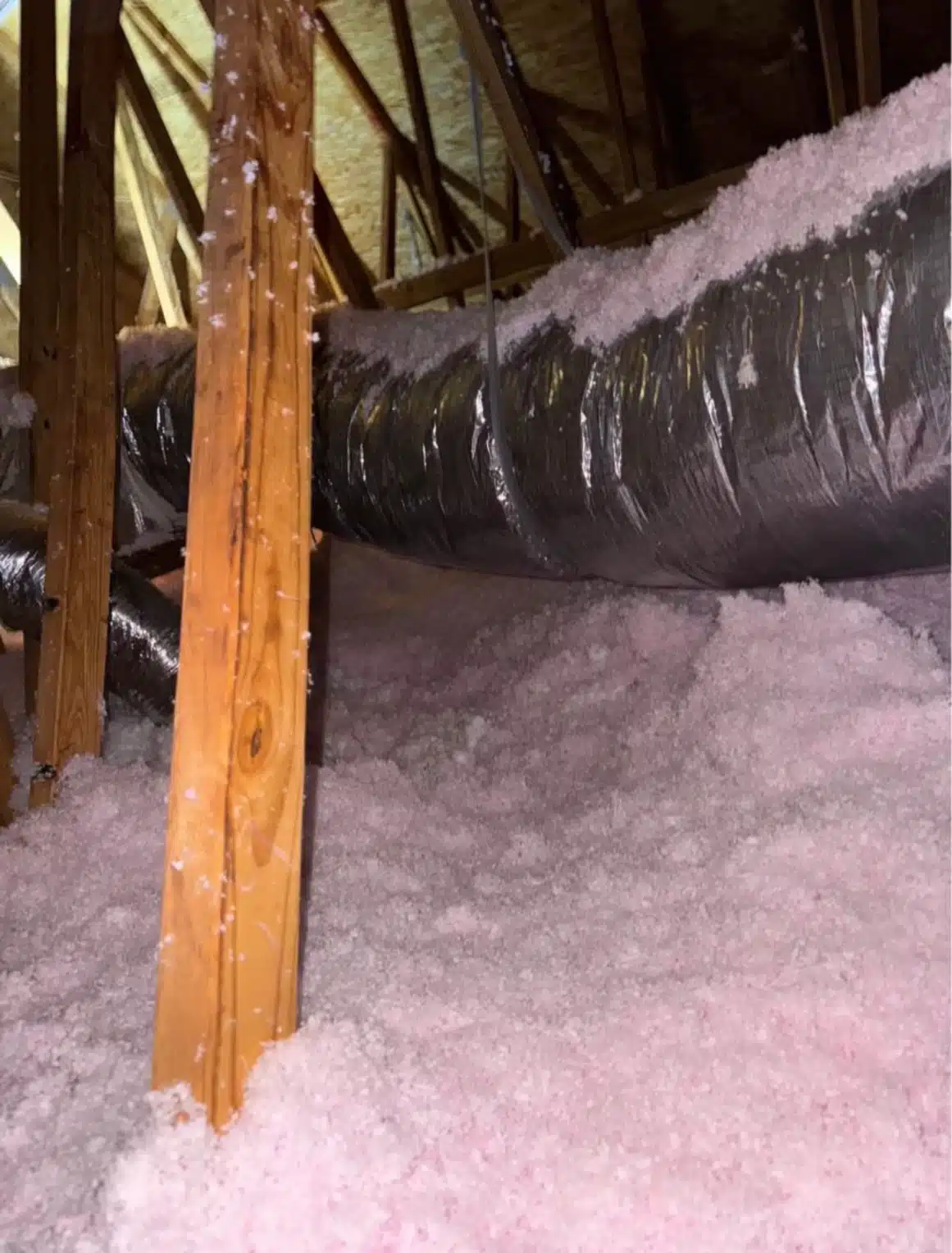
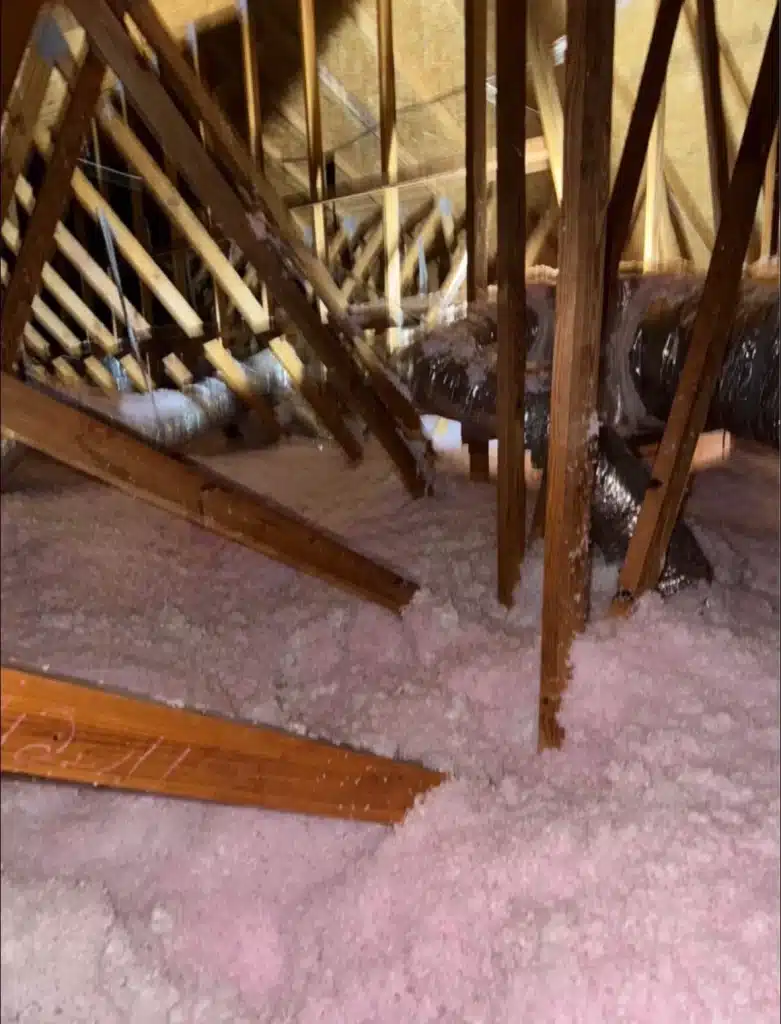
- Settling over time: Cellulose insulation, in particular, is prone to settling. As it compacts under its own weight, it can leave an uninsulated gap at the top of wall cavities or thin out across attic floors. This effectively lowers the R-value of the entire section.
- Poor initial installation: If the installer did not achieve the correct density, especially in wall cavities, the material may not have filled the entire space. Low-density fills leave air pockets that allow convective heat loss.
- Moisture damage: In a humid climate like ours, moisture infiltration can cause blown-in materials to clump, sag, or degrade, creating bare spots where no insulation remains.
- Pest activity and disturbance: Rodents and insects can displace insulation, creating tunnels and voids that compromise coverage.
- Home settling and structural shifts: As a house ages and settles naturally, framing can shift slightly, creating new gaps where insulation pulls away from studs, joists, and sheathing.
The Department of Energy notes that reducing air leakage is one of the most cost-effective ways to improve home comfort and energy efficiency, and insulation gaps directly contribute to uncontrolled air movement through the building envelope.
Understanding R-Value Requirements for Baldwin County
Baldwin County falls outside the majority of Alabama counties in terms of climate classification. While most of the state is in Climate Zone 3A, Baldwin and Mobile counties are classified as Climate Zone 2A (Hot-Humid), according to the Southface Institute’s Alabama Residential Field Guide. This distinction matters because it sets the baseline for how much insulation your home needs.
ENERGY STAR’s recommended R-values for Climate Zone 2 are:
| Home Area | Uninsulated Attic | Attic With 3-4 Inches Existing | Floor |
|---|---|---|---|
| Zone 2 (Elberta) | R-30 | R-38 to R-49 | R-13 |
If your blown-in insulation has settled or developed gaps, you may be well below these targets even if the insulation was installed correctly years ago. An R-30 attic that has lost 30% of its depth to settling is effectively performing at R-21 or lower, which is a significant shortfall in a hot-humid climate.
Blown-In Insulation Materials Compared
Choosing the right blown-in material makes a real difference in long-term performance, especially in a coastal Alabama environment. The Insulation Institute reports that all insulation types perform equally well when properly installed and air sealed, but each material has distinct characteristics that affect durability, moisture resistance, and fire safety.
| Material | R-Value Per Inch | Fire Resistance | Moisture Tolerance | Settling Tendency | Best Application |
|---|---|---|---|---|---|
| Cellulose | R-3.2 to R-3.8 | Treated with fire retardants | Moderate; can absorb moisture | High; compacts over time | Attics, enclosed wall cavities |
| Fiberglass (loose-fill) | R-2.2 to R-2.7 | Naturally non-combustible | Good; does not absorb water | Low to moderate | Attics, open wall cavities |
| Mineral Wool | R-3.0 to R-3.3 | Naturally non-combustible | Excellent; hydrophobic | Very low | Attics, walls, areas prone to moisture |
| Rock Wool (slag wool) | R-2.8 to R-3.0 | Naturally non-combustible | Excellent | Very low | Walls, basements, crawl spaces |
For homes in Elberta, where humidity levels run high for much of the year, mineral wool and fiberglass both offer advantages in moisture resistance. Cellulose performs well thermally but requires careful attention to moisture management because it can absorb water, clump, and lose effectiveness in humid conditions across Elberta, AL homes.
The Fix: Air Sealing Plus Correct Installation
Adding more blown-in insulation on top of existing gaps will not solve the problem. The ENERGY STAR Seal and Insulate program recommends a combined approach that addresses air leakage first, then ensures insulation is installed to the correct depth and density.
Step one is air sealing. Before any new insulation goes in, our team seals gaps around:
- Plumbing penetrations and wire chases
- Ductwork connections and registers
- Recessed light housings (with approved covers)
- Attic hatches and pull-down stairs
- Wall-to-ceiling intersections and top plates
Caulking, low-expansion spray foam, and rigid flashing are the primary tools. The DOE reports that caulking and weatherstripping offer returns on investment of one year or less, making air sealing one of the fastest-payoff home improvements available.
Step two is addressing existing gaps. Depending on the severity, this may involve:
- Adding blown-in material over settled areas to restore target R-values
- Dense-packing wall cavities that have developed voids
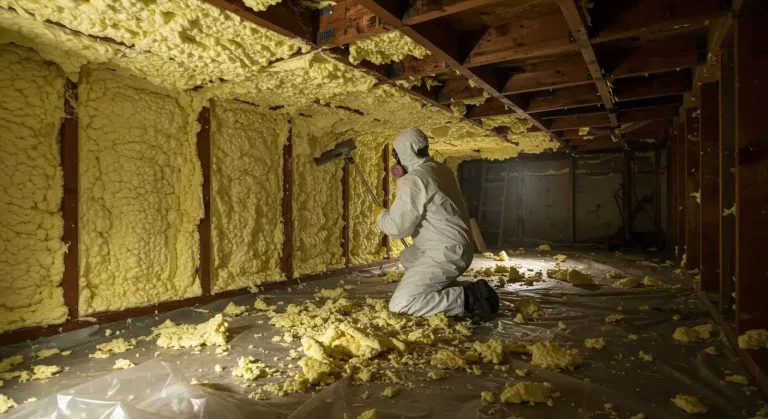
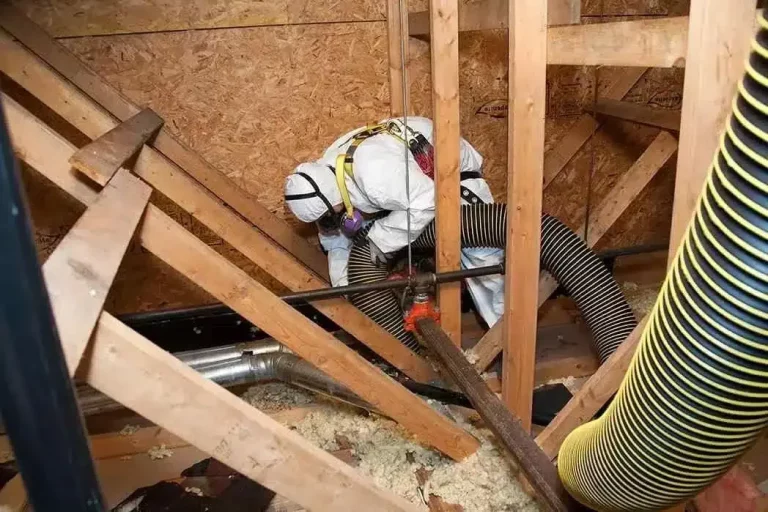
- Removing and replacing insulation that has been damaged by moisture or pests
- Installing baffles to maintain proper ventilation channels in the attic
Step three is verifying coverage. A professional installer uses depth rulers, visual inspection, and often infrared imaging to confirm that the new insulation fills the entire area to the specified R-value with no remaining voids.
Recommendations by Home Type
| Home Situation | Recommended Approach | Key Considerations |
|---|---|---|
| Older home, never updated | Full assessment + dense-pack walls + attic top-up | Likely has little to no wall insulation; air sealing alone can produce noticeable improvements |
| Home with existing blown-in cellulose | Inspect for settling, moisture damage, and pest activity | Cellulose in Zone 2A is vulnerable to humidity; it may need partial replacement |
| New construction or recent renovation | Verify installation meets code R-values and air sealing standards | Even new homes can have gaps if the insulation was rushed or poorly supervised |
| Home with frequent HVAC cycling | Blower door test + comprehensive air sealing + insulation top-up | High energy bills and short-cycling often point to envelope issues rather than equipment failure |
| Crawlspace or basement under the home | Insulate and seal rim joists + floor insulation | Ground-level moisture is a major factor in Baldwin County homes |
Signs You Have Found the Right Insulation Contractor
Not every insulation company approaches gap repair the same way. Here is what separates a thorough, professional job from a surface-level patch:
- They recommend air sealing first. Any contractor who jumps straight to adding insulation without discussing air leakage is skipping the most impactful step.
- They use diagnostic tools. A blower door test, thermal imaging camera, or both should be part of the assessment process, not an upsell.
- They explain R-value targets for your specific zone. If a contractor gives a single number without referencing Climate Zone 2A requirements, they may not be accounting for local conditions.
- They discuss material options honestly. A good contractor explains the trade-offs between cellulose, fiberglass, and mineral wool rather than pushing one product for every situation.
- They provide a written scope of work. The proposal should specify R-value targets, areas to be sealed, material type, and depth measurements, not just a price per square foot.
- They stand behind their work. Warranties, follow-up inspections, and clear communication after installation are signs of a contractor who takes long-term performance seriously.
Stop Losing Money to Insulation Gaps
Prestige Insulation Solutions LLC helps homeowners across Elberta, AL, identify and fix blown-in insulation gaps with a thorough, code-compliant approach tailored to our local Climate Zone 2A conditions. Our team combines air sealing expertise with professional blown-in installation to restore your home’s thermal barrier and lower your energy costs for good.
Call us at (850) 429-4969 or email [email protected] to get started. We will inspect your attic and walls, identify every gap, and give you a clear plan to fix it right the first time.
Sources
- Recommended Home Insulation R-Values – ENERGY STAR – Official R-value recommendations by climate zone for retrofit and new construction projects.
- Air Sealing Your Home – U.S. Department of Energy – Federal guidance on detecting and sealing air leaks to improve home energy efficiency.
- Comparing Insulation Types – Insulation Institute – Detailed comparison of fiberglass, mineral wool, cellulose, and spray foam insulation materials covering performance, safety, and installation quality.
- 2015 IECC + 2016 Alabama Residential Field Guide – Southface Institute – Alabama-specific climate zone map confirming Baldwin County as Zone 2A, along with state energy code requirements.
- Seal and Insulate with ENERGY STAR – Comprehensive program guidance on combining air sealing and insulation for maximum energy savings.
Frequently Asked Questions
How do I know if my blown-in insulation has gaps?
Look for uneven or thin spots in attic insulation, notice rooms that feel drafty or hotter than others, or check your energy bills for unexplained increases. A professional blower door test or thermal imaging inspection is the most reliable way to identify hidden gaps.
Can blown-in insulation gaps be fixed without removing all the existing material?
In most cases, yes. Settled areas can be topped off with additional blown-in material, and small voids can be dense-packed without a full tear-out. However, if the existing insulation has been damaged by moisture or pests, replacement may be necessary.
How much does it cost to fix blown-in insulation gaps in Elberta?
Costs vary based on the size of the area, the extent of gaps, whether air sealing is needed, and the material selected. A professional assessment is required to give an accurate quote, as each home’s situation is unique.
How long does blown-in insulation last before it needs to be replaced?
Fiberglass and mineral wool can last 50 years or more when installed correctly and kept dry. Cellulose typically lasts 20 to 30 years before settling or moisture exposure reduces its effectiveness enough to warrant a top-up or replacement.
Is air sealing really necessary if I am adding more insulation?
Yes. The Insulation Institute and the Department of Energy both emphasize that insulation alone cannot stop air movement through gaps and penetrations. Air sealing and insulation work together, and skipping air sealing means you are leaving the most cost-effective improvement on the table.

- What Should You Know Before Hiring Professional Insulation Removal Services in Pensacola, FL? - October 13, 2026
- Everything You Need to Know About Professional Insulation Removal - October 7, 2026
- Which Insulation Upgrades Deliver the Best Long-Term Value in Bagdad, FL? - September 14, 2026