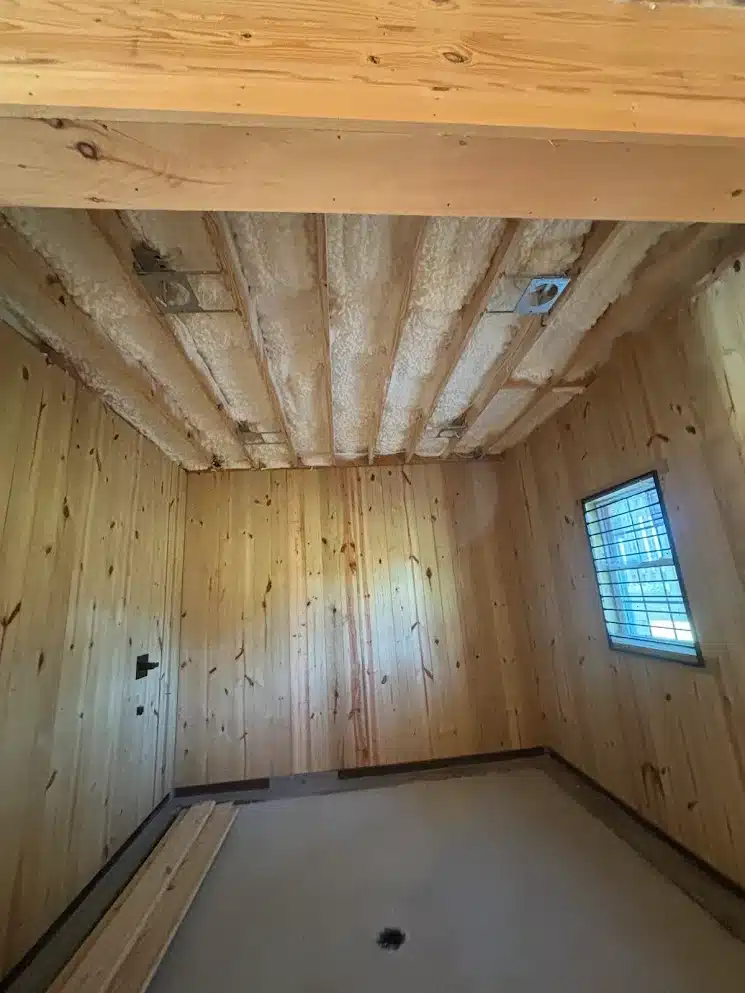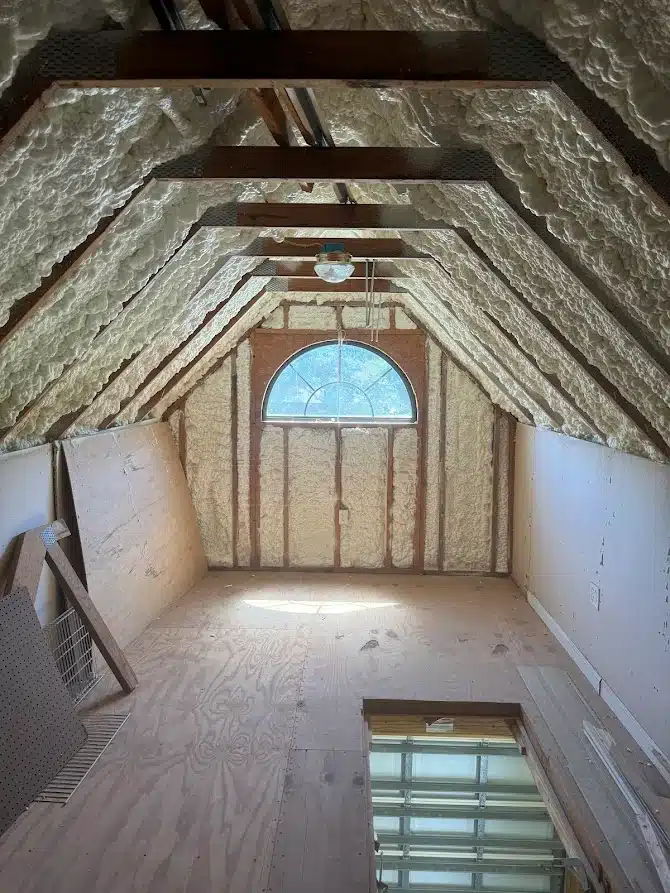
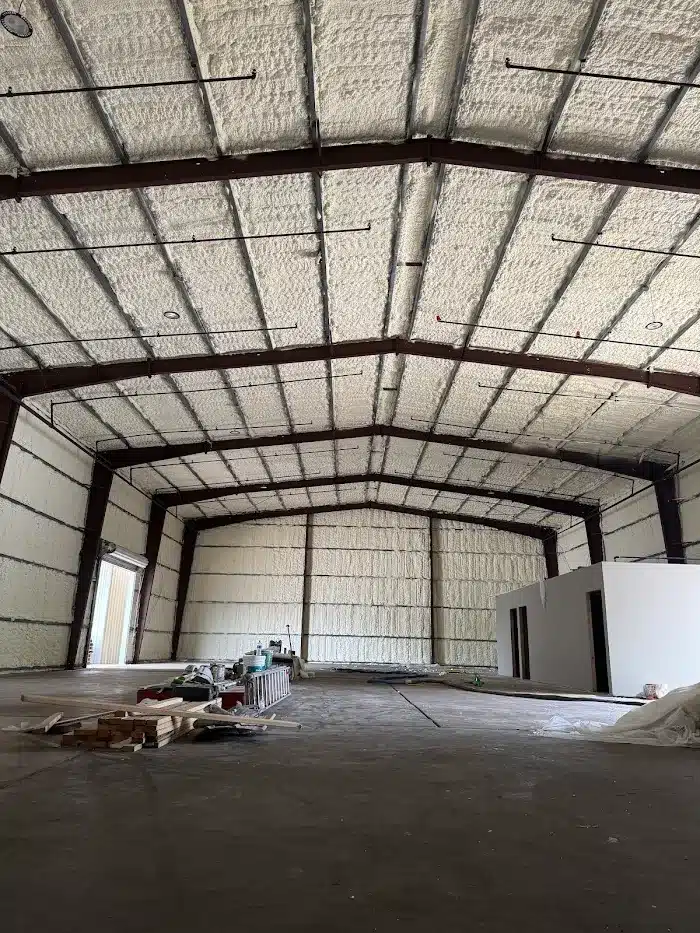
Spray foam insulation provides a superior thermal envelope for cathedral and vaulted ceilings because it serves as both an insulating material and an air barrier. This dual function is essential in Pensacola’s hot and humid climate, where traditional insulation often fails to stop moisture infiltration and air leakage. Unlike fiberglass batts or blown-in cellulose, spray foam expands to fill every gap and crack, creating a sealed space that prevents the outdoor heat and humidity from entering the living space. Prestige Insulation Solutions has observed that improperly insulated cathedral ceilings are a leading cause of high energy bills and mold growth in the Florida Panhandle, making the choice of insulation material a critical decision for homeowners.
This guide explains the technical reasons why spray foam outperforms other materials in these specific architectural designs, particularly within the Gulf Coast region. Readers will find practical information on moisture control, energy efficiency, and structural considerations, backed by industry data and local experience.
The Challenge of Cathedral Ceilings in Hot Climates
Cathedral and vaulted ceilings present unique difficulties that standard flat ceilings do not. In a traditional attic, there is open space to allow for ventilation and easy movement of air. In a cathedral ceiling, the insulation is sandwiched directly between the living space and the roof deck. This leaves very little room for error.
In Pensacola, the combination of high temperatures and extreme humidity creates a relentless pressure on homes. The U.S. Department of Energy states that air leakage accounts for a significant portion of energy waste in residential buildings, often exceeding 25% of total cooling costs. When a cathedral ceiling is not perfectly sealed, hot, moist air from the outside enters the roof assembly. As this air hits the cooler interior surface or the air-conditioned side of the insulation, condensation forms. Over time, this moisture creates the perfect environment for mold growth and wood rot, compromising the structural integrity of the roof trusses and sheathing.
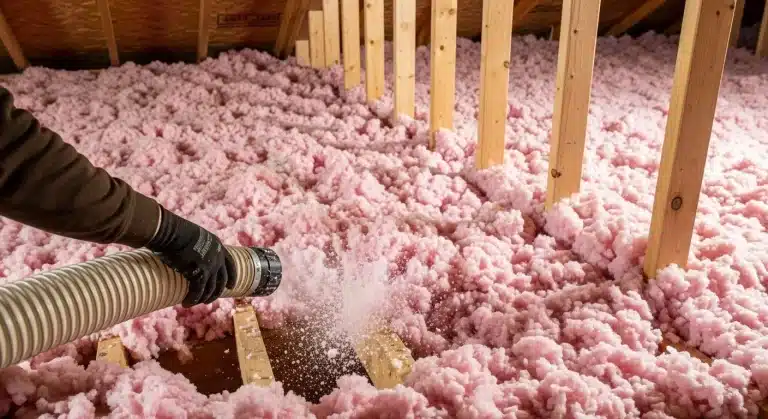
Traditional insulation materials like fiberglass rely on a perfect installation to work correctly. They must be cut perfectly around wires, light fixtures, and framing members. Even a small gap allows air to pass freely. This concept, known as the “wind washing effect,” drastically reduces the effective R-value of fiberglass in real-world conditions compared to laboratory ratings. Spray foam does not suffer from this issue because it adheres to the building materials and creates a continuous seal.
Air Sealing and Thermal Performance
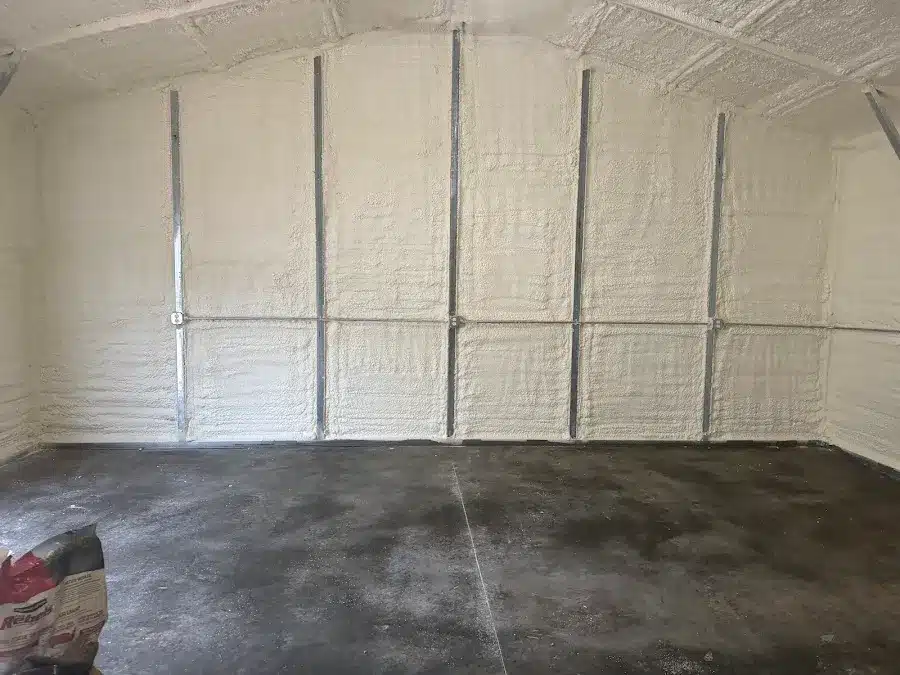
The primary advantage of spray foam is its ability to air seal. Air sealing is the process of closing up cracks and holes where air leaks. In a cathedral ceiling, these leaks often occur at the intersection of the top plate and the roof deck, around rafters, and around ceiling-mounted fixtures. Closed-cell spray foam, in particular, has a high density and expands significantly upon application, forcing itself into these small crevices.
When air movement is stopped, the insulation can perform at its rated capacity. This stability maintains a consistent temperature on the interior surface of the drywall. A consistent surface temperature leads to greater comfort. In homes with poorly insulated vaulted ceilings, occupants often feel a “radiant heat” effect coming from the ceiling in the summer, forcing the air conditioning system to work harder to compensate.
Comparison of Insulation Types
The table below outlines the performance differences between common insulation materials used in cathedral ceilings.
| Feature | Fiberglass Batts | Blown-in Cellulose | Closed-Cell Spray Foam | Open-Cell Spray Foam |
|---|---|---|---|---|
| R-Value per Inch | ~3.1 to 3.4 | ~3.2 to 3.8 | ~6.0 to 7.0 | ~3.5 to 3.6 |
| Air Barrier | No | No | Yes | Yes (with thicker application) |
| Vapor Retarder | No (requires separate kraft facing) | No | Yes (Class II Vapor Retarder) | No (vapor permeable) |
| Moisture Resistance | Absorbs water, loses R-value when wet | Absorbs water, can mat down | Resists water, does not support mold | Can hold water, needs drainage |
| Application Method | Friction fit or stapled | Loose fill blown in | Sprayed and expands | Sprayed and expands |
Moisture Control in High Humidity
Managing moisture is arguably more important in Florida than managing temperature. The Gulf Coast region experiences dew points that often exceed 70 degrees Fahrenheit. When warm, humid air leaks into a roof assembly and cools down, the water vapor condenses into liquid water. According to research by the Building Science Corporation, unvented cathedral ceilings are risky unless the insulation provides a perfect air seal and effectively manages vapor diffusion.
Closed-cell spray foam is an ideal solution here because it is a vapor retarder. When applied directly to the roof deck in the recommended thickness, it prevents interior humidity from reaching the cold roof sheathing during winter and blocks exterior humidity from entering the home during summer. This characteristic essentially shifts the dew point, meaning the temperature at which condensation occurs falls outside the insulation layer. By keeping the sheathing temperature closer to the indoor air temperature, the risk of condensation drops significantly.
Open-cell spray foam offers air-sealing properties but allows water vapor to pass through more easily. While it can work in cathedral ceilings, it generally requires a smart vapor retarder on the interior side (the warm side) of the assembly to be safe in a hot, humid climate like Pensacola’s. Closed-cell foam is often the preferred, fail-safe choice for these applications due to its structural rigidity and superior moisture resistance.
Regional Considerations for Pensacola Homes
Homes in the Pensacola area face specific weather patterns, including heavy rains and salt air exposure. The proximity to the Gulf of Mexico means wind-driven rain can find its way into the smallest openings in a roof structure. Spray foam provides a secondary layer of protection against water intrusion. While it is not a substitute for proper roofing underlayment and shingles, it can help limit water spread if a minor leak occurs.
Additionally, the high solar radiation on roofs in the Florida Panhandle creates intense heat buildup. Radiant barriers are sometimes used in conjunction with insulation to reflect this heat. Spray foam insulation, especially when applied at full depth, reduces heat transfer so effectively that radiant barriers become less necessary, though they can still provide marginal benefits.
Data from the Florida Public Service Commission highlights that cooling accounts for the largest share of energy consumption in Florida homes, often exceeding 50% of the electric bill. Improving the efficiency of the building envelope, particularly the roof, offers the highest return on investment for local homeowners.
Things to Consider Before Making a Decision
Before choosing spray foam for a specific project, several factors should be evaluated. Retrofitting an existing cathedral ceiling with foam is more invasive than new construction. It often requires the removal of the drywall ceiling from the interior to access the rafter bays. Homeowners must decide if the disruption is worth the long-term savings.
- Existing Insulation Removal: Old insulation must usually be removed before spraying foam. Leaving fiberglass batts behind the foam can trap moisture between the layers and create problems.
- Electrical Wiring: Exposed wiring in the rafters must be rated for contact with foam or protected by conduit. Spray foam can generate heat as it cures, which could damage the insulation on older wiring if not properly managed.
- Ventilation Strategy: Modern building science often favors “unvented” spray foam installations in cathedral ceilings. However, this requires specific detailing at the soffits and ridge to ensure the roof assembly is designed to breathe or remain sealed as intended.
Bonus Tips for Installation
- Recessed Lighting: Replace old can lights with IC-rated (insulation contact) LED fixtures before insulation is sprayed. Standard cans create massive air leaks and cannot be covered with foam due to fire safety risks.
- Sealing the Plates: Before the foam truck arrives, use a high-quality caulk to seal the gap between the top plate of the wall and the bottom of the roof deck. This ensures the foam has a solid surface to bond to and guarantees a seal at this critical junction.
Get Professional Assessment
Deciding on the right insulation for a cathedral ceiling requires understanding the specific dynamics of the home. Prestige Insulation Solutions recommends a thorough inspection of the roof deck and existing structure before moving forward. Every home in Pensacola is different, and a solution that works for a new build might need adjustment for a retrofit.
Evaluating the current energy usage, checking for signs of prior moisture damage, and understanding the budget are all necessary steps. Investing in high-quality insulation improves home value and comfort immediately.
Contact Prestige Insulation Solutions
For homeowners ready to improve their home’s efficiency and comfort, a professional consultation is the next step. Prestige Insulation Solutions can provide detailed quotes and technical assessments for cathedral and vaulted ceiling projects. Reach out via email at [email protected] or call (850) 429-4969 to schedule an appointment.
Common Questions
Is spray foam flammable?
Raw spray foam is flammable during application. Once cured, it becomes a plastic material that can burn if exposed to a high-intensity fire. Building codes require an ignition barrier, typically a layer of intumescent paint or a thermal barrier like drywall, to cover the foam in living spaces. In attics and cathedral ceilings, drywall usually serves this purpose.
Will spray foam make the roof too hot?
A common myth suggests that insulating the roof deck directly will cause shingles to overheat and fail. Studies have shown that while roof surface temperatures may rise slightly, the increase is minimal and generally within the tolerance range of standard asphalt shingles. The energy savings far outweigh the slight reduction in shingle lifespan.
How long does spray foam last?
When installed correctly, spray foam insulation can last the lifetime of the building. It does not settle, sag, or degrade over time like fiberglass or cellulose. It maintains its R-value and air sealing properties for decades as long as it is protected from physical damage and UV exposure.
Sources
- U.S. Department of Energy – Provides comprehensive information on building technologies, energy efficiency, and the impact of air sealing on residential energy costs.
- Building Science Corporation – Offers research and guidance on building physics, specifically regarding moisture management in unvented cathedral ceilings and hot-humid climates.
- Florida Public Service Commission – Publishes data and reports on energy consumption patterns and utility costs within the state of Florida.