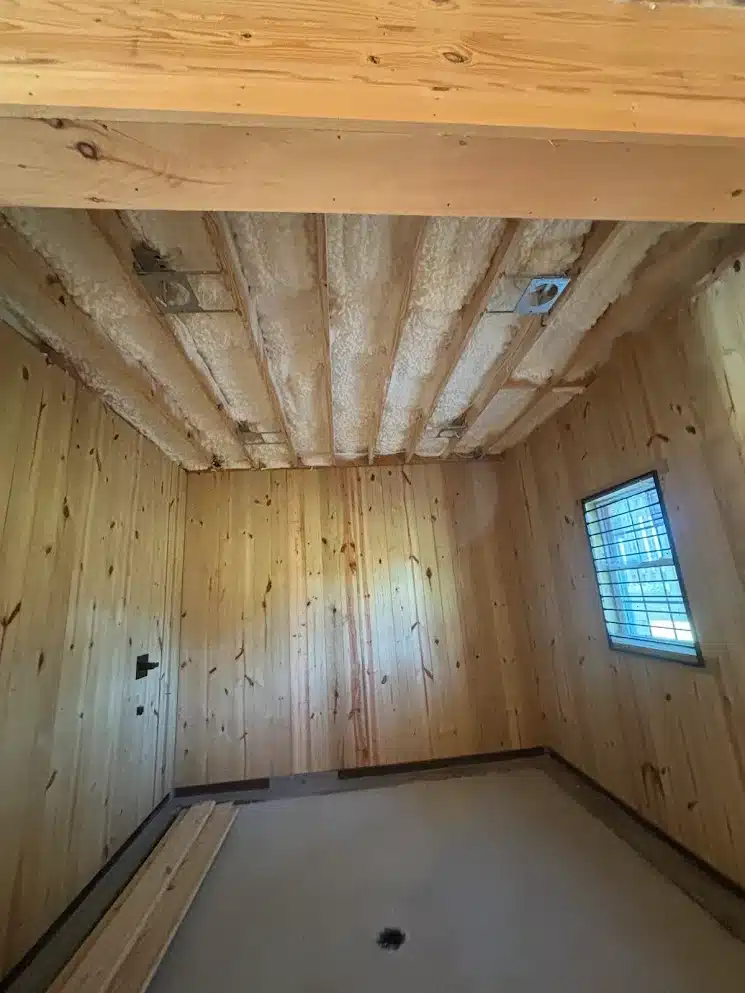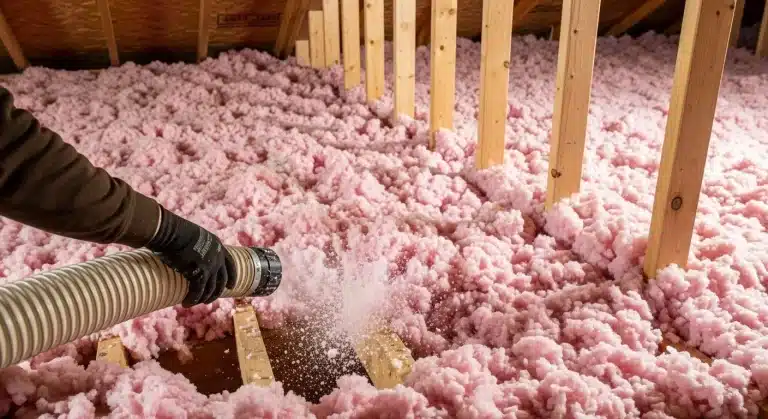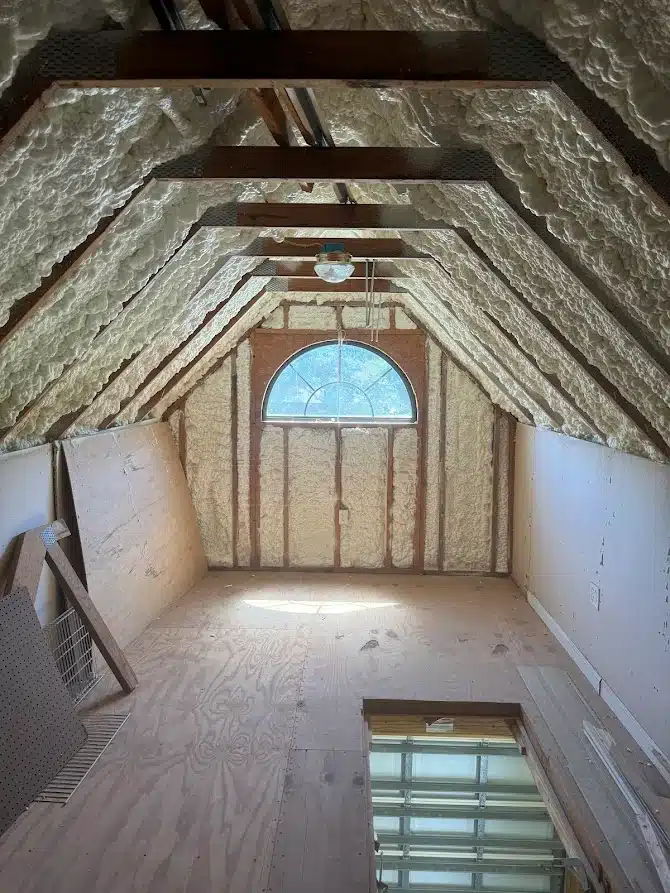
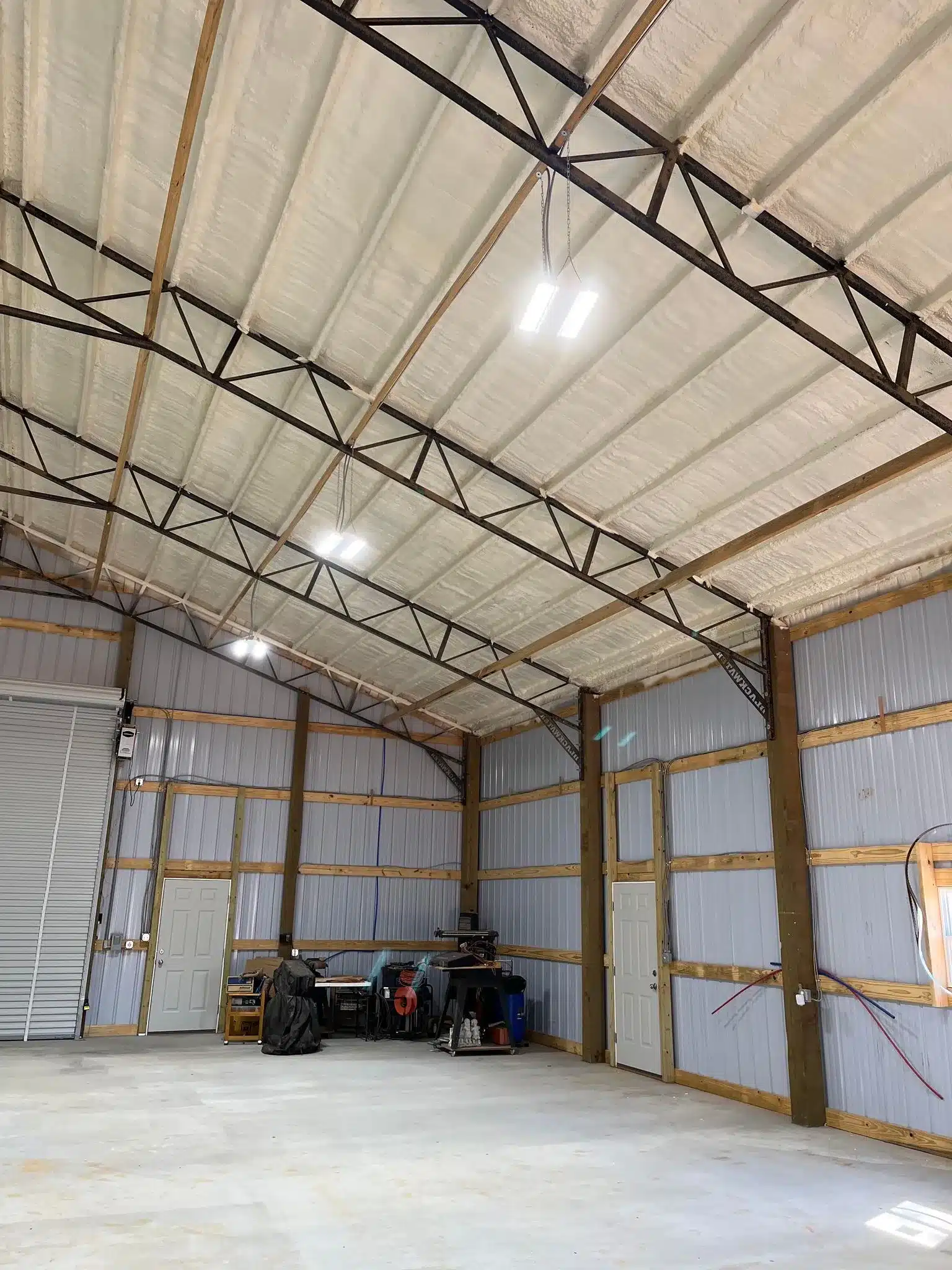
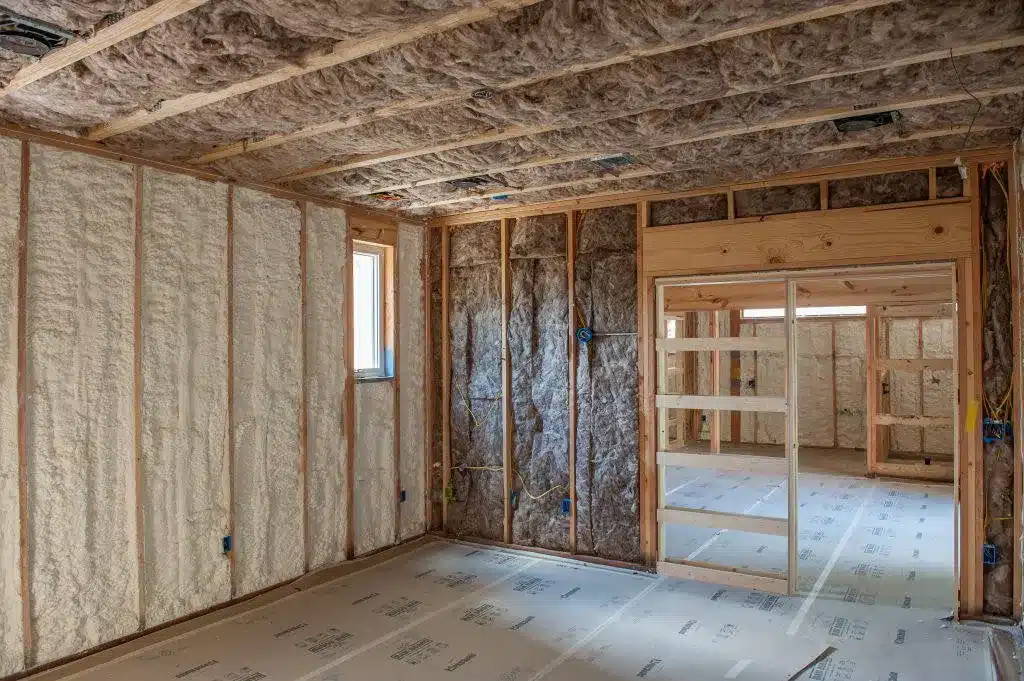
Spray foam insulation does more than just regulate temperature. It functions as a structural adhesive that bonds wall components together. This material expands to fill gaps and hardens into a rigid solid that connects the sheathing to the framing studs. By creating a continuous bond, spray foam significantly increases a wall’s resistance to racking and shear forces. Prestige Insulation Solutions has observed that buildings using this insulation method often demonstrate greater rigidity and durability than those using traditional fiberglass batts.
The following sections explain how this material contributes to a building’s strength and why it matters for long-term stability.
Increased Racking Resistance
Racking occurs when external forces push against a wall, causing it to shift out of a square or parallelogram shape. This often happens during high winds or seismic activity. Traditional insulation materials like fiberglass or cellulose sit loosely between studs. They do not connect the framing members. Spray foam changes this dynamic by adhering to both the wood studs and the exterior sheathing.
This adhesive effectively bonds the wall assembly. When pressure hits the wall, the foam distributes the force across a larger area rather than allowing individual studs to move independently. A study conducted by the National Association of Home Builders (NAHB) Research Center confirmed that closed-cell spray foam can increase the racking strength of a wall structure by up to 300% compared to uninsulated walls.
Bonus Tip
Always ensure the framing is straight before applying foam. Once the material cures, it becomes difficult to adjust the alignment of studs because the bond is so strong.
Superior Wind Uplift Resistance
In regions prone to hurricanes or severe storms, keeping the roof attached to the walls is a primary concern. High winds create uplift pressure that can pull a roof deck off the top plates of the walls. Spray foam insulation applied to the roof deck acts as a powerful glue.
When applied between the rafters or trusses and the roof sheathing, the foam locks the decking in place. This makes it much harder for wind to get underneath the shingles or underlayment and peel the roof back. The Insurance Institute for Business & Home Safety (IBHS) recommends specific attachment methods for high-wind areas, and spray foam insulation serves as a critical supplemental measure to meet these stringent standards.
For homes in coastal areas like the Florida Panhandle, this feature provides an extra layer of security against storm damage. The continuous seal prevents pressurization of the attic space, which is a common cause of roof failure during hurricanes.
Moisture Control and Rot Prevention
Water is the enemy of structural integrity. When wood framing stays wet for extended periods, it rots, loses strength, and becomes susceptible to mold and termites. Traditional insulation can trap moisture against the wood if a vapor barrier is missing or improperly installed. It can also absorb water if a leak occurs, becoming heavy and losing its insulating properties.
Closed-cell spray foam acts as a moisture barrier. The foam cells are closed and filled with gas, preventing liquid water and water vapor from passing through. By stopping moisture intrusion, the foam protects the wood framing from decay.
According to the U.S. Department of Energy, proper air sealing and moisture control are essential for maintaining the durability of building envelopes. Spray foam addresses both issues simultaneously. By keeping the framing dry, the wood maintains its original load-bearing capacity for decades longer than it would in a damp environment.
Structural Performance Comparison
The table below compares how different insulation types perform regarding structural support and moisture resistance.
| Feature | Fiberglass Batts | Cellulose Blown-In | Closed-Cell Spray Foam |
|---|---|---|---|
| Structural Adhesion | None (friction fit only) | None | High (adhesive bond) |
| Racking Strength | No improvement | No improvement | Increases by 150-300% |
| Water Absorption | High (loses R-value when wet) | High (holds water, adds weight) | Negligible (resists water absorption) |
| Mold Resistance | Low (paper facings support mold) | Medium (treated but can hold moisture) | High (inert material does not feed mold) |
Long Term Stability and Settling
Gravity affects all building materials over time. Loose-fill insulation like cellulose can settle and compress, leaving the top of the wall cavity uninsulated. Fiberglass batts can slump or fall out of place if not stapled correctly. This settling creates voids at the top of walls, where thermal bridging occurs, leaving the structure vulnerable to temperature fluctuations that cause wood to expand and contract.
Spray foam does not settle. Once it cures, it remains in the exact shape and position it was applied. This dimensional stability ensures that the wall assembly maintains its designed thermal and structural performance for the life of the building. Because the foam fills every crack and crevice, it eliminates gaps that allow drafts and pests to enter, further preserving the wood’s condition.
Bonus Tip
Inspect for electrical wires and plumbing pipes before spraying. Foam expands aggressively and can put pressure on these components if the installer is not careful, potentially causing loose connections.
Things to Consider Before Making a Decision
Choosing spray foam requires evaluating several factors to ensure it suits the specific building project.
- Installation Precision: The performance depends entirely on the installer. The mixing ratio and temperature must be perfect.
- Retrofit Challenges: Applying foam in existing walls requires drilling holes, which is more invasive than blowing in loose-fill cellulose.
- Budget: The upfront cost is higher than other materials. However, the return on investment comes through lower energy bills and reduced structural repair costs.
- Ventilation Changes: Because spray foam creates such a tight seal, the building may require updated mechanical ventilation to ensure fresh air circulation.
Final Thoughts
Spray foam insulation offers benefits that go far beyond temperature control. By acting as a structural adhesive, it fortifies walls against racking, wind uplift, and moisture damage. It provides stability that loose-fill materials simply cannot match. Building owners should evaluate their long-term durability goals alongside energy efficiency needs. The structural advantages make a compelling case for spray foam in new construction and major renovations, particularly in areas prone to severe weather.
Contact Prestige Insulation Solutions
Professional assessment is the best way to determine if spray foam suits a specific building design. Prestige Insulation Solutions provides detailed evaluations and technical guidance for insulation projects. For expert advice on improving structural integrity through insulation, contact the team at [email protected] or call (850) 429-4969 to discuss project requirements.
Frequently Asked Questions
Does spray foam make a house earthquake proof?
No material makes a structure completely earthquake proof. However, spray foam increases racking resistance, which helps walls withstand lateral movement better than uninsulated or loosely insulated walls.
Can spray foam support the weight of the house?
Spray foam strengthens the wall assembly, but it does not replace the need for proper load-bearing beams, columns, or foundation work. It is a reinforcement material, not a structural beam substitute.
Is closed-cell foam better than open-cell for structural integrity?
Yes. Closed-cell foam is rigid and dense. It adheres strongly to building materials. Open-cell foam is soft and flexible. While it seals air leaks, it adds little to no structural strength.
Will spray foam stop floor squeaks?
Spray foam can reduce floor squeaks caused by movement between subflooring and joists. If sprayed between the joists, it minimizes the vibration and movement that often cause noise.
Sources
- National Association of Home Builders Research Center – Research on the structural benefits of spray foam insulation, specifically regarding racking strength and wall rigidity.
- Insurance Institute for Business & Home Safety – Guidelines and research on wind uplift resistance and roof deck attachment methods for high-wind regions.
- U.S. Department of Energy – Information on moisture control, air sealing, and the long-term durability benefits of proper insulation.