
Homeowners who install blown-in insulation typically notice seven distinct improvements in home comfort: consistent temperature distribution across rooms, significantly reduced drafts, enhanced sound dampening from outside noise, better humidity regulation, improved indoor air quality due to reduced allergen infiltration, cooler interiors during summer months due to thermal lag, and warmer floors and ceilings during winter. While energy savings are often the primary motivation for upgrading insulation, these tangible comfort factors tend to have the most immediate impact on daily living.
Comfort is not just about the number on a thermostat; it is about how a home feels to the people living inside it. At Prestige Insulation Solutions, we have observed that many homes suffer from “thermal envelopes” that are compromised by gaps and voids, leading to uneven heating and cooling. Blown-in insulation addresses these irregularities by filling the nooks and crannies that traditional batt insulation often misses. The following detailed breakdown explains the specific comfort changes you can expect after an installation.
The 7 Key Comfort Improvements
1. Consistent Temperature Distribution
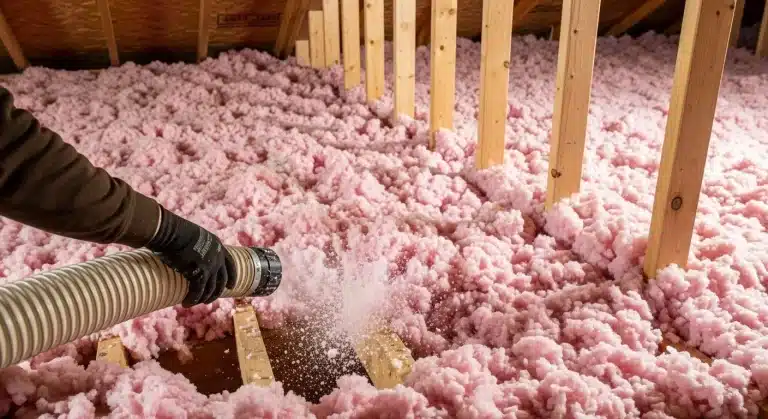
One of the most frequent complaints we hear involves “hot rooms” or “cold spots” in a house. This usually happens because traditional rolled insulation leaves small gaps around joists, wiring, and pipes. Blown-in insulation, particularly cellulose or loose-fill fiberglass, creates a monolithic layer that blankets these obstructions. This eliminates thermal bridging, where heat bypasses the insulation through wood studs or gaps. The result is a home where the living room and bedroom temperatures match, without requiring constant thermostat adjustments.
2. Significant Reduction in Drafts
Open windows do not always cause drafts; they often result from convective loops where air circulates through wall cavities and attics. Because blown-in material is dense and fills irregular spaces, it reduces the air movement within walls and attics. Energy Star notes that sealing air leaks and adding insulation can improve overall comfort by stopping these drafts. While insulation alone is not a complete air barrier, the density of blown-in cellulose, in particular, slows down airflow significantly compared to standard fiberglass batts.
3. Enhanced Sound Dampening
A quieter home is a more comfortable home. Blown-in insulation acts as a superior sound absorber because it fits tightly against drywall and framing members, leaving no space for sound waves to travel effortlessly. This is especially noticeable in homes near busy streets or in neighborhoods with close proximity between houses. The dense fibers break up sound waves, reducing the transmission of outdoor noise and even dampening sound between different floors of the home.
4. Better Humidity Control
Moisture migration through ceilings and walls can make a home feel clammy in the summer and dry in the winter. Cellulose insulation is hygroscopic, meaning it can manage moisture by absorbing and releasing small amounts of water vapor without losing its insulating properties. This buffering effect helps stabilize indoor humidity levels. By slowing the movement of moisture-laden air from the attic into the living space, the HVAC system can more effectively dehumidify the air, leading to a fresher feeling indoor environment.
5. Improved Indoor Air Quality
Your attic is often a source of dust, pollen, and old particulate matter. When air leaks from the attic into the living space (a phenomenon known as the “stack effect”), it brings these irritants with it. By creating a dense, thick blanket of insulation, you suppress the movement of these airborne particles. Department of Energy resources highlight that properly insulating and air sealing helps keep contaminants such as dust and pollen from entering the home, which is a major comfort factor for allergy sufferers.
6. Cooler Summers Through Thermal Lag
In the summer, radiant heat from the sun strikes the roof, raising attic temperatures to extreme levels. This heat eventually radiates down into the living space. Blown-in insulation has a property called “thermal lag”—it takes a long time for heat to migrate through the dense material. By the time the heat works its way through the insulation, the sun has often gone down, and the attic has begun to cool. This keeps the home’s interior noticeably cooler during the hottest parts of the day.
7. Warmer Floors and Ceilings
Cold floors are a classic sign of poor insulation, particularly in rooms above garages or crawl spaces. Blown-in insulation is ideal for these “blind” cavities because it can be injected through small holes to completely fill the space. When the floor cavity is fully packed, the floor surface temperature rises to match the room temperature. This means you can walk around in socks without feeling the chill from the unconditioned space below.
Comparing Insulation Types: Blown-In vs. Batts
To understand why blown-in insulation offers superior comfort, it helps to compare it directly with the most common alternative: fiberglass batts.
| Feature | Blown-In Cellulose | Fiberglass Batts | Impact on Comfort |
|---|---|---|---|
| Gap Filling | Excellent (Fills around all obstructions) | Poor (Must be cut perfectly to fit) | Blown-in eliminates drafts and cold spots better. |
| R-Value per Inch | ~3.2 – 3.8 | ~3.1 – 3.4 (Standard) | Blown-in provides more thermal resistance in the same space. |
| Air Density | High (Dense pack) | Low (Fluffy) | Higher density reduces sound transmission and air movement. |
| Settling | Minimal (if installed correctly) | Prone to sagging over time | Consistent performance over decades with blown-in. |
| Sound Control | Superior | Moderate | Blown-in creates a quieter, more peaceful indoor environment. |
Data on R-values and performance characteristics derived from Koala Insulationand general industry standards.
Market Data on Insulation Efficiency
The need for better insulation is widespread. According to Energy Star, roughly 9 out of 10 homes in the United States are under-insulated. This deficiency forces heating and cooling systems to work harder, creating drafts and noise as they cycle on and off frequently. Furthermore, data from the EPA suggests that homeowners can save an average of 15% on heating and cooling costs by air sealing and adding insulation, which directly correlates to a more stable and comfortable indoor climate.
Things to Consider Before Making a Decision
Before scheduling an installation, evaluate the current state of your home. If you have existing insulation that is wet, moldy, or infested with pests, it must be removed before new material is blown in. Adding fresh insulation over compromised material can trap odors and moisture, negating the comfort benefits.
You should also consider the age of your home’s wiring. In very old homes with knob-and-tube wiring, blowing insulation over the wires can present a fire hazard because the heat from the wires cannot dissipate. A professional inspection is required to ensure your electrical system is compatible with insulation upgrades.
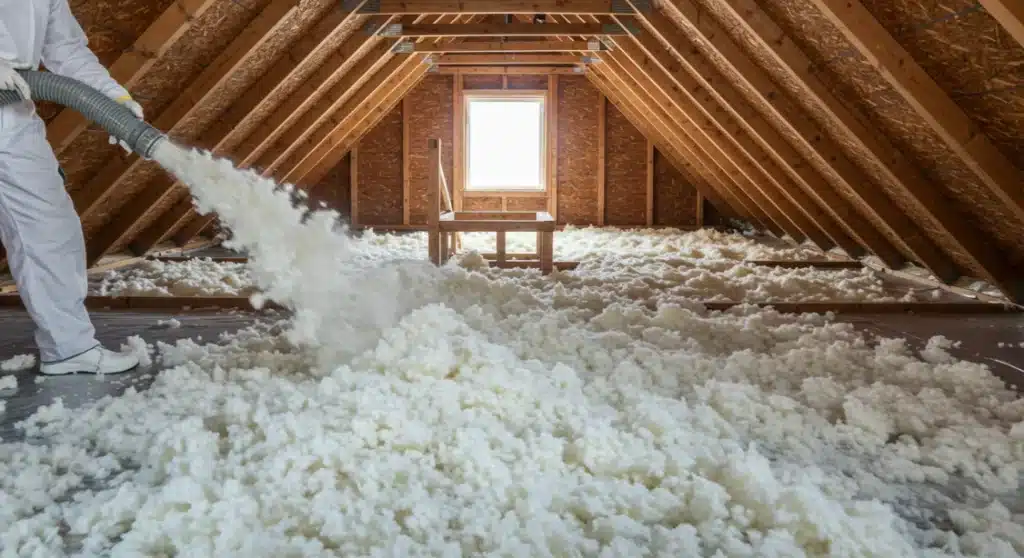
Finally, think about your attic access. Blown-in insulation creates a deep layer of material that can hide joists. If you use your attic for storage, you will need to install raised platforms or dams to keep the insulation in place and maintain a safe walking path.
Bonus Tip: Ventilation Matters
Bonus Tip: Insulation and ventilation go hand in hand. When adding blown-in insulation, ensure that your soffit vents are not blocked. We always recommend installing “baffles” or “rafter vents,” which create a channel for fresh air to flow from the soffits up to the ridge vent. This prevents the attic from overheating and protects the roof deck from moisture damage.
Conclusion
Upgrading to blown-in insulation provides immediate, noticeable improvements in how a home functions. From eliminating cold drafts and stabilizing temperatures to reducing outside noise, the benefits go beyond simple energy savings. Homeowners often report that their house finally “feels solid” and comfortable regardless of the weather outside. Before proceeding, assess your current attic conditions and ventilation to ensure the new insulation performs at its peak.
Upgrade Your Home Comfort
If you are ready to eliminate drafts and uneven temperatures in your home, professional guidance is the next step. Contact Prestige Insulation Solutions to evaluate your specific needs. Reach us by phone at (850) 429-4969 or email us at [email protected] to discuss how blown-in insulation can transform your living space.
Frequently Asked Questions
How long does the installation take?
For a standard attic of 1,000 to 1,500 square feet, the process usually takes 2 to 4 hours. This includes setup, the actual blowing of the insulation, and cleanup.
Does blown-in insulation attract pests?
No. Modern cellulose insulation is treated with borates, which are non-toxic to humans but repel insects and mice. Fiberglass is naturally resistant to pests as it offers no food value, though it does not actively repel them like treated cellulose.
Can I install blown-in insulation myself?
While rental machines are available, it is rarely recommended. Achieving the correct density and R-value requires precise air-to-material ratios that DIY machines often cannot provide. Improperly installed insulation may be too fluffy (low R-value) or too dense (wasted material).
Will this help with ice dams on my roof?
Yes. Ice dams form when heat escapes the living space and melts snow on the roof. By keeping the heat inside your living space with a thick layer of blown-in insulation, the roof deck stays cold, preventing the melt-freeze cycle that causes ice dams.
Sources
- Department of Energy – Guide to insulation types, including resistance to heat flow and air quality benefits.
- EPA – Methodology for estimating energy savings from sealing and insulating.
- Koala Insulation – Comparison of R-values and thermal performance between cellulose and fiberglass.