Direct Answer
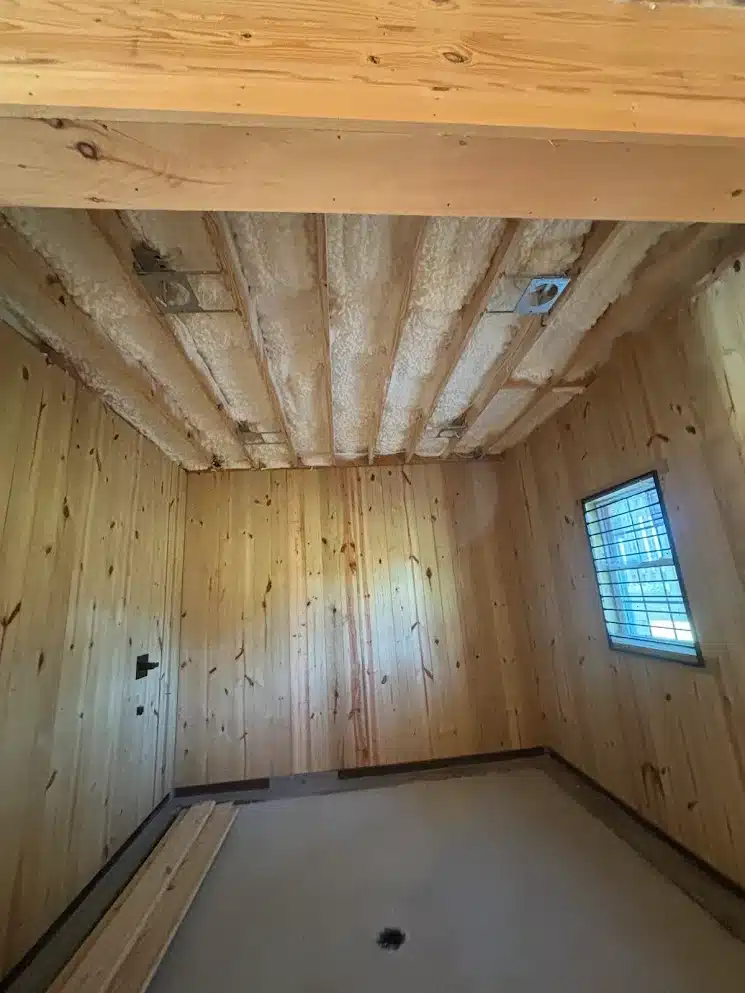
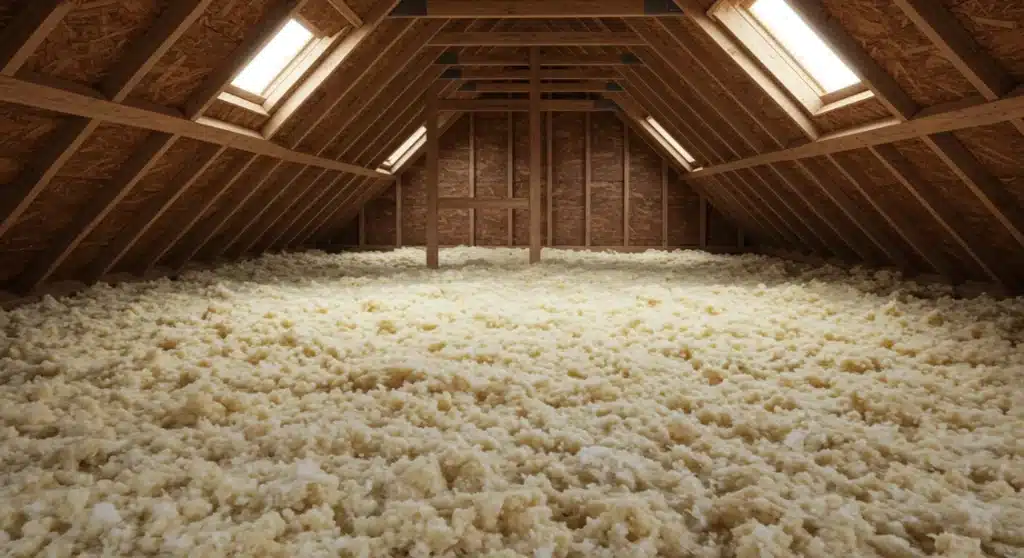
Blown-in insulation fills gaps that traditional batts miss in Pensacola properties because it is applied as loose-fill material that conforms to any cavity shape, flowing around obstacles, wiring, pipes, and irregular framing that batts cannot navigate. While fiberglass and mineral wool batts rely on precise cutting and fitting, blown-in insulation (typically made from cellulose, fiberglass, or mineral wool) settles into every void, creating a continuous thermal and acoustic barrier. For Pensacola’s humid subtropical climate, where air sealing is critical for moisture control and energy efficiency, blown-in insulation provides superior coverage that batts simply cannot achieve, especially in older homes with non-standard framing, vaulted ceilings, and hard-to-reach attic spaces.
TLDR / Key Takeaways
- Blown-in insulation achieves 98% coverage compared to 70-85% coverage typical with poorly installed batts, eliminating thermal bridging and cold spots
- Loose-fill material flows around wiring, plumbing, and irregular studs, reaching areas where batts cannot fit properly
- In Pensacola’s climate, blown-in cellulose provides R-3.2 to R-3.8 per inch while also acting as a moisture-regulating buffer
- Blown-in insulation settles over time, maintaining contact with framing members and preventing gaps from reappearing
- The average Pensacola homeowner saves 15-25% on energy bills after upgrading from batts to blown-in insulation in attics
- Blown-in installation requires specialized equipment and trained technicians, ensuring consistent depth and coverage
- Retrofit projects benefit most from blown-in insulation, as it can be added over existing material without removal
Why Traditional Batts Leave Gaps
Traditional insulation batts have served as the standard for decades, but they come with inherent limitations that create performance gaps in most homes. The fundamental issue is that batts are pre-cut rectangular pieces that must be manually fitted between studs, joists, and rafters. Even experienced installers struggle to achieve perfect coverage in every cavity.
Common gaps created by traditional batts include compression gaps where batts are pushed into place too firmly, reducing their R-value, cut gaps where batts are trimmed around electrical boxes, plumbing, and ductwork, leaving narrow, uninsulated strips, and settling gaps that develop over time as batts shift or compress, creating voids at the top of wall cavities. Research from the U.S. Department of Energy indicates that gaps as small as 5% of the insulation area can reduce overall thermal performance by up to 30%.
Additionally, traditional batts struggle with Pensacola’s older housing stock. Many homes built before 1980 have non-standard stud spacing, uneven framing, and varying cavity depths that make precise batt installation nearly impossible. The humidity in our coastal climate also affects batt performance, as fiberglass can hold moisture when exposed to humid air infiltration, degrading its thermal properties, according to Energy Star.
How Blown-In Insulation Solves These Problems
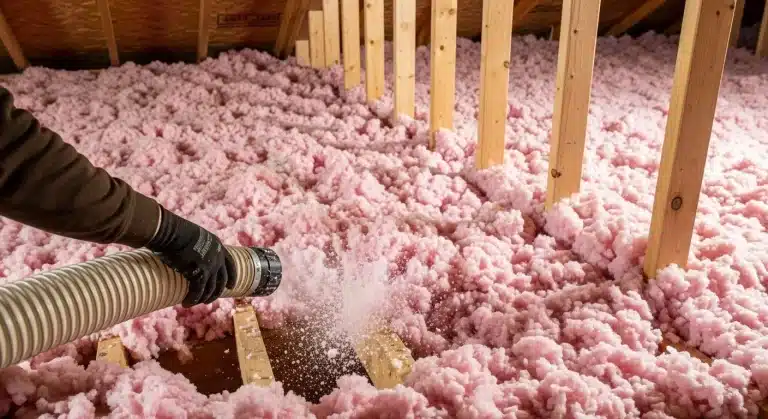
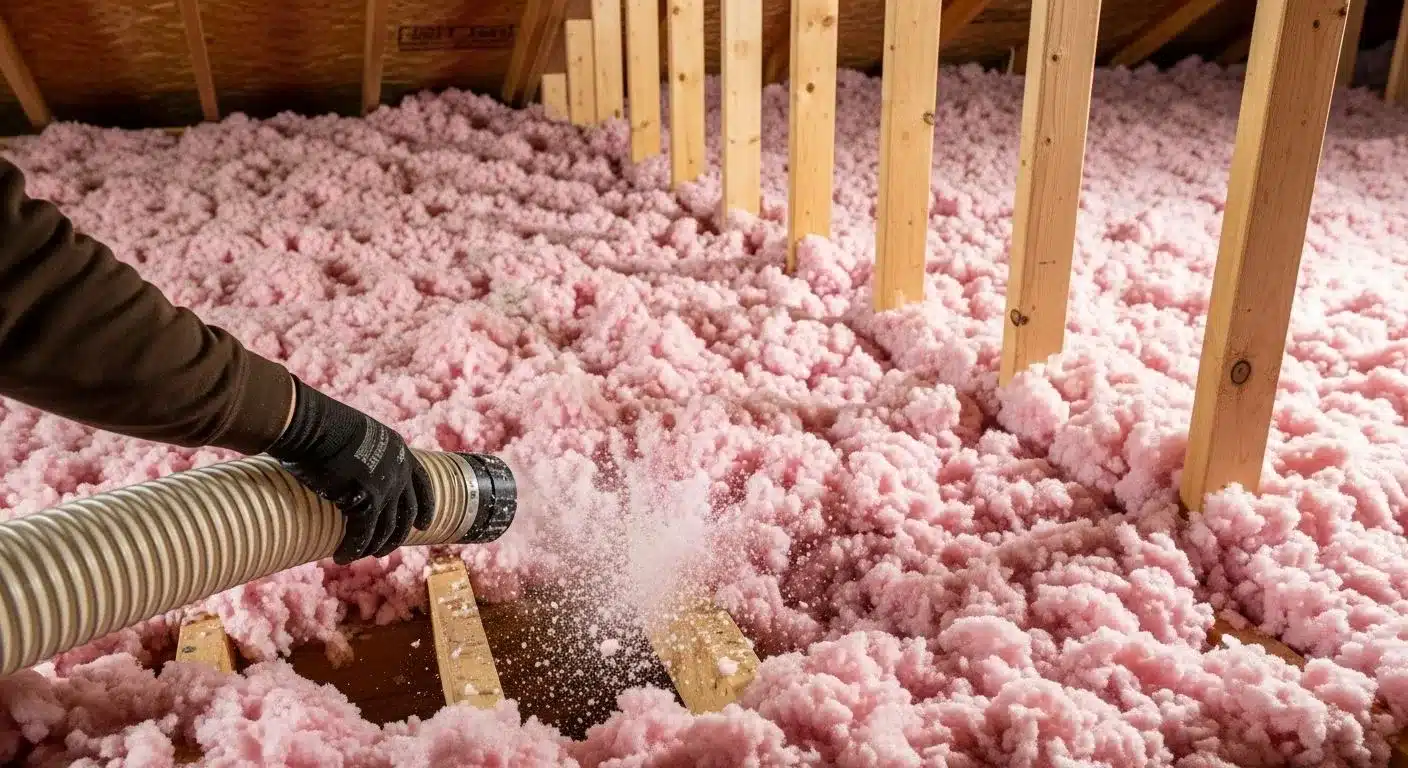
Blown-in insulation addresses the gap problem through its fundamental application method. The loose-fill material is pneumatically blown into spaces, allowing it to flow naturally into every crevice and void. As the material settles, it creates a uniform density that maintains contact with all surfaces, according to the Environmental Protection Agency.
The application process itself ensures comprehensive coverage. Professional installers use specialized equipment that controls material flow and ensures consistent depth across the entire area. For example, cellulose insulation is applied at a specified depth (typically 10-12 inches in Pensacola attics for R-38), and the equipment automatically regulates density to prevent settling issues.
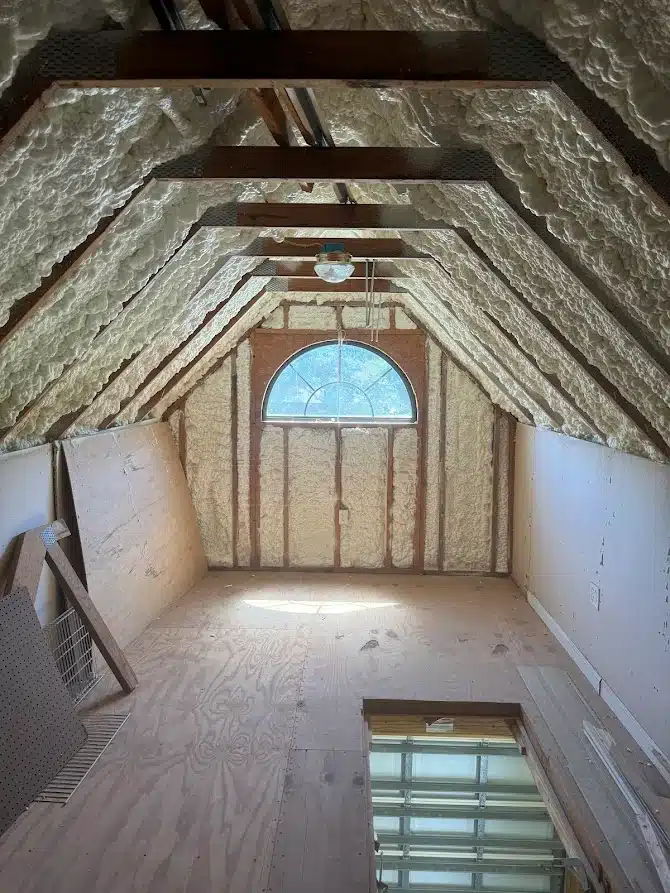
Blown-in insulation also excels at conforming to irregular shapes. Vaulted ceilings, soffit areas, knee walls, and other complex geometries that challenge batt installers are no problem for loose-fill material. It fills around recessed lights, ceiling fans, and attic ventilation without creating fire hazards or compression points.
Pensacola-Specific Climate Considerations
Pensacola’s climate presents unique insulation challenges that make blown-in insulation particularly advantageous. Our humid subtropical environment means moisture control is just as important as thermal resistance. According to the National Weather Service, Pensacola averages 65 inches of rainfall annually and maintains high humidity levels year-round.
Blown-in cellulose insulation offers moisture management benefits that batts cannot match. The dense-packed application creates an air barrier that reduces humidity infiltration through insulation layers. Additionally, cellulose can absorb and release moisture without significant thermal performance loss, whereas fiberglass batt insulation can become less effective when saturated, as explained in this Wikipedia article on thermal insulation.
Summer heat rejection is critical in Pensacola, where temperatures regularly exceed 90 degrees Fahrenheit. The deeper insulation layer possible with blown-in material (12+ inches vs. the 6-8 inches typical with batts) provides superior resistance to heat transfer through the attic. This translates directly to lower cooling costs and improved indoor comfort during our long, hot summers, according to Fine Homebuilding.
Coastal exposure also brings salt air and increased corrosion concerns. Blown-in insulation systems typically require fewer penetrations and less mechanical installation, reducing the potential for air leaks that introduce humid outdoor air into the home envelope.
Comparison: Blown-In vs. Traditional Batts
| Factor | Blown-In Insulation | Traditional Batts |
|---|---|---|
| Coverage Rate | 95-98% | 70-85% |
| R-Value per Inch | 3.2-4.0 | 3.1-4.3 |
| Gap Prevention | Fills all voids automatically | Requires precise cutting |
| Installation Time | 2-4 hours (average home) | 6-10 hours (average home) |
| Labor Cost | Lower (faster installation) | Higher (more labor-intensive) |
| Material Cost | $1.00-$2.00/sq ft | $0.50-$1.50/sq ft |
| Ideal Application | Attics, retrofit, irregular spaces | New construction, standard walls |
| Settling Resistance | Excellent (maintains coverage) | Poor (gaps develop over time) |
| Moisture Performance | Good (breathable material) | Variable (can hold moisture) |
Practical Strategies for Insulation Contractors
Our team has refined several strategies that deliver superior results for Pensacola homeowners seeking gap-free insulation performance.
First, always conduct a thorough pre-installation assessment. Before recommending blown-in insulation, evaluate the existing conditions, identify air sealing needs, and determine appropriate R-values for the specific application. This assessment should include attic ventilation verification, electrical and plumbing penetration documentation, and moisture damage inspection.
Second, prioritize air sealing before adding insulation. According to This Old House, air leakage accounts for more energy loss than insulation underperformance in most homes. Seal recessed lights, attic hatchways, ductwork penetrations, and electrical outlets before installing blown-in material. This ensures the insulation performs as intended without air movement, reducing its effectiveness.
Third, use the correct density for the application. Blown-in insulation must be installed at manufacturer-specified depths to achieve rated R-values and prevent settling. For cellulose in attic applications, maintain 10-12 inches of settled depth. For wall applications, dense-pack to approximately 3.5 pounds per cubic foot to prevent settling and ensure complete cavity fill.
Fourth, educate homeowners on maintenance and expectations. Explain that some settling is normal and that a quality installation includes a “fluff” layer that compensates for settling. Schedule follow-up inspections at 6 months and 2 years to address any settling issues.
Real-World Example
A Pensacola homeowner in the East Hill neighborhood contacted us after experiencing uneven heating and cooling throughout their 1960s ranch-style home. Summer utility bills exceeded $350 monthly despite running the air conditioner constantly. Our assessment revealed that the original fiberglass batt insulation in the attic had compressed significantly, with an estimated R-value of only R-19 (well below the recommended R-38 for our climate).
We removed the damaged batts, performed comprehensive air sealing around all penetrations, and installed blown-in cellulose insulation to a settled depth of 12 inches. The homeowner reported immediate improvements in indoor comfort, with even temperatures throughout the home. Their summer cooling costs decreased by 28% in the first year, saving over $600 annually while achieving superior comfort.
Upgrade Your Home’s Insulation Today
Ready to provide your Pensacola home with the gap-free insulation performance it deserves? Prestige Insulation Solutions LLC specializes in blown-in insulation installations tailored to our local climate and your specific needs.
Contact us today at (850) 429-4969 or email [email protected]to schedule your free consultation.
FAQ
Q: How long does blown-in insulation last in Pensacola’s climate?
A: Properly installed blown-in insulation lasts 20-30 years, with cellulose maintaining its R-value better than fiberglass in our humid climate when proper ventilation is maintained.
Q: Can blown-in insulation be added over existing batt insulation?
A: Yes, in most cases, blown-in insulation can be installed over existing batts after removing any damaged or compressed sections and performing necessary air sealing.
Q: Is blown-in insulation better for allergies?
A: Blown-in cellulose insulation is treated with fire retardants and does not harbor mold or bacteria, making it suitable for allergy sufferers when properly installed with adequate ventilation.
Q: Does blown-in insulation settle over time?
A: Some settling is normal, typically 5-10% within the first year. Quality installations include additional material to compensate for settling and maintain rated R-values.
Q: How much does blown-in insulation cost in Pensacola?
A: Blown-in insulation costs $1.00-$2.00 per square foot depending on material type and project complexity, with most homeowners investing $2,500-$5,000 for whole-attic coverage.